
EBİ EXPORT is a foreign trade company that provides services to hypermarkets, fast moving consumer goods suppliers, ethnic markets and wholesalers. We are exporting to more than 20 different countries.
EBİ EXPORT is a foreign trade company that provides services to hypermarkets, fast moving consumer goods suppliers, ethnic markets and wholesalers. We are exporting to more than 20 different countries.
It is an Ebi Export Brand
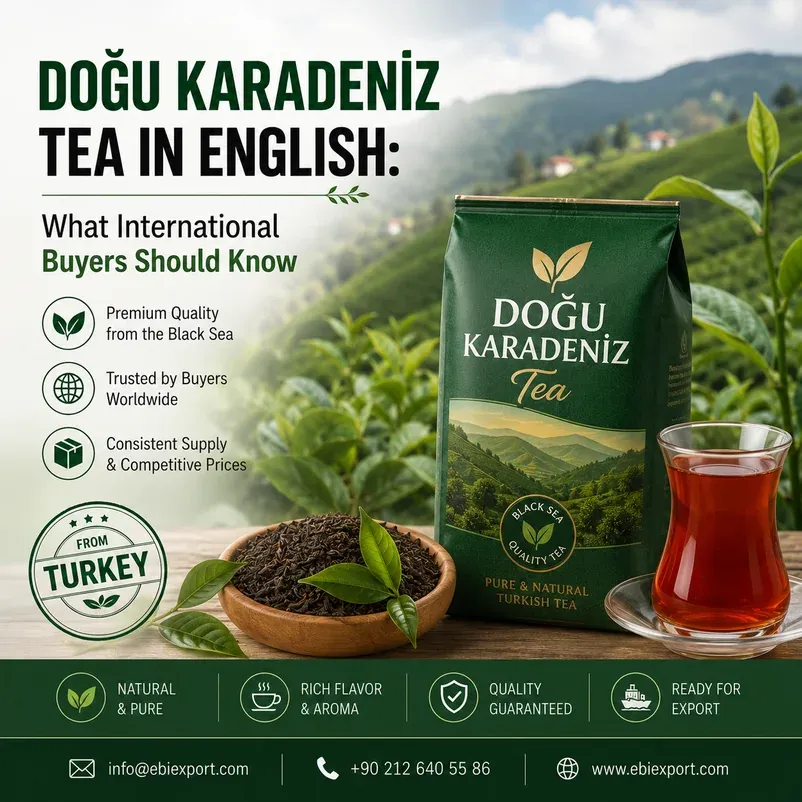
 Doğu Karadeniz Tea in English: What International Buyers Should Know
Doğu Karadeniz tea in English can be understood as Eastern Black Sea tea. The phrase refers to tea connected with Turkey’s eastern Black Sea region, an area strongly associated with Turkish tea culture, black tea production and daily tea consumption. For international buyers, this term is useful because it does not only describe a product. It also points to a regional identity, a brewing tradition and a customer expectation that can matter in retail and wholesale markets.
Buyers searching for Doğu Karadeniz tea are often trying to understand what the name means, how it relates to Turkish black tea and whether it can be suitable for export. This is a smart question. Tea is not a random grocery item in Turkey. It is part of daily life, hospitality, breakfast tables, offices, restaurants and family visits. Turkish Food Exporter, as an Ebi Export brand, helps international buyers evaluate Turkish tea products and related grocery categories for export, wholesale and retail supply.
The Turkish phrase “Doğu Karadeniz” means “Eastern Black Sea” in English. Therefore, Doğu Karadeniz tea can be described as Eastern Black Sea tea. In a commercial context, buyers may use this phrase when they are looking for Turkish black tea connected with the Black Sea tea-growing region.
This translation is useful for importers because it helps explain the product to non-Turkish customers. A buyer may see the phrase on packaging, product lists or supplier information and want to understand whether it is a brand, a region or a tea style. In many cases, it should be read as a regional expression connected with Turkish tea culture rather than only a generic flavor name.
For retail use, this explanation can help stores present the product more clearly. If customers do not know Turkish, the term may look unfamiliar. But when it is explained as Eastern Black Sea tea, it becomes easier to connect with origin, tradition and black tea identity.
Tea culture in Turkey is strongly connected with the Black Sea region. For international buyers, this regional connection can support product storytelling and shelf positioning. Customers often respond better when a product has a clear origin and a meaningful background. Tea is not only purchased by taste; it is also purchased by trust, habit and familiarity.
Doğu Karadeniz tea can be positioned as part of Turkey’s black tea tradition. This matters especially for ethnic grocery stores, Turkish markets, Middle Eastern stores, Balkan grocery retailers and specialty food shops. Customers who already know Turkish-style tea may look for products that feel familiar in taste, color and brewing strength.
For broader supermarkets, the regional name can also be useful, but it should be explained simply. A product labeled with regional identity can create curiosity, yet curiosity needs guidance. The shelf should not make the customer work too hard. Good retail communication turns an unfamiliar name into a clear reason to buy.
Turkish black tea is one of the most important beverage categories for Turkish grocery buyers. It is usually brewed strong and served regularly throughout the day. This makes it different from products that are consumed only occasionally. For importers, daily-use products are valuable because they can create repeat sales.
A customer who likes a certain Turkish tea may return to buy the same product again and again. This kind of loyalty is useful for grocery stores and wholesalers. Snacks may depend on mood. Sweets may depend on occasion. Tea often depends on habit, and habit is one of the strongest engines in retail.
The Turkish tea category can help buyers evaluate black tea and related tea products from Turkey. Importers should review product type, package size, brand, shelf life, carton quantity and brewing expectations before placing an order.
Doğu Karadeniz tea and similar Turkish black tea products can be suitable for several buyer types. Ethnic grocery stores may carry them for customers who already know Turkish tea culture. Supermarkets may use them in international food and beverage sections. Wholesalers may distribute them to smaller stores, cafes, restaurants and regional retailers. Online grocery sellers may also position them as authentic Turkish tea products.
The best buyer profile depends on the target market. In countries with Turkish, Middle Eastern, Balkan or Central Asian communities, Turkish black tea may already have a ready customer base. In markets where Turkish tea is less known, buyers may need to introduce it with clearer product descriptions, smaller trial packages and simple brewing guidance.
Importers should ask where the product will be sold before deciding what to buy. A tea product for an ethnic market may need a different package size than a tea product for a general supermarket. A product for restaurants may require different planning than a product for household retail.
Packaging is an important part of tea export. Turkish black tea may be offered in loose tea packages, boxed formats, tea bags or larger family-size options depending on availability. Each format serves a different purpose. Loose tea can be strong for customers who brew tea traditionally. Tea bags may be easier for offices, hotels, cafes and new customers who want convenience.
Larger packs can work well in ethnic grocery stores where customers drink tea frequently. Smaller packages may be better for supermarkets or first-time buyers. A customer who does not know Turkish tea may be more comfortable trying a smaller package first. Once the product becomes familiar, larger packs can support repeat purchases.
Importers should check package weight, carton quantity, barcode details, shelf life, packaging language and visual presentation. Tea is lighter than bottled beverages, but it still needs careful handling. Packaging should protect aroma, freshness and product quality. A tired-looking tea package does not inspire trust, even if the product inside is good.
For international retail, explanation matters. A product name like Doğu Karadeniz tea may attract Turkish-speaking customers immediately, but non-Turkish customers may need help. The phrase can be explained as Eastern Black Sea Turkish black tea. This gives shoppers three useful clues: origin, country and tea type.
A simple retail description may mention that it is a Turkish black tea suitable for traditional brewing and daily use. The product does not need exaggerated claims. It needs clarity. Customers should understand whether the tea is loose, bagged, strong, mild, herbal or black tea. Confusion is not elegant on a shelf; it just slows sales.
If the store serves customers who already know Turkish tea, the regional name may be enough. If the store serves a wider audience, the product may need supporting shelf text, a clear English description or placement near other Turkish products. The goal is to make the product easy to discover and easy to buy.
Tea becomes stronger when it is sold with products that naturally fit tea-time habits. Importers can pair Turkish black tea with biscuits and crackers, wafers, cakes, chocolate, Turkish delight, halva, jam and honey-based products. These pairings make sense because customers often buy tea with sweets or snacks.
The Turkish delight category can be especially useful beside tea products. Turkish delight and black tea together create a familiar cultural combination and a more complete shelf story. For ethnic markets, this can feel natural. For international grocery stores, it can make the Turkish section more attractive.
Tea can also be included in wider FMCG orders with pasta, tomato paste, sauces, snacks, fruit juice, bottled water and personal care products. A distributor serving many retailers may benefit from this mixed product approach because it creates more selling opportunities from one sourcing plan.
Wholesale buyers should plan tea orders carefully. Important details include product weight, units per carton, carton dimensions, pallet structure, shelf life, available stock and shipment timing. Tea may not create the same freight pressure as bottled water or soft drinks, but small packaging details still affect pricing and warehouse handling.
A first tea order should usually be focused. Importers can choose one or two black tea products, add several herbal or complementary tea options if suitable, and support the order with related grocery items. After the first sales period, the buyer can review which package size moved faster, which stores reordered and whether customers asked for different tea formats.
For ethnic markets, larger loose tea packages may perform well if customers already brew tea regularly. For supermarkets, smaller retail packs or convenient formats may be safer at first. For cafes and restaurants, buyers should check whether the product fits service use and brewing habits.
Doğu Karadeniz tea is mainly connected with black tea identity, but importers can also consider herbal tea products as part of a broader Turkish tea range. Herbal teas can serve customers looking for lighter drinks, caffeine-free options or plant-based flavors. Mint, linden, sage, chamomile, fennel and mixed herbal teas may all be relevant depending on market demand and product availability.
A combined tea range can work well for supermarkets and international grocery stores. Black tea brings Turkish tradition and daily use. Herbal tea brings variety and easier entry for customers who may not know Turkish brewing culture. Together, they create a more complete beverage section.
Turkish Food Exporter can help buyers evaluate tea products alongside coffee, sweets, snacks and staple foods. This wider planning is useful because tea often sells better when it belongs to a complete grocery environment rather than standing alone.
Before importing Doğu Karadeniz tea or other Turkish tea products, buyers should check destination-country rules. Tea products may require ingredient information, origin details, local language labels, barcode data, importer information or other compliance points depending on the market.
The exporter can support product and export-side information, but the importer should confirm local import rules with customs brokers or relevant authorities. This step should be handled before shipment. Paperwork is not exciting, but when ignored it develops a dramatic personality.
Buyers should also ask about supply continuity. If a product sells well, can it be sourced again? Are package sizes stable? Is the same product available for repeat orders? Tea customers often return for the same taste, so consistency is important.
Turkish Food Exporter supports international buyers looking for Turkish tea products, including black tea, herbal tea and retail-ready grocery options from Turkey. Buyers can evaluate Doğu Karadeniz tea interest together with broader Turkish tea export opportunities and related FMCG categories.
For importers, the best approach is to understand both the language and the market meaning of the product. Doğu Karadeniz tea in English means Eastern Black Sea tea, but commercially it also suggests Turkish black tea culture, regional identity and daily consumption potential. That makes it useful for ethnic markets, international grocery stores, wholesalers and distributors.
With clear packaging, accurate product information, suitable order quantities and reliable export support, Turkish tea products can become steady items in global grocery supply. Turkish Food Exporter helps buyers build that process with practical sourcing, category awareness and a retail-focused view of Turkish food and beverage products.