
EBİ EXPORT is a foreign trade company that provides services to hypermarkets, fast moving consumer goods suppliers, ethnic markets and wholesalers. We are exporting to more than 20 different countries.
EBİ EXPORT is a foreign trade company that provides services to hypermarkets, fast moving consumer goods suppliers, ethnic markets and wholesalers. We are exporting to more than 20 different countries.
It is an Ebi Export Brand
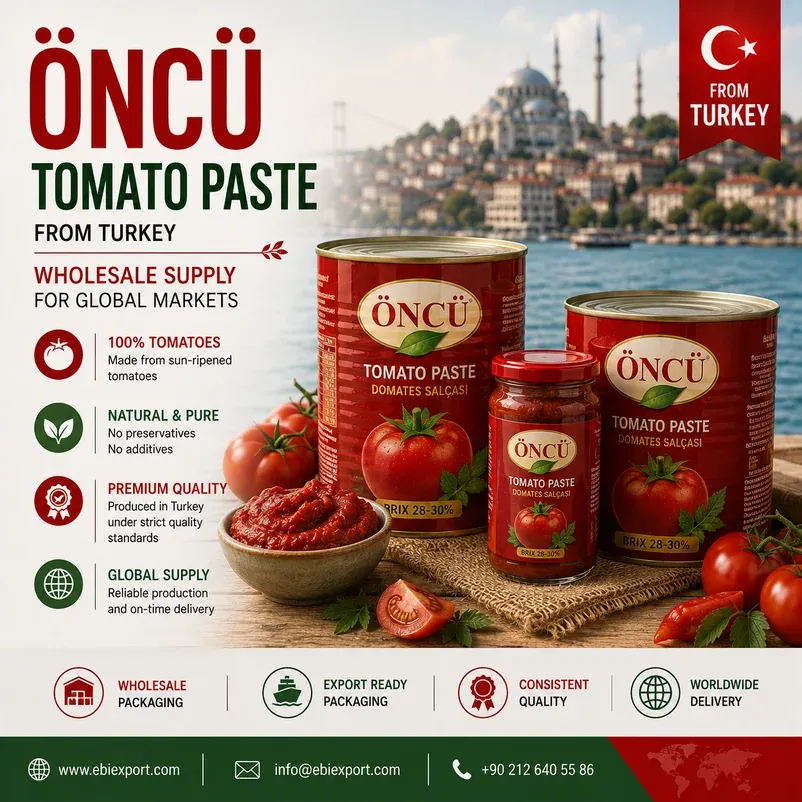
 Öncü Tomato Paste from Turkey: Wholesale Supply for Global Markets
Öncü tomato paste from Turkey is a strong product option for wholesale buyers who want a practical, familiar and repeat-purchase grocery item for international markets. Tomato paste is used in daily cooking across many cuisines, which makes it valuable for supermarkets, ethnic grocery stores, wholesalers, food distributors and food service suppliers. For importers, the product has a clear advantage: customers understand what it is, how to use it and why they need it in the kitchen.
Turkey has a strong position in tomato paste production and export because the product is deeply connected with everyday food culture. From home kitchens to restaurants, tomato paste is used as a base ingredient in soups, stews, sauces, rice dishes, pasta recipes and traditional meals. Turkish Food Exporter, as an Ebi Export brand, helps international buyers source Öncü tomato paste from Turkey and related staple food products for wholesale and retail markets.
Importers often look for products that can move steadily after the first shipment. Some items may attract attention once, but tomato paste can create repeat demand because it belongs to regular cooking habits. This is especially important for wholesalers and distributors that need products with ongoing sales potential. A product that enters the kitchen routine has a better chance of becoming a long-term order item.
Öncü tomato paste is a searched product name among buyers interested in Turkish tomato paste. Brand recognition can help retailers build trust more quickly, especially in markets where Turkish grocery products already have customer demand. For ethnic markets, familiar Turkish brands can be important because shoppers often look for products they have used before or recognize from traditional recipes.
However, wholesale buyers should not select any product only because the name is familiar. The best decision comes from reviewing package size, carton quantity, shelf life, availability, destination market needs and shipment structure. A strong brand gives the product a better starting point, but export success still depends on careful planning.
Tomato paste is one of the most practical staple food products for importers. It is not limited to one meal type or one customer group. It can be used by households, restaurants, catering businesses and small food producers. This gives wholesalers a broader selling field compared with products that appeal only to a narrow audience.
The Turkish tomato paste category can be positioned as part of a full cooking essentials section. Retailers can place tomato paste near pasta, sauces, spices, soup mixes, rice, legumes and oils. This helps customers shop naturally and increases the chance of related purchases.
For ethnic grocery stores, tomato paste is often more than a simple ingredient. It is tied to familiar cooking methods. Customers from Turkish, Middle Eastern, Balkan, Mediterranean and Central Asian backgrounds may use tomato paste frequently in daily meals. For this reason, carrying a Turkish tomato paste brand can strengthen the store’s identity and improve product loyalty.
Wholesale tomato paste supply requires a different mindset from small retail purchasing. Buyers must think about carton quantities, pallet structure, total shipment weight, warehouse handling and shelf rotation. Tomato paste is compact but heavy, so logistics planning matters. A good unit price can lose its charm quickly if freight and handling are not calculated properly.
For global markets, buyers should also think about sales channels. A supermarket chain may need retail-ready package sizes and strong visual shelf appeal. An ethnic market distributor may prioritize brand familiarity and repeat household use. A food service buyer may prefer larger formats depending on restaurant or catering demand. Each channel needs a different product plan.
Turkish Food Exporter helps buyers review these needs before building a wholesale order. The goal is to avoid random purchasing and create a product mix that fits the importer’s real market. In international trade, guessing is not brave; it is just expensive with better lighting.
Packaging is one of the most important points in tomato paste export. Buyers should check whether the product is offered in tins, jars or other suitable formats, and which package sizes match customer habits in the destination country. Small packs may work well for households and grocery shelves, while larger formats may be more suitable for restaurants, wholesalers or food service supply.
Retailers usually need packaging that is easy to display, easy to understand and practical for shoppers. If the product is sold in an ethnic market, customers may already recognize the format. If it is sold in a broader supermarket environment, clear shelf positioning becomes more important. Tomato paste should not look like a mysterious item; it should look like a useful kitchen product.
Importers should also review barcode details, label information, nutrition facts, ingredient declarations and language requirements. Some countries may require additional labeling or importer information. The exporter can provide product details, but the buyer should confirm local compliance requirements with customs brokers or relevant authorities before shipment.
A first wholesale order should be built with discipline. Importers do not need to buy every available size or variation immediately. A better approach is to select the most suitable package sizes for the target market, combine them with related products and test real demand before scaling.
For example, a distributor serving ethnic grocery stores may start with Öncü tomato paste, Turkish pasta products, sauces and spices. This creates a clear cooking category that retailers can understand. A supermarket buyer may focus on retail-friendly package sizes and pair tomato paste with other Turkish grocery products to create an international foods section.
After the first shipment, sales feedback becomes very valuable. Which size sold faster? Did customers ask for larger packs? Did retailers reorder quickly? Did tomato paste sell better when placed near pasta and sauces? These answers help buyers create stronger second and third orders. Export strategy should grow from the market, not from guesswork.
Öncü tomato paste can become stronger when it is imported with related Turkish food products. Pasta, pasta sauce, spices, soup mixes and ready meals are natural companions because they serve similar cooking needs. These products can create a complete staple food range for grocery stores and wholesalers.
Buyers can also support tomato paste with traditional products such as Turkish delight, halva, jam, tea and coffee. This is especially useful for ethnic markets that want to build a broader Turkish grocery identity. The customer may come for one familiar product, but a well-planned shelf can introduce several others.
For larger distributors, mixed FMCG orders can include tomato paste along with Turkish snack products, beverages, cleaning products and personal care items. This wider approach helps wholesalers serve more retailers and increase shipment value through different categories.
Before ordering Öncü tomato paste from Turkey, importers should request accurate product information. Important details include package weight, carton quantity, shelf life, expiry dates, available stock, pallet structure, barcode information and shipment timing. These details affect landed cost, storage planning and retail pricing.
Shelf life is especially important for wholesale food products. Tomato paste usually has practical storage advantages, but buyers should still confirm dates before placing an order. Retailers do not want short shelf life unless the product is purchased for a specific fast-sale plan.
Buyers should also check whether the product is suitable for their destination market. Taste expectations, package size preferences, price points and brand awareness can change from country to country. A product that performs well in one market may need a different sales approach in another.
Turkish Food Exporter supports international buyers looking for Turkish tomato paste and other staple food products for wholesale supply. Buyers can evaluate Öncü tomato paste together with pasta, sauces, spices, snacks, beverages, sweets and household FMCG products from Turkey.
For importers, the main benefit is organized sourcing. Instead of treating tomato paste as a single isolated item, buyers can build a complete Turkish grocery selection around it. This makes the product easier to sell and gives retailers a stronger category structure.
Öncü tomato paste from Turkey can be a reliable wholesale product when selected with the right packaging, order quantity and market strategy. With clear product details, realistic logistics planning and a dependable export partner, importers can turn Turkish tomato paste into a steady product line for global grocery, retail and wholesale markets.