
EBİ EXPORT is a foreign trade company that provides services to hypermarkets, fast moving consumer goods suppliers, ethnic markets and wholesalers. We are exporting to more than 20 different countries.
EBİ EXPORT is a foreign trade company that provides services to hypermarkets, fast moving consumer goods suppliers, ethnic markets and wholesalers. We are exporting to more than 20 different countries.
It is an Ebi Export Brand
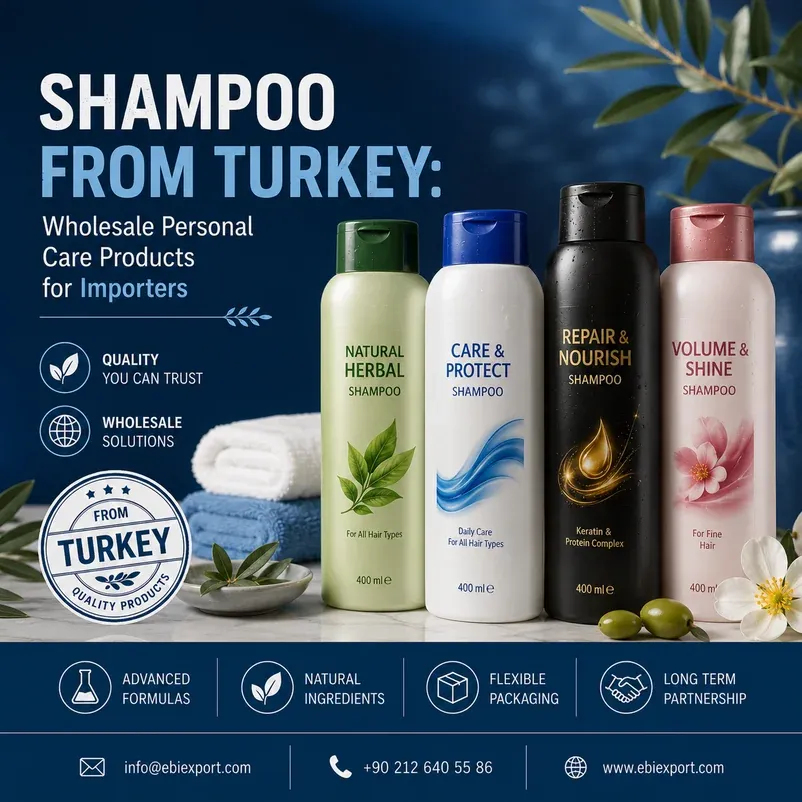
 Shampoo from Turkey: Wholesale Personal Care Products for Importers
Shampoo from Turkey can be a practical product category for importers who want to expand their FMCG range with personal care items that customers use regularly. Shampoo is not a seasonal curiosity or a product that depends on a special occasion. It belongs to daily and weekly household routines, which makes it valuable for supermarkets, wholesalers, ethnic grocery stores, personal care retailers and FMCG distributors.
For international buyers, Turkish shampoo products can support a broader import strategy. Many businesses that source food, beverages and household goods from Turkey also look for personal care categories that can be sold through the same retail network. Turkish Food Exporter, as an Ebi Export brand, helps importers evaluate shampoo, soap, cologne and other FMCG products from Turkey for wholesale and retail markets.
Shampoo has clear repeat-purchase potential. Customers buy it for personal hygiene, hair care, family use, travel, hotels, salons and daily household needs. Once a customer finds a brand or formula they trust, they often continue buying it. This makes shampoo useful for importers looking for products that can create stable reorders.
Retailers also understand the category well. Shampoo can be placed in supermarkets, pharmacies, cosmetic shops, ethnic markets, convenience stores and small neighborhood retailers. A product that can enter multiple sales channels gives distributors more flexibility. This is why wholesale shampoo from Turkey can become part of a larger personal care supply plan.
The Turkish shampoo category includes different product types that can serve various hair care needs. Importers can evaluate options by brand, bottle size, formula, carton quantity and market suitability before placing an order.
Shampoo should not be seen as an isolated product. It usually performs better when it belongs to a complete personal care section. Importers can combine shampoo with soap, conditioner, cologne, hair care oils, hygiene products and household items depending on availability. This makes the retailer’s shelf more complete and gives customers more reasons to buy.
For ethnic grocery stores, personal care products from Turkey can sit naturally beside food and household goods. Customers who visit a Turkish or international grocery store may buy tea, snacks, tomato paste and also pick up shampoo, soap or cologne. Retail baskets rarely follow strict category borders. A good importer understands that and builds product ranges accordingly.
For wholesalers, this broader structure is useful because it creates more selling opportunities. A distributor that can offer both grocery and personal care items becomes more valuable to small markets and neighborhood stores. Turkish Food Exporter helps buyers review these categories with a wider FMCG view.
When sourcing shampoo from Turkey, buyers should consider both brand and formula. Some markets respond better to known personal care brands, while others may focus on price, bottle size or specific hair care benefits. Products may include formulas for damaged hair, oily hair, colored hair, anti-dandruff needs, shine, volume, repair, nourishment or everyday use depending on availability.
A balanced shampoo range should include a few clear product benefits. If every bottle looks like it solves the same problem, the shelf becomes dull. If the range is too complicated, customers may hesitate. Importers should choose products that make sense for the target customer, not products that simply make the catalog look full.
For example, a supermarket may need family-friendly products and recognizable packaging. A personal care shop may want more formula variety. An ethnic market may prefer Turkish brands with familiar names. A wholesaler may need products that can move across all of these channels. The right selection depends on the route to market.
Packaging is one of the most important factors in shampoo export. Customers often choose shampoo by bottle size, product benefit, fragrance, brand trust and price. The package must communicate quickly. If the label is confusing or the benefit is unclear, customers may move to another product within seconds.
Importers should review bottle volume, units per carton, carton dimensions, barcode details, label language, shelf life and storage conditions. Bottle durability also matters. Shampoo products must arrive without leakage, damaged caps or scratched packaging. Retailers expect products that look clean and ready for sale.
Package size should match the sales channel. Smaller bottles may be suitable for trial purchases, travel, hotels or price-sensitive customers. Larger bottles may work better for families and supermarkets. A distributor may carry several sizes to serve different retailer types. Packaging is not just appearance; it is the handshake between the product and the customer.
Wholesale buyers should plan shampoo imports with clear numbers. Important details include carton quantity, gross weight, net weight, pallet structure, loading information and product availability. Although shampoo is not as heavy as bottled water, it still requires careful handling because leakage or damaged packaging can create losses.
A first order should usually be focused and measurable. Importers can select several high-demand formulas, one or two bottle sizes and a limited brand range. After products reach the market, sales performance can guide future orders. Which formula sold faster? Did customers prefer larger bottles or smaller ones? Did retailers ask for matching conditioner or soap? These answers should shape the next shipment.
Wholesale buyers should also ask about continuity. Personal care categories depend on repeat use. If a shampoo product sells well, the importer should be able to reorder it. Retailers do not want to introduce a product and then explain to customers that it has disappeared. That is how trust leaks out of the shelf.
Different importers need different shampoo strategies. Supermarket buyers may need products with strong shelf visibility and broad appeal. Personal care retailers may look for more specific formulas. Ethnic grocery stores may prefer Turkish personal care brands that customers recognize. Wholesalers may choose products that can be sold across many small retailers.
For hotels, guesthouses and hospitality suppliers, smaller or practical formats may be important. For neighborhood markets, price and bottle size may drive demand. For online grocery sellers, product images, descriptions and brand clarity matter more because customers cannot touch the bottle before buying.
Importers should define the channel before choosing the product. A shampoo line that works well in one market may not be ideal for another. The strongest sourcing decisions come from customer habits, not from guessing by package color.
Shampoo products can be imported together with other personal care and household categories. Buyers may pair shampoo with Turkish soap products, cologne, detergent, softener, dishwashing products and cleaning goods. This helps create a complete non-food FMCG selection from Turkey.
For distributors that also handle grocery products, shampoo can be included in mixed shipments with snacks, beverages, tea, coffee, pasta, tomato paste and sweets. A store owner may buy several product groups from the same supplier if the offer is organized and practical. This gives importers more ways to increase order value.
Turkish Food Exporter helps buyers evaluate shampoo not only as a personal care item, but as part of a wider FMCG supply plan. This is useful for importers serving small markets, supermarkets, ethnic stores and regional distributors.
Before importing shampoo from Turkey, buyers should review destination-country regulations. Personal care products may require ingredient declarations, local language labels, safety documents, importer information, product notifications or other compliance details depending on the market. These requirements can be different from food import rules, so they should be checked carefully.
The exporter can provide product details and export-side information, but the importer should confirm local rules with customs brokers or relevant authorities. This is one of those boring steps that saves money later. Ignore it, and paperwork suddenly becomes the loudest person in the room.
Buyers should also check storage and transport requirements. Products should be protected from extreme temperatures, pressure damage and poor handling. Caps, bottles and cartons should remain stable during shipment so the goods arrive ready for retail sale.
Turkish Food Exporter supports international buyers looking for shampoo from Turkey and other wholesale personal care products. Buyers can evaluate shampoo together with soap, cologne, cleaning products, beverages, snacks, staple foods and other Turkish FMCG categories.
For importers, shampoo can be a strong addition to a Turkish product portfolio because it offers repeat-use demand, broad retail placement and natural pairing with other personal care goods. The best results come from choosing suitable formulas, checking packaging details, planning logistics and matching products with the correct sales channel.
Shampoo from Turkey can serve supermarkets, ethnic markets, personal care retailers, wholesalers and distributors when sourced with care. With a reliable export partner and a clear product strategy, Turkish shampoo products can become part of a steady personal care supply line for international markets.