
EBİ EXPORT is a foreign trade company that provides services to hypermarkets, fast moving consumer goods suppliers, ethnic markets and wholesalers. We are exporting to more than 20 different countries.
EBİ EXPORT is a foreign trade company that provides services to hypermarkets, fast moving consumer goods suppliers, ethnic markets and wholesalers. We are exporting to more than 20 different countries.
It is an Ebi Export Brand
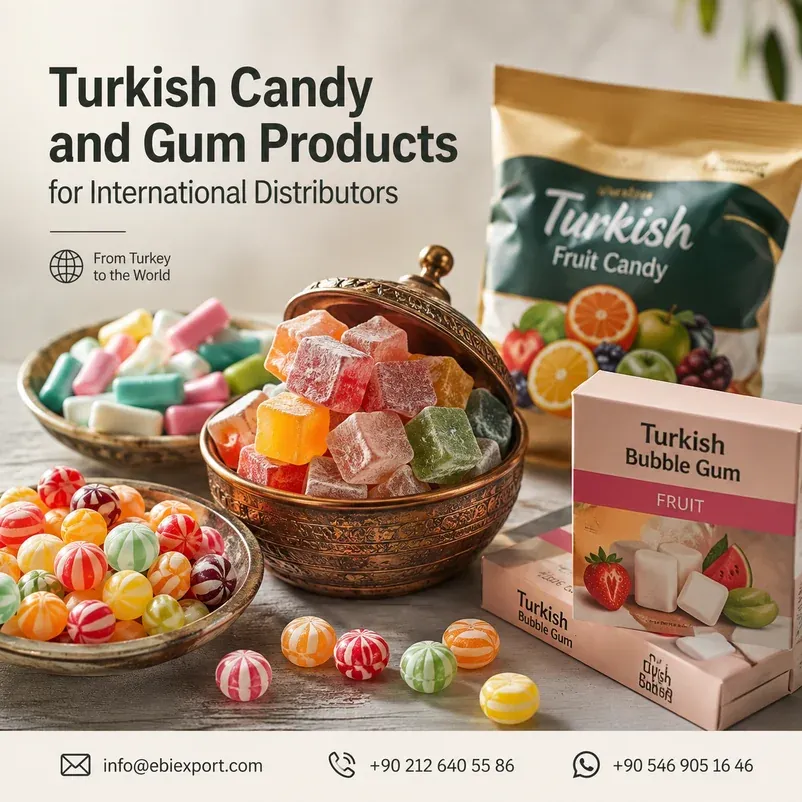
 Turkish Candy and Gum Products for International Distributors
Turkish candy and gum products can be useful categories for international distributors because they are small, fast-moving and easy to place in many retail environments. These products can serve impulse purchases, children’s sections, checkout areas, convenience stores, supermarkets, ethnic grocery stores and wholesale snack networks. For importers who want practical confectionery products from Turkey, candy and gum can add movement, color and variety to a broader FMCG portfolio.
Candy and gum products do not usually need long explanations. Customers understand them quickly, compare flavors easily and often buy them with little planning. This makes the category attractive for distributors that need products suitable for many small retail points. Turkish Food Exporter, as an Ebi Export brand, helps international buyers evaluate Turkish candy, gum and related snack products for wholesale and retail markets.
Candy and gum are classic impulse products. They are often bought near checkout counters, in mini markets, convenience stores, school-area shops, petrol station markets and small grocery stores. Customers may add them to the basket without planning, which makes them valuable for retailers trying to increase small-ticket sales.
For distributors, this is useful because candy and gum can be sold to many different store types. A product that fits checkout areas, snack shelves and children’s sections gives the wholesaler more opportunities. It may not take much shelf space, but it can create steady movement when the price, flavor and packaging are right.
The Turkish candy category and Turkish gum category can help buyers build a more complete confectionery and snack range from Turkey. These products can also be paired with chocolate, wafers, cakes, beverages and chips.
Candy products from Turkey may include hard candies, soft candies, fruit-flavored sweets, jelly-style products, filled candies, lollipops or other confectionery items depending on availability. For importers, the main advantage is variety. Different flavors, colors, pack sizes and price points can serve different retail channels.
Candy is especially useful for children’s sections, checkout shelves and small impulse displays. A supermarket may use candy in a confectionery aisle or promotional area. A mini market may place it near the counter. An ethnic grocery store may include it as part of a wider Turkish sweets and snack range.
Buyers should choose candy products according to local taste preferences. Fruit flavors may work broadly, while more unusual flavors may need testing. A first order should include familiar options and a small number of discovery products. Too much variety can look cheerful in the box but confusing in the warehouse.
Gum is one of the most compact and practical FMCG products for distributors. It can be sold in checkout areas, convenience stores, kiosks, petrol station markets, school-area shops and supermarkets. Customers often buy gum quickly, and the product usually occupies little shelf space compared with larger snack categories.
Gum products may include mint flavors, fruit flavors, sugar-free options, coated pieces, stick formats or other retail styles depending on availability. Importers should choose formats according to their target channel. Convenience stores may prefer small packs with quick movement, while supermarkets may carry multipacks or family-size options.
For wholesalers, gum can be a useful add-on product. It may not dominate the shipment, but it can support a complete confectionery offer. A distributor selling chips, wafers, chocolate, candy and gum has a stronger snack portfolio than one selling only a few large products.
Candy and gum are strongest when they are placed where customers make quick decisions. Checkout counters, small display stands, cashier areas and snack corners can all support impulse sales. The product must be easy to see, easy to understand and affordable enough for quick purchase.
Packaging should communicate flavor quickly. Bright colors, clear product names and suitable pack sizes can help customers decide faster. If the product is too difficult to understand, impulse sales become weaker. A checkout product has only a few seconds to win attention; it cannot ask for a meeting.
Importers should consider how retailers will display candy and gum before choosing products. Products suitable for hanging displays, counter boxes or small shelf trays may be more practical for certain channels. Display format can affect sales almost as much as flavor.
Candy and gum work well as part of a larger snack and confectionery range. Importers can pair them with Turkish chocolate products, wafers, cakes, biscuits, crackers and chips. This creates a more complete snack offer for supermarkets, mini markets and convenience retailers.
The Turkish wafer category can support candy and gum orders by adding light sweet snack products. Buyers can also include biscuits, cakes and chocolate to create different price points and consumption occasions. Customers do not always enter a store planning to buy sweets, but a good snack shelf gives them reasons.
For distributors, a mixed confectionery range is easier to sell to retailers. A store owner may not order a full shipment of candy alone, but candy, gum, wafers, chocolate and drinks together can make a stronger purchase.
Candy and gum can also be part of a wider snack-and-beverage portfolio. Chips, fruit juice, iced tea, soda and bottled water can all support the same quick-consumption retail channels. A customer buying a drink may add gum. A customer buying chips may add candy or chocolate.
Importers can combine candy and gum with Turkish chips products and Turkish fruit juice products to create a practical FMCG offer for convenience stores and small retailers. This helps wholesalers serve more shelf needs from one supply plan.
The best distributor offer is not a random assortment. It should be built around how retailers sell: quick snacks, drinks, small sweets, family snacks and everyday grocery products. When the product groups follow real shopping behavior, sales conversations become easier.
Packaging is central to candy and gum export. Products should arrive fresh, clean and undamaged. Importers should review package size, units per display box, units per carton, carton dimensions, gross weight, net weight, shelf life, barcode details and storage conditions before confirming an order.
Candy may be sensitive to heat, humidity or crushing depending on product type. Gum may require protection from heat and package damage. Display boxes should remain presentable because many retailers place them directly near checkout counters. A damaged counter display loses value before the customer even sees the product.
Carton planning also affects wholesale efficiency. Candy and gum are small products, but they may involve many units. Buyers should understand how products are packed, counted and handled in the warehouse. Small items can create large confusion when details are unclear.
Different markets may prefer different candy and gum products. Some countries favor mint gum, while others prefer fruit flavors. Some markets respond well to sour candy, while others prefer classic sweet flavors. Children’s products, family packs and single-serve formats may also perform differently depending on the channel.
Importers should define their retailer network before choosing products. A distributor serving school-area shops may need affordable small packs. A supermarket supplier may need branded multipacks and clear shelf packaging. An ethnic grocery importer may prefer Turkish confectionery products that add variety to the store’s existing sweets range.
The best first order should be balanced and measurable. Buyers can test several candy types, a few gum products and related snack items. After the products reach the market, reorder behavior will show which items deserve more space.
Before importing Turkish candy and gum products, buyers should review destination-country food labeling rules. These products may require ingredient lists, allergen information, nutrition facts, local language labels, origin details, importer information and barcode data depending on the market.
Some candy products may contain gelatin, coloring agents, flavorings, allergens or other ingredients that require special attention. Gum products may include sweeteners or additives that should be checked according to local regulations. The exporter can provide product information, but the importer should confirm compliance with customs brokers or official authorities.
This step is especially important when products are sold to children or placed in mass retail channels. Compliance and label clarity protect the buyer, the retailer and the customer.
Turkish Food Exporter supports international buyers looking for Turkish candy and gum products for distribution markets. Buyers can evaluate candy and gum together with chocolate, wafers, biscuits, chips, beverages, tea, coffee and other Turkish FMCG categories.
For distributors, candy and gum can add useful impulse power to a wider product range. They are compact, familiar and suitable for many retail channels. With the right flavors, packaging and display formats, they can help retailers increase small-ticket sales and strengthen snack shelves.
Turkish candy and gum products can become steady items for international distributors when selected with market fit, carton planning and compliance in mind. Turkish Food Exporter helps buyers approach this category with practical sourcing and export-focused product planning from Turkey.