
EBİ EXPORT is a foreign trade company that provides services to hypermarkets, fast moving consumer goods suppliers, ethnic markets and wholesalers. We are exporting to more than 20 different countries.
EBİ EXPORT is a foreign trade company that provides services to hypermarkets, fast moving consumer goods suppliers, ethnic markets and wholesalers. We are exporting to more than 20 different countries.
It is an Ebi Export Brand
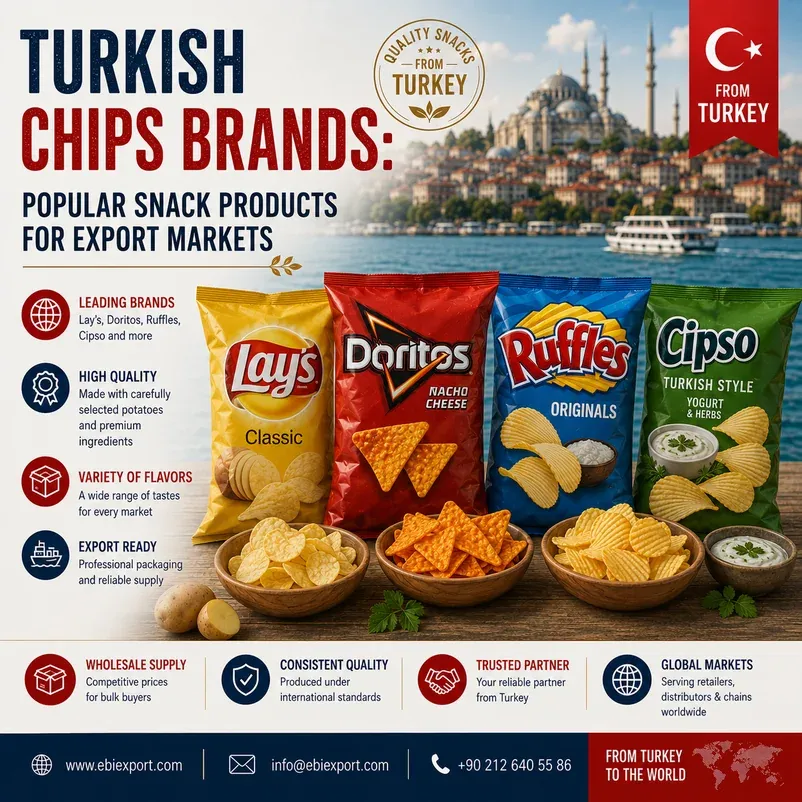
 Turkish Chips Brands: Popular Snack Products for Export Markets
Turkish chips brands have become an attractive category for importers, wholesalers and retail buyers who want fast-moving snack products with strong shelf appeal. Chips are easy to understand, easy to display and easy for customers to try. This makes them one of the most practical product groups for international grocery stores, ethnic markets, supermarkets, convenience stores and snack distributors looking for FMCG products from Turkey.
For many buyers, chips are not just a small side category. They are a useful entry point into Turkish snack supply. A buyer can start with potato chips, corn snacks, tortilla chips and flavored crisps, then expand into biscuits, wafers, chocolate, candy and beverages. Turkish Food Exporter, as an Ebi Export brand, helps international buyers source Turkish chips brands and related snack products for wholesale and retail markets.
Snack products travel well commercially because they fit many types of retail environments. A supermarket can place chips in the snack aisle, a grocery store can display them near beverages, and a convenience store can use smaller packs for impulse purchases. For importers, this flexibility matters. Products that can work in more than one sales channel reduce risk and make distribution easier.
Turkey has a strong snack culture and a wide range of packaged chips products. Buyers can find classic potato chips, ridged chips, flavored potato chips, corn puffs, cheese snacks, spicy snacks, tortilla chips and regional flavor options. This variety allows distributors to create a more interesting shelf instead of offering only one standard product type.
Another reason Turkish chips are attractive is brand familiarity. Some brands supplied from Turkey are already known by international consumers, while others can bring a new taste experience to local markets. A snack shelf needs both familiarity and discovery. Too much familiarity becomes boring; too much novelty becomes risky. The best product mix usually sits between the two.
The Turkish chips category includes different snack styles that can serve different customer preferences. Potato chips are usually the safest starting point because they are recognized in almost every market. Classic salted, cheese, onion, ketchup, spicy and yogurt-herb style flavors can be used to test local demand.
Tortilla chips are another useful product group. They can appeal to younger customers, snack lovers and buyers looking for party-style products. Flavored tortilla chips are especially suitable for markets where spicy and bold snack profiles perform well. Products such as Doritos-style tortilla chips can create strong visual impact on the shelf because customers already understand the format.
Corn snacks and puffed snacks also have value. These products are often affordable, easy to consume and suitable for children, families and casual snacking. Brands and products such as Cheetos-style cheese snacks, corn puffs and flavored corn snacks can help importers create a wider snack section.
International buyers often look for recognizable names when building a snack category. Products such as Ruffles, Doritos, Lays and Cheetos supplied from Turkey can be attractive because they already carry consumer awareness in many markets. This can make the first sales conversation easier for distributors and retailers.
A buyer who wants to test Turkish snack supply may begin with well-known chips products before adding more local or regional Turkish snack items. This strategy is sensible because it gives the retailer a familiar foundation. Once customers are already visiting the snack shelf, more distinctive Turkish products can be introduced next to recognizable brands.
There is also demand for products such as Çerezza, Patos, Cipso and other Turkish snack options in different markets. These products can help ethnic grocery stores and specialty retailers offer something more specific than standard global snack brands. For stores serving Turkish, Balkan, Middle Eastern or Central Asian communities, these familiar snack names may carry emotional value as well as commercial value.
Choosing chips for export is not only about picking flavors that look exciting. Importers should think about package size, carton quantity, price level, shelf life, target customer and retail channel. A small convenience store may prefer compact packs with strong impulse appeal. A supermarket may need family-size packs or a broader flavor range. A wholesaler may focus on carton movement and repeat availability.
Flavor selection should also be handled carefully. Classic flavors are usually safer for first orders because they are easier for customers to understand. Salted, cheese, barbecue-style, onion, ketchup and spicy options can work in many markets. More unusual flavors may perform well too, but they should be tested with smaller quantities first.
Packaging design matters as well. Chips are a visual category. Customers often decide quickly, and the package must communicate flavor, brand and product type without effort. Importers should review whether the packaging fits the destination market and whether label requirements need attention before shipment.
Ethnic markets often need products that remind customers of home. Turkish chips brands can play that role very well. A customer may enter the store for tea, tomato paste or Turkish delight, but leave with familiar snacks as well. This makes chips a strong basket-building category.
International grocery stores can also benefit from Turkish chips because snacks are easy trial products. A customer may not immediately buy a large traditional food item, but they may try a bag of chips out of curiosity. If the flavor is good and the price is reasonable, repeat purchase can follow naturally.
For stores that already carry Turkish products such as tomato paste, pasta, tea, coffee, Turkish delight and beverages, adding chips creates a more complete retail offer. It makes the Turkish product section feel alive instead of purely traditional.
Distributors need snack products that can move through different retail points. Chips are useful because they can be sold to supermarkets, small markets, kiosks, convenience stores, ethnic groceries and regional wholesalers. This gives distributors more flexibility when planning sales routes.
Before placing an order, distributors should check carton quantities, pallet structure, product volume, expiry dates and loading conditions. Chips are lightweight but bulky, so logistics planning is important. A product may have a good unit price, but if it uses container space poorly, the final landed cost may become less attractive.
This is why working with an experienced exporter matters. A reliable supplier should help buyers understand which products are practical for shipment, which options are suitable for mixed containers and which categories can be paired with chips to improve order value.
Chips can be the first step, but a strong snack portfolio should usually include more than chips alone. Importers can combine chips with biscuits and crackers, wafers, cakes, chocolate, gum and candy products. This creates a stronger snack aisle and gives retailers more options for different customer groups.
Pairing chips with beverages is also a smart retail move. Soft drinks, iced tea, fruit juice and bottled water can sit naturally beside snack products. A customer buying chips may also buy a drink, especially in convenience stores and small markets. For importers, this means chips can support wider FMCG sales instead of standing alone.
Turkish Food Exporter offers access to chips, snacks and related product categories from Turkey. Buyers can create a mixed FMCG order that includes snacks, drinks, staple foods and household products depending on their market needs.
An export-ready chips product should have clear packaging, sufficient shelf life, stable supply, practical carton structure and suitable documentation. Importers should not rely only on photos or brand names. The basic commercial details must be checked before the order is confirmed.
Buyers should ask about package weight, carton count, expiry date, flavor list, barcode, available quantity and shipment timing. If products will be sold in regulated retail environments, label language and local compliance should also be reviewed with the importer’s own customs or regulatory consultant.
The best exporters understand that these questions are normal. In international trade, details are not decoration; they are the rails the shipment runs on. When information is clear, the buyer can calculate pricing, plan shelf placement and avoid unpleasant surprises after the goods arrive.
Turkish Food Exporter helps international buyers source Turkish chips brands and snack products for export markets. The company supports supermarkets, ethnic markets, wholesalers and distributors that want to build reliable supply from Turkey across food and FMCG categories.
For buyers interested in chips, the opportunity is wider than one product group. A strong order can include potato chips, tortilla chips, corn snacks, biscuits, wafers, candy, beverages and other grocery products. This allows importers to test multiple categories and discover which products perform best in their own market.
Turkish chips brands can bring both familiarity and variety to global snack shelves. With the right product mix, clear export planning and reliable communication, importers can turn Turkish snack products into a steady part of their retail or wholesale business. Turkish Food Exporter helps make that process more organized, more practical and better suited to real market demand.