
EBİ EXPORT is a foreign trade company that provides services to hypermarkets, fast moving consumer goods suppliers, ethnic markets and wholesalers. We are exporting to more than 20 different countries.
EBİ EXPORT is a foreign trade company that provides services to hypermarkets, fast moving consumer goods suppliers, ethnic markets and wholesalers. We are exporting to more than 20 different countries.
It is an Ebi Export Brand
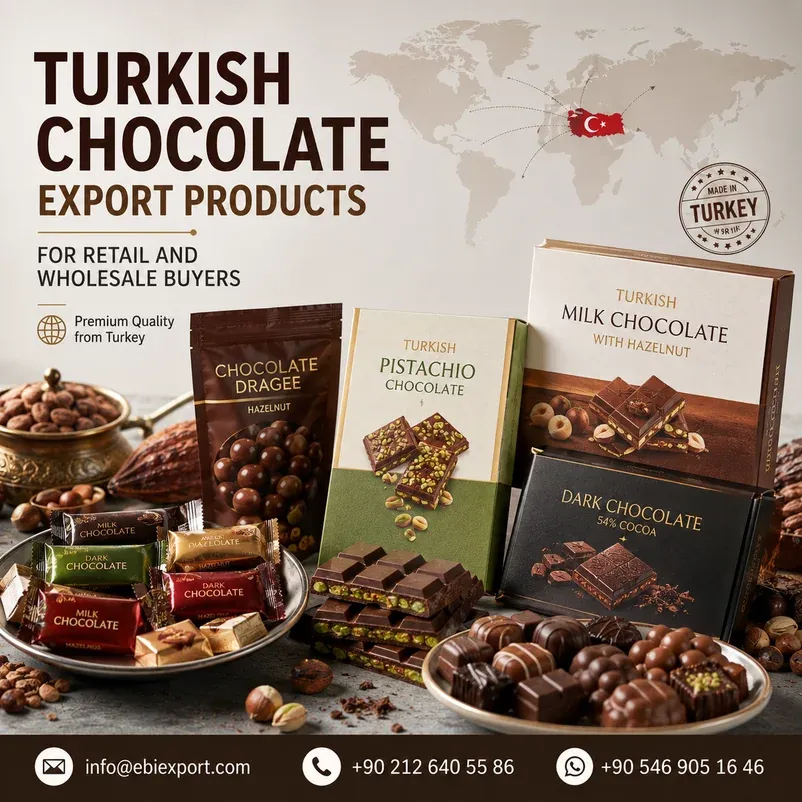
 Turkish Chocolate Export Products for Retail and Wholesale Buyers
Turkish chocolate export products can be attractive for retail and wholesale buyers because chocolate is one of the most familiar confectionery categories in global grocery trade. Customers understand it quickly, retailers know where to place it, and distributors can sell it through many different channels. For supermarkets, ethnic grocery stores, mini markets, convenience shops, wholesalers and snack distributors, chocolate products from Turkey can support both everyday sales and seasonal demand.
Chocolate has a different commercial personality from chips, biscuits or beverages. It can be an impulse product, a family snack, a gift item, a checkout product, a tea-time companion or part of a wider confectionery shelf. This flexibility gives importers room to build a product range according to their market. Turkish Food Exporter, as an Ebi Export brand, helps international buyers evaluate Turkish chocolate products and related snack categories for wholesale and retail supply.
Chocolate is a useful export category because it already has global demand. Buyers do not need to explain the basic product to customers. The real competition happens around taste, packaging, price, brand familiarity, format and shelf placement. A good chocolate range can bring movement to supermarkets, small markets, ethnic grocery stores and convenience retailers.
For importers, Turkish chocolate products can be included in a wider FMCG shipment with snacks, wafers, biscuits, candy, beverages, tea and coffee. This makes the category practical for distributors that want more than one product group from Turkey. Chocolate may be small on the shelf, but it can pull strong attention when the package, price and flavor are right.
The Turkish chocolate category can be reviewed by buyers looking for export-ready confectionery options from Turkey. Importers should compare products by format, package size, carton structure, shelf life and destination-market suitability before placing an order.
Chocolate products can appear in many retail formats. Chocolate bars are usually the easiest to understand because they fit impulse purchases and everyday snacking. Filled chocolates can add more variety with cream, caramel, wafer, nut or fruit-style centers depending on availability. Smaller snack-size products may work well near checkout areas, while larger packs may suit family grocery shelves.
Importers should choose formats according to the sales channel. A convenience store may prefer small chocolate bars that customers buy quickly with drinks. A supermarket may need multipacks, family packs or a broader confectionery range. An ethnic market may choose Turkish chocolate products that sit beside tea, coffee, biscuits and traditional sweets.
A first order should not be built only around personal taste. Chocolate is emotional for customers, but wholesale buying must stay practical. Buyers should test several formats, measure sales and then increase the products that receive real reorder demand.
Chocolate often performs well when paired with wafer products. Wafers are light, familiar and easy to sell, while chocolate adds richer flavor and stronger impulse value. For retailers, these two categories can create a sweet snack section that feels complete without becoming complicated.
The Turkish wafer category can support chocolate orders from Turkey. Importers can combine chocolate bars, chocolate-coated wafers, plain wafers, biscuits and candy to create a stronger confectionery shelf. This gives retailers more options for different customers, from children and families to office snack buyers and tea-time shoppers.
For wholesalers, chocolate and wafers together can also make the sales offer easier. A store owner may not want to buy only one chocolate product, but a mixed sweet snack range with chocolate, wafers, biscuits and candy feels more useful.
Supermarkets usually need chocolate products with clear packaging, stable supply and sensible price positioning. Chocolate can be placed in confectionery aisles, snack sections, checkout areas, seasonal gift displays or promotional shelves. Each placement creates a different buying behavior.
Checkout chocolate products should be easy to pick up quickly. Family packs should offer value and convenience. Gift-style products need stronger visual appeal. Standard chocolate bars should compete clearly on flavor, size and price. Importers should decide which retail role each product will play before ordering.
A supermarket chocolate range may also be supported by Turkish biscuits and crackers, wafers, cakes and beverages. These products can help retailers build a wider snack section from Turkey instead of placing chocolate alone.
Ethnic grocery stores can use Turkish chocolate products to strengthen a wider Turkish product section. Customers who buy Turkish tea, coffee, tomato paste, pasta, sweets or snacks may also be interested in chocolate products from Turkey. In these stores, chocolate can serve both familiarity and discovery.
Some customers may look for chocolate products they remember from Turkey or regional markets. Others may try them because they are already shopping in the Turkish grocery section. This gives importers a useful advantage. The product does not have to fight alone; it can benefit from the trust created by the surrounding Turkish products.
For ethnic markets, chocolate can be paired with Turkish tea products, coffee, Turkish delight, halva, biscuits and wafers. This kind of shelf planning helps customers buy around real consumption moments: tea, guests, family snacks and small treats.
Chocolate becomes stronger when it is connected with other products customers naturally consume at the same time. Tea and coffee are important companions. A customer buying coffee may add chocolate for guests or office use. A customer buying tea may choose biscuits, wafers or chocolate for tea-time.
Importers can pair chocolate with Turkish coffee products and Turkish tea to create a more complete hot beverage and sweet snack range. Turkish delight and halva can also sit near chocolate, especially in ethnic markets and specialty food stores.
This matters because good retail is not only about stocking products. It is about placing related needs close enough for customers to notice. A shelf with tea, coffee, chocolate, wafers and Turkish delight tells a clearer story than one lonely chocolate box waiting for destiny.
Packaging is critical in chocolate export. Chocolate products must arrive clean, attractive and undamaged. Importers should review package size, units per carton, carton dimensions, gross weight, net weight, barcode details, shelf life, storage conditions and pallet structure before confirming an order.
Chocolate is more sensitive than many dry snack products. Heat, poor storage and rough handling can affect texture, shape and appearance. Depending on the destination country and season, importers may need to consider temperature conditions during transport and warehousing. A melted chocolate product is not a small defect; it is a direct attack on shelf trust.
Retail buyers should also check packaging clarity. Flavor, product type, brand identity and size should be easy to understand. If the product contains nuts, wafer, milk, caramel or other fillings, this should be clear for both customers and compliance purposes.
Wholesale chocolate orders should be planned with controlled variety. A first shipment may include several chocolate bars, one or two filled products, wafer-supported chocolate items and related sweet snacks. This helps buyers test demand without creating too many similar SKUs.
Importers should track which formats sell fastest, which package sizes retailers reorder, whether chocolate performs better near checkout or in snack aisles, and whether customers prefer familiar or more distinctive flavors. These answers should guide the second order.
Distributors should also check product continuity. If a chocolate product sells well, can it be supplied again? Are package sizes stable? Are seasonal changes likely? Retailers dislike building customer interest around products that vanish after one shipment.
Before importing chocolate products from Turkey, buyers should review destination-country food labeling rules. Chocolate products may require ingredient lists, nutrition information, allergen declarations, local language labels, origin details, importer information and barcode data depending on the market.
Allergen information is especially important. Chocolate may contain milk, nuts, soy, gluten, sesame or other ingredients depending on the product. Importers should request accurate product specifications before shipment. The exporter can provide product information, but local compliance should be confirmed with customs brokers or official authorities.
Turkish Food Exporter supports international buyers looking for Turkish chocolate export products for retail and wholesale markets. Buyers can evaluate chocolate together with wafers, biscuits, candy, chips, beverages, tea, coffee, Turkish delight and other FMCG categories from Turkey.
For importers, chocolate works best when selected with clear retail purpose. Some products should serve impulse sales. Some should support family shopping. Some should pair with tea and coffee. Some may work better as seasonal or gift products. With the right mix, chocolate from Turkey can become a useful and repeatable category for supermarkets, ethnic markets, wholesalers and snack distributors.
Turkish chocolate export products can strengthen international grocery shelves when buyers focus on packaging, shelf life, market fit and reliable supply. Turkish Food Exporter helps buyers approach this category with practical sourcing, organized product selection and export planning designed for real retail and wholesale demand.