
EBİ EXPORT is a foreign trade company that provides services to hypermarkets, fast moving consumer goods suppliers, ethnic markets and wholesalers. We are exporting to more than 20 different countries.
EBİ EXPORT is a foreign trade company that provides services to hypermarkets, fast moving consumer goods suppliers, ethnic markets and wholesalers. We are exporting to more than 20 different countries.
It is an Ebi Export Brand
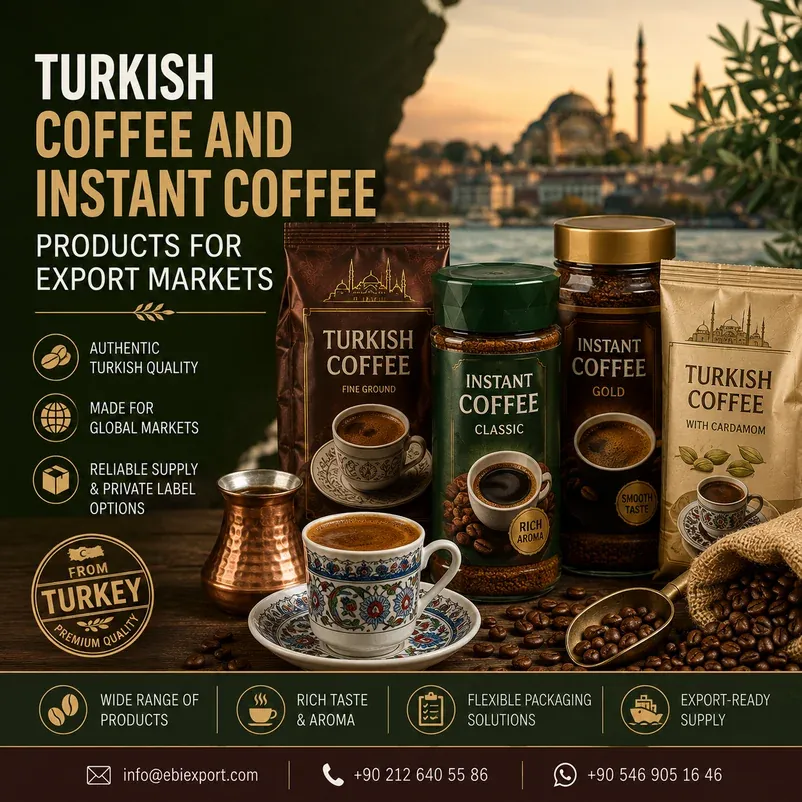
 Turkish Coffee and Instant Coffee Products for Export Markets
Turkish coffee and instant coffee products can create strong opportunities for importers who want a compact, familiar and repeat-purchase beverage category from Turkey. Coffee is not only a drink on the shelf; it is a daily ritual, an office habit, a hospitality product and a retail category that can connect easily with sweets, biscuits, chocolate and breakfast items. For international grocery stores, wholesalers, ethnic markets and FMCG distributors, coffee products from Turkey can become a useful part of a wider food and beverage import plan.
Coffee buyers usually need two different kinds of value. Traditional Turkish coffee can bring cultural identity, strong flavor and specialty shelf appeal. Instant coffee products can bring speed, convenience and mass-market usability. When these two groups are planned together, importers can serve both customers who want authentic taste and customers who want practical daily consumption. Turkish Food Exporter, as an Ebi Export brand, helps international buyers evaluate Turkish coffee, instant coffee and related grocery categories for wholesale and retail supply.
Coffee is one of the most durable grocery categories because it belongs to routine. Customers may change snack flavors or test new beverages, but coffee often becomes part of the morning, office break or evening habit. This gives importers a category with repeat potential. A good coffee product can return to the shopping basket many times after the first trial.
The Turkish coffee category can support different buyer profiles. Ethnic grocery stores may focus on traditional Turkish coffee and familiar brands. Supermarkets may prefer retail-ready packages and instant coffee products. Wholesalers may need carton efficiency, stable supply and products suitable for different retailer types.
Traditional Turkish coffee has a clear identity. It is usually finely ground and prepared in a specific brewing style that is closely connected with Turkish culture. For ethnic markets, this product can be essential because customers already know how to prepare and drink it. It may also attract customers from Middle Eastern, Balkan, Mediterranean and regional communities where similar coffee traditions are appreciated.
For specialty grocery stores, Turkish coffee can be positioned as an authentic imported product. The packaging should explain the product clearly for customers who may not know the brewing method. If the market includes new customers, smaller packages or simple preparation information can help reduce hesitation. A product with tradition still needs clear retail communication.
Instant coffee products serve a different need. They are quick, practical and easy to use at home, in offices, hotels, cafes, small shops and travel environments. For importers, instant coffee can be attractive because it is familiar in many countries and easier for general customers to understand than traditional brewing products.
Instant coffee can include jars, sachets, stick packs, coffee mixes and flavored options depending on availability. Stick coffee and single-serve formats can work especially well in convenience retail and office supply channels. Larger jars may be better for home use and supermarket shelves. The best format depends on how customers buy coffee in the destination market.
Packaging is critical in coffee export because customers often judge coffee by trust, freshness and clarity. The package should communicate the product type quickly: traditional Turkish coffee, instant coffee, coffee mix, flavored coffee or single-serve product. If the customer cannot understand the difference, the shelf loses momentum.
Importers should review package weight, carton quantity, barcode, shelf life, language details and storage requirements before ordering. Coffee is more compact than bottled beverages, which can make it attractive for mixed FMCG shipments. Still, it should be protected from moisture, heat and strong odors because aroma and quality matter.
Coffee becomes stronger when it is sold beside products that naturally fit the same customer habit. Turkish delight, chocolate, biscuits, wafers, cakes and halva can all support coffee sales. A customer buying coffee may also buy a sweet product for guests, breakfast or tea-time style consumption.
Importers can pair coffee with biscuits and crackers, chocolate products and Turkish delight to create a stronger retail section. This approach helps stores sell coffee as part of a complete grocery experience rather than a single isolated item.
Coffee can also be imported together with tea products. Many stores that sell Turkish coffee can also benefit from black tea, herbal tea and related beverage products. The Turkish tea category can support buyers who want a full hot beverage section from Turkey.
For ethnic grocery stores, tea and coffee together create a familiar shopping area. For supermarkets, they can form an international beverage shelf. For wholesalers, the combination creates more selling options for different retailers. Tea may carry daily family consumption, while coffee can serve office, hospitality and specialty demand.
Before importing Turkish coffee or instant coffee products, buyers should request complete product information. Important details include brand name, product type, package size, ingredients, carton count, shelf life, barcode, storage conditions, available stock and shipment timing. For coffee mixes, ingredient and allergen details should be checked carefully.
Destination-country requirements should also be reviewed before shipment. Coffee products may require local language labeling, nutrition information, ingredient declarations, importer details or other compliance points depending on the market. Turkish Food Exporter can support product and export information, while importers should confirm local rules with customs brokers or relevant authorities.
Turkish Food Exporter supports international buyers looking for Turkish coffee and instant coffee products for export markets. Buyers can evaluate coffee together with tea, sweets, biscuits, chocolate, snacks, beverages and staple foods from Turkey.
For importers, coffee works best when product type, packaging and sales channel are selected with care. Traditional Turkish coffee can bring identity and specialty value. Instant coffee can bring convenience and wider daily use. With the right mix, coffee products from Turkey can become reliable items for supermarkets, ethnic markets, wholesalers and distributors.