
EBİ EXPORT is a foreign trade company that provides services to hypermarkets, fast moving consumer goods suppliers, ethnic markets and wholesalers. We are exporting to more than 20 different countries.
EBİ EXPORT is a foreign trade company that provides services to hypermarkets, fast moving consumer goods suppliers, ethnic markets and wholesalers. We are exporting to more than 20 different countries.
It is an Ebi Export Brand
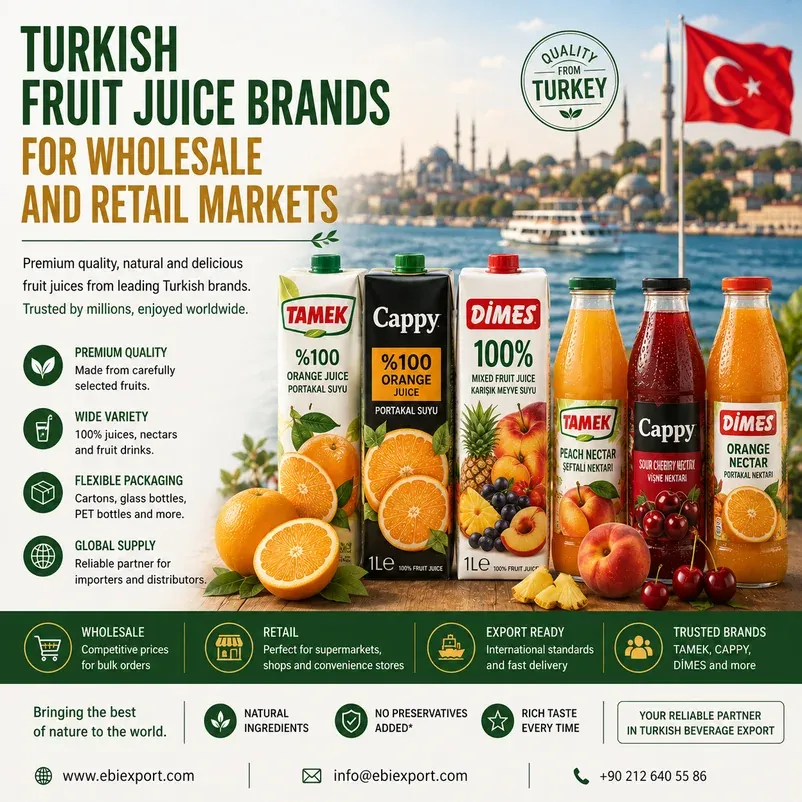
 Turkish Fruit Juice Brands for Wholesale and Retail Markets
Turkish fruit juice brands can be strong options for wholesale and retail markets because fruit juice is familiar, flexible and easy to place on the shelf. It can serve families, children, students, office workers, convenience shoppers and grocery customers looking for practical beverage products. For importers and distributors, fruit juice from Turkey can become part of a wider beverage strategy that includes bottled water, soda, iced tea, soft drinks and snack pairings.
Fruit juice is not a product that needs heavy explanation. Customers already understand orange, cherry, peach, apricot, apple, grape, pomegranate and mixed fruit flavors. The real work for importers is choosing the right brand, package size, flavor mix, carton structure and market position. Turkish Food Exporter, as an Ebi Export brand, helps international buyers source Turkish fruit juice products and related beverage categories for wholesale and retail supply.
Fruit juice is one of the most practical beverage categories for international buyers. It can be sold in supermarkets, ethnic markets, mini markets, convenience stores, school-area shops, cafes, hotels and wholesale channels. This gives importers more flexibility than categories that only fit one narrow retail environment.
For grocery stores, fruit juice can support daily household shopping. For convenience stores, smaller packages can support quick purchases. For ethnic markets, Turkish fruit juice brands can sit naturally beside Turkish snacks, tea, coffee, sweets and staple foods. For distributors, the category can be combined with other fast-moving beverage and snack products to create a broader FMCG offer.
The Turkish fruit juice category includes different flavors and package formats that can help buyers build a balanced retail selection. The strongest choices usually depend on the destination market, customer age group, sales channel and price expectation.
International buyers often look for Turkish fruit juice brands that can create confidence on the shelf. Products such as Tamek, Cappy, Dimes and other beverage options from Turkey can be evaluated according to availability, flavor range and packaging format. Recognizable names may help retailers introduce the category more easily, especially in stores that already carry Turkish or regional grocery products.
Brand selection should be practical, not emotional. A familiar brand can help, but the product still needs the right shelf life, carton quantity, package size and landed cost. A beautiful bottle with bad freight economics is not a business plan; it is decoration with paperwork.
Importers should compare products by customer use. A family grocery store may need larger cartons or bottles. A convenience store may prefer small single-serve packs. A wholesaler may want products that can move through many types of retailers. The right fruit juice brand is the one that fits the route to market.
Flavor choice is one of the most important parts of fruit juice import. Classic flavors such as orange, apple, peach, cherry and grape are usually easier to introduce because customers already know them. These flavors can form the safe foundation of a first order.
More distinctive flavors such as apricot, pomegranate, sour cherry, mango, pineapple, mixed fruit or tropical blends can add variety and help the shelf feel more interesting. These products may perform especially well in ethnic markets or stores where customers enjoy regional flavors. However, importers should test them carefully before ordering too much.
A strong fruit juice portfolio should not contain only safe flavors, and it should not contain only unusual flavors either. The best mix usually combines familiar products with a few discovery options. Retail needs both comfort and curiosity. Too much comfort becomes dull; too much curiosity becomes slow-moving stock.
Packaging size should match the way customers buy. Small packs can work well for children, lunchboxes, school stores, offices, cafes and quick-consumption channels. Medium-size bottles or cartons may be suitable for mini markets and daily grocery shopping. Larger family-size packages can work better in supermarkets and household retail.
Wholesale buyers should ask for package volume, units per carton, carton weight, pallet details, barcode information and shelf life before confirming an order. Fruit juice may seem simple, but the packaging structure directly affects storage, transport, pricing and retail presentation.
The package should also speak clearly to the customer. Flavor, juice type, size and product identity should be easy to understand. If a customer needs too much time to understand the product, the shelf loses momentum. In beverage retail, quick recognition matters.
Supermarkets usually need a more structured fruit juice range. They may want multiple flavors, family-size options, single-serve products and recognizable brands. A supermarket buyer will also care about shelf appearance, carton stability, repeat supply and price positioning next to local and imported alternatives.
For supermarkets, fruit juice can be placed in beverage aisles, breakfast sections, children’s lunchbox areas or promotional displays. It can also be paired with snacks and biscuits during campaigns. A well-planned product group can make fruit juice feel like part of daily shopping rather than a random imported item.
Importers serving supermarkets should start with a focused selection. Orange, apple, peach, mixed fruit and cherry-style products can create a practical foundation. After testing the market, the buyer can add pomegranate, apricot, tropical blends or other flavors according to sales performance.
Ethnic grocery stores can be strong channels for Turkish fruit juice brands. Customers who buy Turkish tea, tomato paste, pasta, snacks, Turkish delight or halva may also be interested in beverages from Turkey. Fruit juice helps complete the shopping basket and makes the store’s Turkish product section more active.
In ethnic markets, flavor familiarity can matter. Sour cherry, apricot, peach, pomegranate and mixed fruit products may carry stronger regional appeal than standard global flavors alone. Buyers should consider the cultural habits of their customer base before choosing the product mix.
Fruit juice can also support family shopping in ethnic markets. Parents may buy small packs for children, larger bottles for home use or multi-flavor selections for daily consumption. This makes fruit juice a useful category for stores that want repeat visits and broader basket value.
Fruit juice works naturally with snack products. Importers can pair it with Turkish chips, biscuits, crackers, wafers, cakes, chocolate and candy. This is especially useful for convenience stores and small markets where customers often buy drinks and snacks together.
A distributor that offers fruit juice together with biscuits and crackers can create a more attractive sales package for retailers. Store owners often prefer suppliers that can fill more than one shelf need. A beverage alone may be interesting; a beverage with snacks becomes a stronger retail conversation.
Fruit juice can also sit beside breakfast and pantry products. Turkish tea, coffee, jam, halva, wafers and family grocery items can all support a wider food section. A good shelf is not a pile of products; it is a small map of customer habits.
Fruit juice export requires careful logistics planning because beverages can be heavy and sometimes sensitive to package damage. Importers should review gross weight, net weight, carton dimensions, pallet structure, loading options and storage conditions. These details affect freight cost and final pricing.
If fruit juice is imported in bottles, buyers should consider breakage risk, carton protection and handling. If it is imported in cartons or PET packaging, they should review stacking strength and storage conditions. The goal is to receive products that are clean, stable and ready for retail shelves.
Fruit juice can be shipped as part of a mixed beverage order with Turkish bottled water, soda, iced tea and soft drinks. It can also be included in a wider FMCG shipment with snacks, staple foods, sweets, cleaning products and personal care items. This helps buyers create a broader import plan from Turkey.
Before ordering Turkish fruit juice products, buyers should request full product information. Important details include brand name, flavor, package size, juice percentage if applicable, ingredients, allergen information, carton quantity, shelf life, barcode, pallet details, available stock and shipment timing.
Importers should also check label requirements in the destination country. Beverage products may require nutrition information, ingredient declarations, local language labels, importer details or other compliance points depending on the market. The exporter can provide product information, but the importer should confirm local rules with customs brokers or relevant authorities.
Shelf life and storage conditions should be reviewed carefully. Retailers do not want short-dated products unless there is a clear fast-sale plan. A reliable exporter should provide transparent information so buyers can calculate sales timing and warehouse rotation properly.
Turkish Food Exporter supports international buyers looking for Turkish fruit juice brands and beverage products for wholesale and retail markets. Buyers can evaluate fruit juice together with bottled water, soda, iced tea, snacks, biscuits, staple foods and other FMCG categories from Turkey.
For importers, the best fruit juice strategy is built on clear product selection, suitable package sizes, realistic logistics and a balanced flavor mix. The category can serve families, convenience shoppers, ethnic markets and supermarkets when planned with care.
Turkish fruit juice brands can become reliable products for international grocery and wholesale supply when buyers focus on market fit rather than random variety. With the right export partner, fruit juice from Turkey can strengthen beverage shelves, support snack sales and become part of a broader Turkish FMCG product range.