
EBİ EXPORT is a foreign trade company that provides services to hypermarkets, fast moving consumer goods suppliers, ethnic markets and wholesalers. We are exporting to more than 20 different countries.
EBİ EXPORT is a foreign trade company that provides services to hypermarkets, fast moving consumer goods suppliers, ethnic markets and wholesalers. We are exporting to more than 20 different countries.
It is an Ebi Export Brand
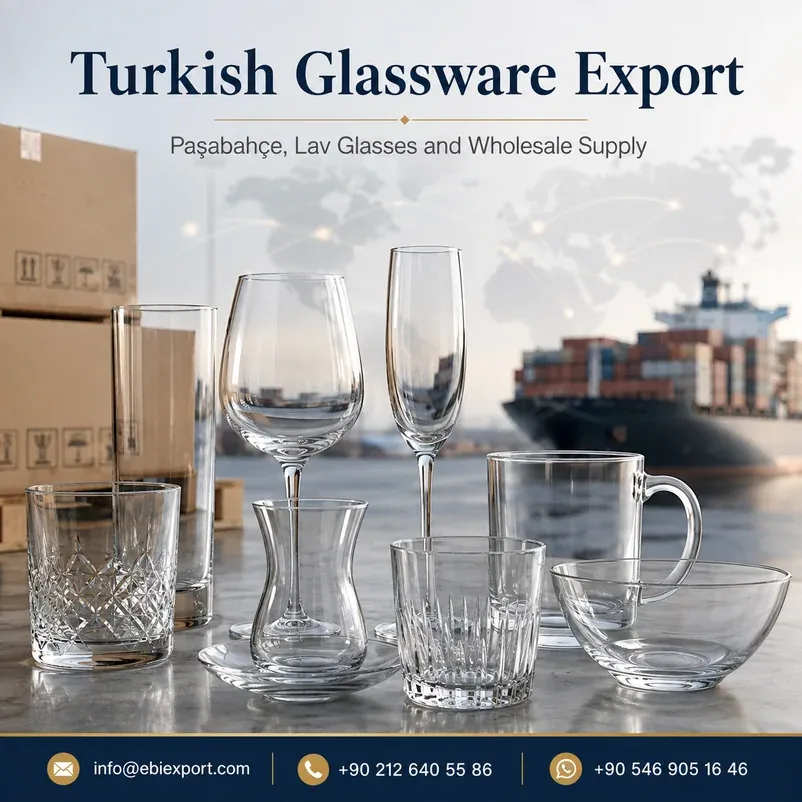
 Turkish Glassware Export: Paşabahçe, Lav Glasses and Wholesale Supply
Turkish glassware export can be a strong opportunity for international buyers who want practical, retail-ready and household-focused products from Turkey. Glassware is different from food, beverages or cleaning products because it belongs to both daily use and presentation. Customers buy glasses for homes, restaurants, cafes, hotels, gift sets, kitchen shelves and table service. For importers, wholesalers, supermarkets and household goods distributors, Turkish glassware can help build a wider FMCG and home products range.
Products such as Paşabahçe and LAV glasses from Turkey can be attractive because they are connected with table culture, household routines and retail familiarity. A good glassware range can serve everyday drinking needs, hospitality, restaurant supply and gift-oriented shopping. Turkish Food Exporter, as an Ebi Export brand, helps international buyers evaluate Turkish glassware products, packaging details and wholesale supply options for global markets.
Glassware is a product category with steady demand because it is used in almost every home and food service environment. Water glasses, tea glasses, juice glasses, dessert bowls, serving glasses and table sets can all serve different customer needs. Unlike highly seasonal products, basic glassware can remain relevant throughout the year when the range is selected properly.
For retailers, glassware is also useful because it can be sold in several sections. Supermarkets may place it in household aisles. Ethnic markets may use it to complete a Turkish kitchen and tableware section. Home goods stores may position it as practical everyday glassware. Restaurants, cafes and hotels may need durable and repeatable supply for service use.
The LAV glasses category and Paşabahçe category can be reviewed by buyers who want glassware products from Turkey for retail and wholesale markets. The product selection should be shaped by customer use, not only by appearance.
Paşabahçe is one of the best-known Turkish glassware names for many buyers and consumers. Brand recognition can be helpful when importers approach supermarkets, home goods stores, tableware retailers or ethnic markets. A recognizable name can make the first retail conversation easier because buyers already connect the product with glassware and table use.
For wholesale buyers, Paşabahçe products may be considered for different channels depending on availability. Basic drinking glasses can serve everyday household demand. More decorative sets may work for gift shelves or homeware sections. Restaurant-friendly products may be useful for food service distributors. The right selection depends on whether the buyer serves retail stores, hospitality businesses or both.
Importers should evaluate Paşabahçe glassware by product type, set quantity, carton structure, packaging protection, barcode, dimensions and shipment suitability. Glassware can look elegant on the shelf, but during transport it is brutally honest. If packaging is weak, the product will say so before it reaches the customer.
LAV glasses from Turkey can offer wide product variety for buyers looking for household and tableware items. The category may include different glass models, shapes, sizes and decorative options depending on current supply. For importers, this variety is useful because glassware buyers do not all want the same product. Some need simple water glasses, while others want colorful, patterned or table-focused sets.
The LAV range can be especially useful for supermarkets, home goods retailers, ethnic markets and wholesalers serving daily household needs. Basic glass sets may move well in general retail, while more decorative models may appeal to customers looking for design, gifting or kitchen renewal. Buyers should choose products according to the target shelf and customer profile.
A first LAV order should usually be focused. Importers can start with several practical glass sets, one or two more decorative options and products that fit the strongest sales channel. After the first shipment, reorder data can show which shapes, sizes and pack formats deserve more volume.
Supermarkets often carry glassware as part of household goods or kitchen sections. For this channel, products should be easy to understand, easy to display and suitable for everyday purchase. A simple six-piece glass set, a water glass pack or a tea glass group can be more effective than a complicated product range.
Retail packaging matters strongly in supermarkets. Customers should be able to see or understand the product clearly. Set quantity, glass size and use case should be visible. If the package does not explain what is inside, shoppers may not stop long enough to compare it. Household shelves are practical places; they reward clarity.
Price positioning is also important. Glassware competes with local products, imported alternatives and private label options in many markets. Buyers should calculate landed cost carefully before choosing the product range. A product may look attractive in Turkey, but it must still make sense after freight, customs, local transport and retailer margin.
Ethnic markets can use Turkish glassware to strengthen a wider Turkish product experience. Customers who buy Turkish tea, coffee, sweets, tomato paste, pasta or snacks may also be interested in Turkish tea glasses, water glasses or tableware products. This gives the retailer a chance to move beyond food and create a fuller household section.
For example, Turkish tea glasses can sit naturally beside Turkish tea products, coffee, Turkish delight and biscuits. Water glasses and serving products can be placed near kitchenware, gift items or household goods. When the shelf is planned with real use in mind, customers understand the product faster.
Glassware also has gift potential in ethnic markets. A customer may buy tea, sweets and a glass set together for guests, family use or a new home. This kind of pairing can increase basket value and make the store feel more complete.
Food service buyers may need glassware for a different reason. Hotels, cafes, restaurants and catering businesses usually care about durability, replacement availability, volume pricing and consistency. A restaurant does not want a glass model that disappears after the first order. Repeat supply matters because breakage is part of daily service life.
Importers serving hospitality channels should ask about product continuity, carton quantities, replacement planning and suitable models for heavy use. Decorative products may look beautiful, but food service buyers often prefer practical shapes that can be cleaned, stored and replaced easily.
This channel can be valuable for wholesale buyers because orders may be more structured. A cafe may need tea glasses. A hotel may need water glasses, juice glasses and room-service items. A restaurant supplier may need several formats. The importer should choose products according to actual service needs.
Packaging is the most important part of glassware export. A glass product must survive handling, pallet movement, container loading, shipping, customs inspection, warehouse storage and retailer delivery. If packaging is not strong enough, the product loses value before it reaches the shelf.
Importers should request detailed packaging information before ordering. Important details include units per box, inner packaging, carton dimensions, gross weight, net weight, pallet structure, stacking rules, barcode, product dimensions and breakage protection. These details help buyers calculate both cost and risk.
Glassware should not be loaded casually with heavy or unstable products. If glassware is part of a mixed FMCG shipment, the loading plan must protect it carefully. A box of glasses should not be treated like a carton of dry biscuits. One can forgive pressure; the other writes complaints in pieces.
Wholesale glassware supply depends on accurate carton planning. Buyers should understand how products are packed, how many sets are in each carton, how much space the cartons require and how fragile the load is. Glassware may not always be extremely heavy, but it can take space and require protection.
The buyer should also calculate landed cost with care. Product price, packaging, freight, customs, breakage allowance, warehouse handling and local delivery all affect profitability. In glassware trade, a low unit price can become less attractive if breakage risk or volume cost is high.
A practical first order may include several high-use models and limited decorative options. This allows the importer to test market demand without carrying too many fragile SKUs. After sales begin, the buyer can expand the range according to retailer feedback.
Glassware becomes stronger when it is connected with related Turkish food and beverage categories. Tea glasses can be paired with Turkish tea. Water glasses can be paired with beverage products. Dessert bowls or serving glasses can be paired with sweets, jam, Turkish delight and dessert products.
Importers can combine glassware with Turkish fruit juice products, tea, coffee, sweets and snacks to create a broader retail offer. For ethnic markets, this makes strong sense because customers often buy food and household products from the same store.
The Copper Series category may also support buyers looking for tableware-style products beyond standard glassware. A mixed household and grocery range can help retailers build a more attractive Turkish product section.
Before importing Turkish glassware products, buyers should check destination-country requirements. Glassware may require product labeling, barcode information, packaging markings, material declarations, safety standards or retail compliance details depending on the market and sales channel.
Unlike food products, glassware does not usually require ingredient labels, but it still needs correct product information. Buyers should request model names, dimensions, set quantities, material details, carton information and country-of-origin details. If products are intended for food contact, importers should check whether any local documentation or standards apply in their market.
The exporter can provide product and shipment information, but the importer should confirm local requirements with customs brokers or relevant authorities. Quiet checks before shipment prevent loud problems after arrival.
Turkish Food Exporter supports international buyers looking for Turkish glassware export products, including Paşabahçe, LAV glasses and related tableware options depending on availability. Buyers can evaluate glassware together with tea, coffee, beverages, sweets, snacks, staple foods and other Turkish FMCG categories.
For importers, glassware can add a useful household dimension to a Turkish product portfolio. Paşabahçe can provide recognizable brand value, while LAV glasses can offer variety for daily use, retail shelves and table presentation. The strongest results come from choosing the right models, checking packaging carefully and planning logistics with discipline.
Turkish glassware export can serve supermarkets, ethnic markets, home goods retailers, hotels, cafes, restaurants, wholesalers and distributors when handled properly. With reliable sourcing, clear product details and strong shipment planning, glassware from Turkey can become a practical and attractive part of global wholesale supply.