
EBİ EXPORT is a foreign trade company that provides services to hypermarkets, fast moving consumer goods suppliers, ethnic markets and wholesalers. We are exporting to more than 20 different countries.
EBİ EXPORT is a foreign trade company that provides services to hypermarkets, fast moving consumer goods suppliers, ethnic markets and wholesalers. We are exporting to more than 20 different countries.
It is an Ebi Export Brand
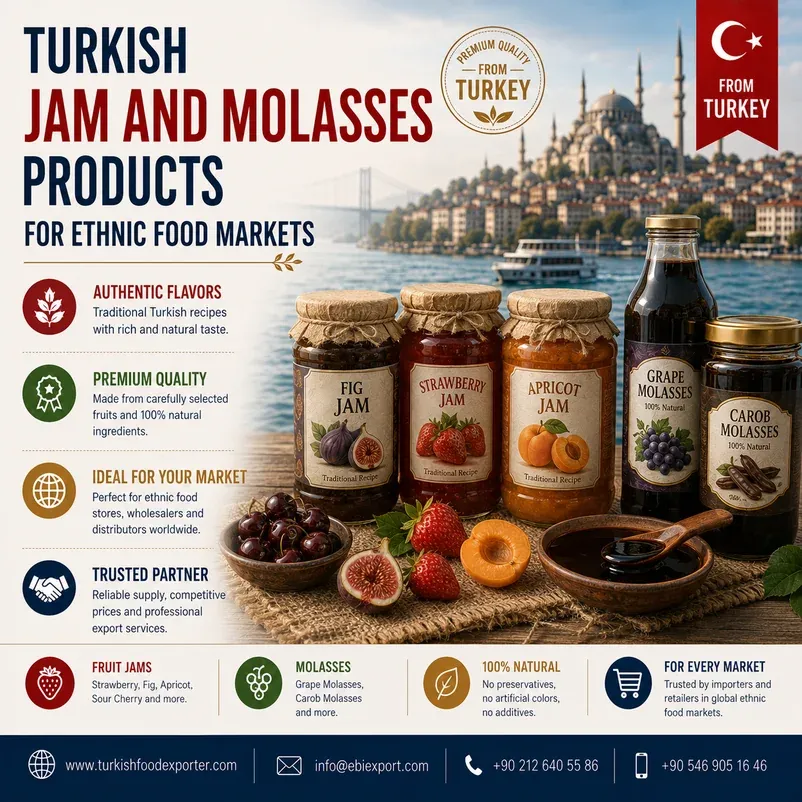
 Turkish Jam and Molasses Products for Ethnic Food Markets
Turkish jam and molasses products can be valuable additions to ethnic food markets because they connect directly with breakfast habits, traditional grocery shopping and familiar family tastes. These products are not only sweet items on a shelf. They belong to morning tables, tea-time moments, pantry routines and cultural food memories. For importers, wholesalers and ethnic grocery distributors, Turkish jam and molasses products can help create a warmer, more complete Turkish food section.
Ethnic markets often succeed when they offer products customers recognize from home. A shopper may come in looking for tea, coffee, tomato paste, pasta or Turkish delight, but a well-planned shelf can also guide them toward jam, molasses, halva and breakfast products. Turkish Food Exporter, as an Ebi Export brand, helps international buyers evaluate Turkish jam, molasses-based products and related grocery categories for wholesale and retail supply.
Jam and molasses products are closely tied to regular consumption. They can be eaten at breakfast, served with bread, paired with tea, used with desserts or placed on family tables for guests. This gives them stronger repeat potential than products purchased only for special occasions. When customers trust a jam or molasses product, they may buy it again as part of their normal grocery routine.
For ethnic food markets, this matters deeply. These stores are not only selling products; they are selling familiarity. Turkish jam and molasses products can appeal to Turkish, Middle Eastern, Balkan, Mediterranean and Central Asian customers who already understand these flavors. They can also attract curious shoppers looking for authentic pantry items from Turkey.
The Turkish jam category can be used as a strong starting point for buyers who want breakfast and sweet spread products from Turkey. Jam can sit naturally beside tea, coffee, honey-style products, halva, biscuits and other traditional foods.
Jam is one of the easiest traditional products to explain because many customers already understand the category. Fruit jam can be used with bread, pastries, pancakes, desserts, yogurt or bakery products. For importers, this gives jam a practical advantage. It can serve both ethnic shoppers and general grocery customers without requiring too much education.
Turkish jam products may include familiar fruit flavors depending on availability, such as strawberry, apricot, cherry, fig, peach, rose, mixed fruit or other regional varieties. Some flavors may work better in supermarkets because they are familiar to a wide audience. Others may perform better in ethnic markets because they carry stronger regional identity.
Importers should think carefully about flavor selection. A first order should not become a festival of every jar in the catalog. A better approach is to choose several familiar flavors and one or two more distinctive Turkish options. This gives the retailer a shelf that feels both safe and interesting.
Molasses products from Turkey can serve a more traditional and culturally specific role. In Turkish food culture, grape molasses, mulberry molasses and molasses-based products may be connected with breakfast, energy-rich foods, tahini pairings, winter consumption and family pantry habits. For ethnic markets, this can create strong customer recognition.
Molasses may need more explanation in general retail channels, but in ethnic stores it can be a familiar product with loyal demand. Customers who already use molasses know how it fits their table. They may pair it with tahini, bread, butter, pastries or traditional breakfast items. This makes it a useful product for stores that want to build a serious Turkish pantry section.
Molasses-based products can also sit beside Turkish halva, jam, tea and sweet spreads. This shelf grouping helps customers understand the category. A product becomes easier to sell when it is placed with its natural companions.
A good ethnic food market should make shopping feel intuitive. Breakfast products should not be scattered across unrelated shelves. Turkish jam, molasses, tea, coffee, halva, biscuits and sweet spreads can be grouped to create a clear breakfast and hospitality area. This helps customers buy more naturally.
For example, a customer buying Turkish black tea may also buy jam for breakfast. A customer buying molasses may add halva or biscuits. A customer buying sweets for guests may notice Turkish delight or coffee nearby. These relationships are not theoretical; they reflect real shopping behavior.
Importers should help retailers think in these product groups. A single jar of jam may sell slowly if it is isolated. A breakfast section with jam, molasses, tea, coffee and traditional sweets feels more complete. Retail shelves are little stories. If the story is clear, customers follow it.
Packaging is one of the most important points in jam and molasses export. Jam is often sold in glass jars or other retail-friendly containers depending on the product. Molasses may be offered in bottles, jars or larger formats depending on use and availability. Each package type must be evaluated according to retail channel and shipment safety.
Glass jars can look attractive and trustworthy on the shelf, but they require careful handling. Importers should check carton strength, pallet structure, protection from breakage and label durability. Bottled molasses products should be reviewed for cap security, leakage risk and transport stability. A sweet product is pleasant until one weak cap turns the carton into a sticky negotiation.
Package size should match customer habits. Smaller jars may work well for new customers and supermarkets. Larger formats may be better for ethnic markets where customers already consume the product regularly. Food service buyers may need different sizes. The importer should choose packaging according to actual use, not only unit price.
Ethnic grocery stores are the most natural channel for Turkish jam and molasses products. Customers in these stores often look for familiar breakfast items, pantry products and traditional sweets. They may already know Turkish brands, flavors or product styles. This makes the first sale easier and supports repeat purchase.
Supermarkets can also carry jam products because the category is widely understood. Molasses may need more explanation in general supermarkets unless the store has an international foods section or a customer base familiar with regional products. Specialty food stores may position molasses as an authentic pantry item from Turkey.
Wholesalers and distributors should choose products according to their retailer network. A distributor serving ethnic stores may prioritize traditional flavors and larger packs. A distributor serving supermarkets may focus on clear labels, smaller jars and familiar fruit flavors. A distributor serving restaurants or bakeries may need larger formats and stable supply.
Turkish jam and molasses products become stronger when paired with tea and coffee. Customers often buy sweet spreads and traditional sweets for breakfast, guests or tea-time. This makes Turkish tea products and Turkish coffee products natural companions.
Importers can also pair jam and molasses with Turkish delight products, halva, biscuits, wafers and cakes. This creates a broader Turkish sweets and breakfast range. A market with only one sweet product feels incomplete, but a shelf with several connected products gives customers more reasons to explore.
These pairings help retailers increase basket value. A customer may not plan to buy three products, but a good shelf arrangement makes the connection obvious. Tea with jam. Coffee with Turkish delight. Molasses with halva. The shelf quietly does its work.
Wholesale buyers should review practical details before ordering jam and molasses products from Turkey. Important information includes product name, flavor, package size, ingredients, carton quantity, gross weight, net weight, shelf life, storage conditions, barcode, pallet structure and shipment timing.
Jam and molasses can be heavier than some dry grocery products because of jar and liquid weight. Freight and handling should be calculated carefully. If glass packaging is used, breakage protection becomes even more important. Buyers should also consider warehouse conditions and retailer handling requirements.
A first order should usually be focused. Importers can select several jam flavors, one or two molasses products and related Turkish grocery items. After the first sales period, they should review which flavors moved faster, which package sizes retailers preferred and whether customers asked for related products such as tea, halva or Turkish delight.
Before importing Turkish jam and molasses products, buyers should check destination-country food labeling requirements. These products may require ingredient declarations, nutrition information, fruit content, sugar content, allergen details, origin information, local language labels, importer details and barcode data depending on the market.
Molasses products may also need clear product descriptions for customers who are less familiar with the category. If the product is grape molasses, mulberry molasses or a molasses-based paste, the label and product listing should explain it accurately. Confused customers rarely become loyal customers.
The exporter can provide product information and export-side support, but importers should confirm local rules with customs brokers or official authorities. This step protects the buyer before shipment and prevents avoidable problems during customs clearance or retail listing.
A strong ethnic food shelf should balance everyday products with traditional identity. Turkish jam and molasses can support breakfast and pantry demand. Tea and coffee can support daily beverage habits. Halva and Turkish delight can create sweet and gift value. Biscuits and wafers can add practical snacking. Together, these products create a section that feels useful, not random.
Importers should think like retailers when choosing products. Where will the item sit? What will it be next to? Who will buy it? Will the product be understood quickly? Can it be reordered? These questions help turn a product list into a real shelf plan.
Turkish Food Exporter helps international buyers evaluate jam, molasses and related Turkish grocery products with this practical view. The goal is to help importers build a product range that fits ethnic markets, supermarkets, wholesalers and specialty food channels.
Turkish Food Exporter supports buyers looking for Turkish jam and molasses products for ethnic food markets and wholesale supply. Buyers can evaluate these products together with tea, coffee, halva, Turkish delight, biscuits, snacks, beverages and staple food products from Turkey.
For importers, Turkish jam and molasses products can add warmth, tradition and repeat-purchase value to a grocery portfolio. Jam offers familiar fruit-based breakfast appeal. Molasses brings deeper cultural identity and pantry use. When selected with the right packaging, flavor mix and retail plan, both categories can strengthen a Turkish food section.
With reliable export support, clear product information and careful order planning, jam and molasses from Turkey can become useful products for ethnic markets and international grocery buyers. Turkish Food Exporter helps buyers source these categories with a practical approach designed for long-term retail and wholesale supply.