
EBİ EXPORT is a foreign trade company that provides services to hypermarkets, fast moving consumer goods suppliers, ethnic markets and wholesalers. We are exporting to more than 20 different countries.
EBİ EXPORT is a foreign trade company that provides services to hypermarkets, fast moving consumer goods suppliers, ethnic markets and wholesalers. We are exporting to more than 20 different countries.
It is an Ebi Export Brand
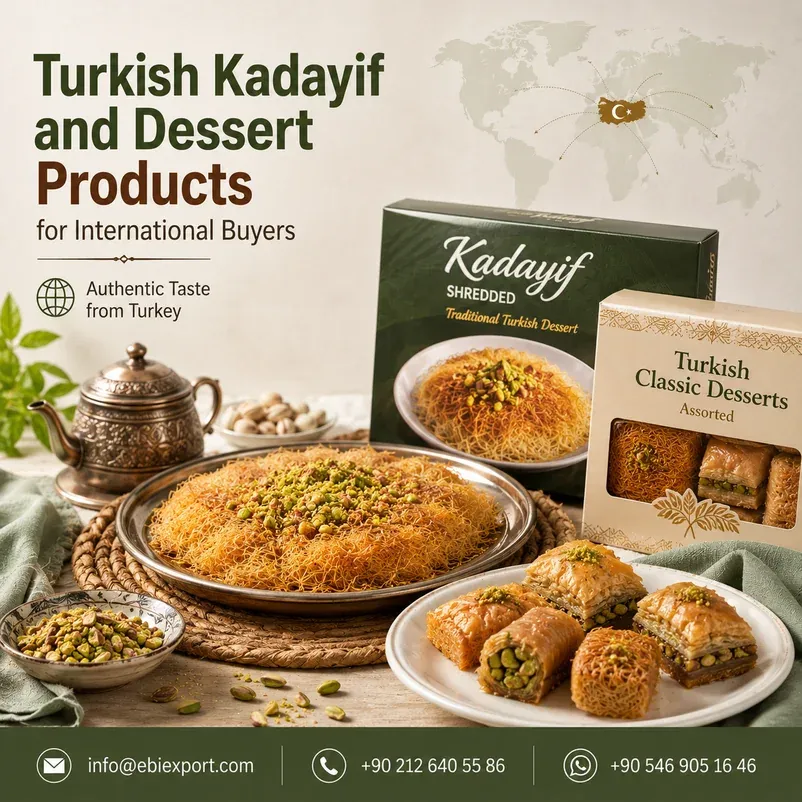
 Turkish Kadayif and Dessert Products for International Buyers
Turkish kadayif and dessert products can be valuable options for international buyers who want to add traditional, memorable and culturally rich sweets to their grocery range. Desserts from Turkey are not only about sugar or flavor. They are connected with hospitality, family tables, tea-time habits, festive periods, gift culture and ethnic market demand. For importers, wholesalers, supermarkets, specialty food stores and ethnic grocery distributors, these products can create a stronger Turkish food section with real shelf character.
Kadayif has a special place among Turkish dessert products because it is widely recognized in regional cuisine and often associated with traditional pastry-style sweets. Alongside kadayif, buyers can evaluate pudding mixes, dessert preparations, Turkish delight, halva, jam, confectionery products and tea-time sweets. Turkish Food Exporter, as an Ebi Export brand, helps international buyers source Turkish dessert products for wholesale and retail markets with practical export planning.
Dessert products can give imported grocery shelves identity. A store may sell pasta, tomato paste, snacks and beverages for daily needs, but dessert products create emotional appeal. Customers buy them for guests, family meals, celebrations, holidays, gifting, tea service and cultural familiarity. This makes Turkish desserts useful for both regular grocery sales and seasonal retail planning.
For ethnic markets, Turkish desserts can meet demand from customers who already know the products. Turkish, Middle Eastern, Balkan, Mediterranean and Central Asian customers may recognize kadayif, halva, Turkish delight and other traditional sweets. For broader supermarkets, the same products can be positioned as authentic imported desserts from Turkey.
The key for importers is choosing products that match the target market. Some desserts may be easy for general customers to understand, while others may perform better in ethnic stores where preparation and serving habits are already familiar. A strong dessert category should not be random; it should be built around how customers actually buy, serve and reorder sweets.
Kadayif is one of the traditional dessert products that can bring a clear Turkish and regional identity to international grocery shelves. It may be sold as a dessert product, pastry ingredient or prepared sweet depending on product type and availability. For buyers serving ethnic markets, kadayif can be especially useful because many customers already know how it is prepared and served.
The Turkish kadayif category can be evaluated by importers looking for dessert products from Turkey. Buyers should review product format, package size, shelf life, storage conditions and retail suitability before ordering. Kadayif products may need clearer explanation in some markets, especially if customers are not familiar with traditional Turkish desserts.
For ethnic grocery stores, kadayif can sit near dessert mixes, Turkish delight, halva, tea, coffee and bakery-related products. For supermarkets, it may need more careful placement in international foods, dessert ingredients or specialty sweets sections. The product has strong character, but character sells better when the shelf gives it the right stage.
Turkish dessert products are not limited to kadayif. International buyers can also evaluate dessert mixes, puddings, baking-related products and practical sweet preparations. These products may appeal to customers who want Turkish-style desserts but prefer easier preparation. Convenience matters, especially in markets where customers may not have time or experience to prepare traditional sweets from scratch.
The Dr. Oetker category can support buyers looking for dessert preparation products and baking-related options from Turkey. Dessert mixes can be useful for supermarkets, ethnic markets and household grocery shelves because they often communicate their use more clearly than raw dessert ingredients.
For importers, dessert mixes can be a smart bridge product. They connect traditional dessert interest with modern convenience. A customer may not know how to prepare every Turkish sweet, but they may be willing to try a packaged dessert mix with clear instructions. That makes these products useful for broader retail channels.
A strong Turkish dessert section should usually include more than one product type. Kadayif can bring pastry-style tradition. Turkish delight can bring gift and confectionery appeal. Halva can bring dense, rich and familiar sweetness. Jam can support breakfast and sweet pantry use. Together, these products create a fuller category.
Importers can pair kadayif with Turkish delight products and Turkish halva to build a more complete Turkish sweets range. This is especially useful for ethnic markets and specialty food stores. Customers who buy one traditional sweet may be interested in others when the products are displayed together.
For supermarkets, balance is important. Turkish delight may be easier to introduce because many customers have heard of it. Kadayif may require more explanation. Halva may perform strongly where sesame-based sweets are already known. Buyers should use each product for its proper retail role instead of treating all desserts the same.
Packaging has a major effect on Turkish dessert export. Sweet products must look clean, fresh and trustworthy. Customers often judge dessert quality before opening the package, especially when buying a product they do not know well. Clear packaging, flavor information, preparation instructions and attractive presentation can all influence sales.
Kadayif products should be packed in a way that protects texture, shape and freshness. Dessert mixes should have clear usage instructions. Turkish delight boxes should protect the product from crushing and heat damage. Halva packaging should preserve texture and avoid messy presentation. A dessert product can lose its magic quickly if it arrives looking tired.
Importers should review package weight, units per carton, carton dimensions, gross weight, net weight, shelf life, barcode, ingredient information and storage requirements. These details affect landed cost, retail listing and warehouse planning. Sweet products may feel delicate, but the trade side needs firm numbers.
Ethnic grocery stores are often the strongest channel for Turkish kadayif and dessert products. Customers in these stores may already understand how kadayif is prepared, when Turkish delight is served or why halva belongs near tea and breakfast products. This existing knowledge reduces the need for heavy product education.
In ethnic markets, dessert products should be placed with related items. Kadayif can sit near dessert mixes, syrups if available, baking products, tea and sweets. Turkish delight can be placed near tea, coffee, gift products and confectionery. Halva can be positioned near breakfast products, tahini-style items, jam and molasses where available.
Importers should also consider seasonal demand. Dessert products may sell more strongly during holidays, family gatherings, religious celebrations and festive periods. Kadayif and traditional sweets can be especially relevant when customers prepare desserts for guests. Stock planning should follow these rhythms, because dessert demand has its own calendar.
Supermarkets may need a different strategy from ethnic markets. General customers may not know kadayif or some Turkish dessert products, so packaging and shelf explanation become more important. Smaller packs, clear English descriptions and simple usage guidance can help customers feel comfortable trying the product.
Specialty food stores can position Turkish desserts as authentic imported sweets. Gift packaging, assorted sweets, premium flavors and regional dessert products may work well in these channels. Customers in specialty stores are often more open to discovery, but they still need clarity. Curiosity should be invited, not tested like an exam.
For supermarkets, Turkish dessert products can be placed in international food aisles, confectionery sections, baking and dessert shelves or seasonal promotion areas. The best shelf location depends on the product type. A prepared dessert mix should not be treated the same as a gift box of Turkish delight or a traditional kadayif product.
Turkish desserts become stronger when paired with tea and coffee. This is not just a marketing idea; it reflects real consumption habits. Kadayif, Turkish delight, halva, biscuits, wafers and cakes can all be served with hot drinks. Importers can use this natural connection to build a stronger retail category.
Buyers can pair dessert products with Turkish tea products and Turkish coffee products. This gives retailers a clear shelf story: traditional sweets and the drinks served beside them. Customers understand this kind of pairing quickly, even if they are new to Turkish cuisine.
For ethnic markets, this pairing is almost essential. A Turkish product section with tea, coffee, kadayif, Turkish delight and halva feels complete. For supermarkets, it can support promotional displays or seasonal gift sections. For wholesalers, it creates a more attractive product bundle for retailers.
Wholesale buyers should build dessert orders with careful structure. A first shipment may include selected kadayif products, several Turkish delight options, one or two halva products and practical dessert mixes. This gives the buyer enough variety to test demand without creating a crowded and confusing product list.
Before ordering, importers should request full details about product format, package size, carton quantity, shelf life, storage conditions, ingredient list, allergen information, barcode and shipment timing. These details are especially important for dessert products that may contain nuts, sesame, dairy ingredients or other allergens.
Buyers should also calculate stock rotation. Sweet products must arrive with enough shelf life for customs clearance, warehouse handling, retailer delivery and consumer sale. Short-dated products can create pressure and damage retailer trust. In dessert export, sweetness is lovely; expiry dates are not sentimental.
Dessert products can require more careful handling than many dry grocery items. Some products may be sensitive to heat, humidity, crushing or package damage. Turkish delight can lose texture if storage conditions are poor. Kadayif products may need protection from breakage or moisture. Dessert mixes must remain dry and clean.
Importers should discuss shipment conditions with the exporter before confirming an order. Carton strength, pallet structure, loading plan and storage requirements should be clear. If dessert products are shipped with heavier goods, they must be protected properly. A box of sweets should not be asked to survive under a mountain of detergent. That is not logistics; that is punishment.
Mixed FMCG shipments can still work well when planned correctly. Desserts can travel with tea, coffee, biscuits, snacks, pasta, sauces and other packaged products. The important point is protecting delicate items and arranging the load according to product type.
Before importing Turkish kadayif and dessert products, buyers should review destination-country food requirements. These may include ingredient declarations, allergen information, nutrition tables, origin details, local language labels, importer information, preparation instructions and barcode data depending on the market.
Allergen checks are especially important in dessert products. Turkish delight, halva, kadayif and dessert mixes may include nuts, sesame, gluten, dairy or other ingredients depending on product type. Importers should confirm labeling requirements before shipment and avoid assuming that one market’s rules apply everywhere.
Turkish Food Exporter can support buyers with product and export-side information, but importers should confirm local compliance with customs brokers or official authorities. This early check helps protect the shipment and keeps retail listing smoother.
A strong Turkish dessert range should include products with different roles. Kadayif can bring traditional dessert depth. Turkish delight can bring gift and confectionery appeal. Halva can bring rich, familiar sweetness. Dessert mixes can bring convenience. Tea and coffee can complete the serving occasion.
Importers should not choose products only because they look attractive. They should ask how each item will sell, where it will sit, who will buy it and whether it can be reordered. A dessert range should feel warm and generous on the shelf, but behind the scenes it must be built with discipline.
Turkish Food Exporter supports international buyers looking for Turkish kadayif and dessert products for wholesale and retail markets. Buyers can evaluate dessert categories together with tea, coffee, sweets, snacks, beverages and staple food products from Turkey.
With the right packaging, product selection, shelf strategy and export planning, Turkish kadayif and dessert products can become strong items for ethnic markets, supermarkets, specialty stores and wholesalers. These products carry tradition, but they also need modern trade discipline. When both sides meet, Turkish desserts can travel well and sell with real purpose.