
EBİ EXPORT is a foreign trade company that provides services to hypermarkets, fast moving consumer goods suppliers, ethnic markets and wholesalers. We are exporting to more than 20 different countries.
EBİ EXPORT is a foreign trade company that provides services to hypermarkets, fast moving consumer goods suppliers, ethnic markets and wholesalers. We are exporting to more than 20 different countries.
It is an Ebi Export Brand
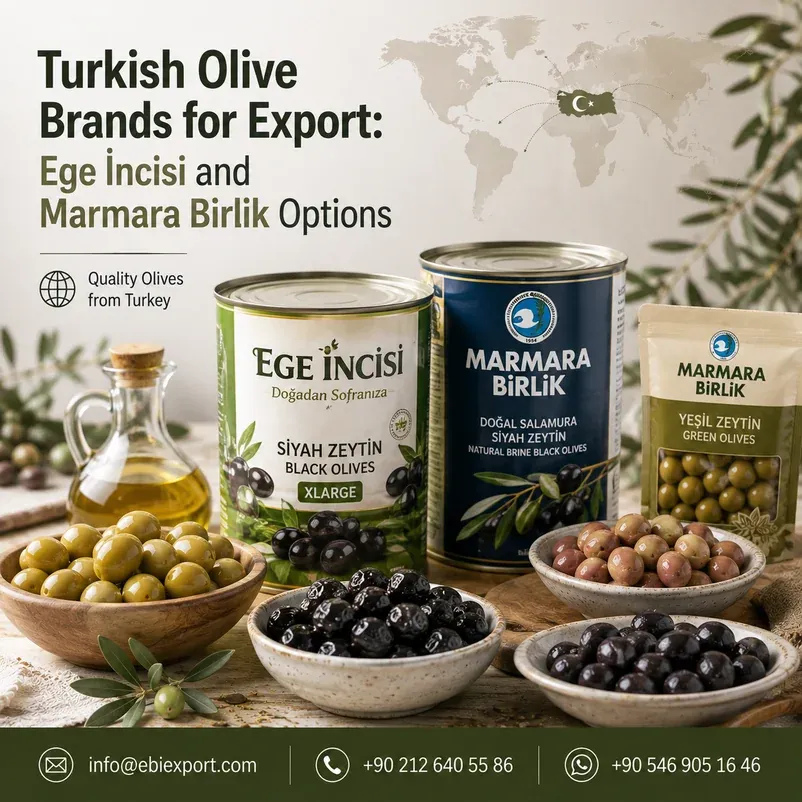
 Turkish Olive Brands for Export: Ege İncisi and Marmara Birlik Options
Turkish olive brands can be valuable products for importers who want to build a stronger grocery range with traditional, shelf-stable and repeat-purchase items. Olives are not only side products in Turkish food culture. They are part of breakfast tables, family meals, appetizers, restaurant service and ethnic grocery shopping. For supermarkets, wholesalers, ethnic markets and food distributors, olives from Turkey can bring both cultural identity and everyday retail value.
For international buyers, the main question is not simply whether Turkish olives are available. The better question is which olive products fit the target market, which packaging formats are practical, which brands create trust and how olives should be positioned beside related Turkish grocery products. Turkish Food Exporter, as an Ebi Export brand, helps buyers evaluate Turkish olive brands such as Ege İncisi and Marmara Birlik options for wholesale and retail supply.
Olives have a strong place in Turkish cuisine and Mediterranean food culture. They are used at breakfast, served with cheese and bread, included in appetizer plates, offered in restaurants and sold as pantry products for households. This makes olives useful for importers because they can serve several customer occasions instead of depending on one narrow use.
For ethnic grocery stores, Turkish olives may already have a loyal customer base. Customers from Turkish, Middle Eastern, Balkan and Mediterranean communities often know how to use olives and may look for familiar taste profiles. For supermarkets and specialty food stores, Turkish olives can be positioned as Mediterranean grocery products with authentic origin and practical everyday use.
The Ege İncisi category and Turkish olive products can support buyers who want to add a traditional but commercially useful category to their import list. Olives may not shout from the shelf like snacks, but they can create steady movement when the market knows them.
Ege İncisi can be considered by buyers looking for Turkish olive products with regional grocery appeal. The name itself connects naturally with the Aegean identity, which is important because the Aegean region is strongly associated with olives, olive oil and Mediterranean-style food culture. For retailers, that regional feeling can help position the product more clearly.
Ege İncisi olive products may be suitable for ethnic markets, Turkish grocery stores, Mediterranean food shops, wholesalers and supermarkets that carry imported foods. Importers should evaluate available products according to olive type, package size, brine format, shelf life, carton quantity and retail presentation.
For ethnic grocery stores, Ege İncisi products can sit beside cheese, breakfast items, Turkish tea, tomato paste, pasta, halva and other traditional products. This creates a more complete Turkish grocery section. A customer buying olives may also buy tea, bread products, sauces or sweets. Good shelf planning understands these quiet connections.
Marmara Birlik is another important Turkish olive name that buyers may consider when reviewing olive products from Turkey. For many consumers familiar with Turkish grocery products, Marmara Birlik can carry brand recognition and trust. This can be useful for importers serving ethnic markets or stores where customers already search for known Turkish brands.
Products under the Marmara Birlik category may be evaluated for retail and wholesale use depending on availability. Buyers should compare package formats, olive varieties, net weight, carton count and destination-market suitability before ordering. A known brand can help the first sale, but the product still needs the right commercial structure.
Marmara Birlik options may work especially well in markets where Turkish and regional customers already understand black olives, breakfast olives and table olive products. For broader supermarket channels, the product may need clearer shelf positioning as Turkish or Mediterranean olives.
Product variety matters in olive export. Buyers may evaluate black olives, green olives, sliced olives, pitted olives, whole olives, brined olives, vacuum-packed olives or jarred options depending on supply. Each format serves a different customer need. Whole olives may feel more traditional, while pitted or sliced olives may be easier for modern grocery customers and food service users.
Black olives are often important in Turkish breakfast culture. They can serve customers who know Turkish-style breakfast and want familiar products. Green olives may appeal to Mediterranean food buyers, appetizer use and customers looking for lighter or sharper flavor profiles. Sliced olives may work better for salads, pizzas, restaurants and food service channels.
Importers should not build the first order with too many similar products. A practical starting range may include one black olive option, one green olive option and one easy-use format such as pitted or sliced olives. The market will then show which product deserves a larger reorder.
Packaging is one of the most important points in Turkish olive export. Olives may be supplied in jars, tins, vacuum packs, plastic containers or larger food service formats depending on product availability. Each package type has a different role in retail and wholesale supply.
Glass jars can look clean and trustworthy on supermarket shelves, but they require careful handling during transport. Vacuum packs may be efficient for ethnic markets and frequent users. Larger tins or containers may be useful for restaurants, catering buyers and wholesale customers. The right packaging depends on how the product will be sold after import.
Buyers should review net weight, drained weight if applicable, units per carton, carton dimensions, gross weight, pallet structure, barcode, shelf life and storage conditions. Olive products can be heavy because of brine and packaging, so freight planning matters. A jar of olives may look innocent, but a pallet of them speaks fluent logistics.
Ethnic markets are often the strongest sales channel for Turkish olives. Customers in these stores may already know Turkish breakfast habits and may actively search for black olives, green olives or familiar brands. This reduces the need for long product education and helps support repeat purchases.
In ethnic grocery stores, olives should be placed with intention. They can sit near breakfast products, cheese, pickles, tea, bread products, tomato paste, pasta and traditional Turkish pantry items. This kind of shelf grouping helps customers build a full basket instead of buying only one item.
Turkish olives can also support holiday and family gathering demand. Some customers buy olives regularly for breakfast, while others buy them for guests, gatherings or special meals. Importers should understand these rhythms before planning stock levels.
Supermarkets may need a more direct product story. If the customer is not already familiar with Turkish olives, the package and shelf placement should explain the value clearly. The product can be positioned as Turkish olives, Mediterranean table olives, breakfast olives or imported specialty olives depending on the market.
Smaller retail packs may be better for first-time customers because they reduce hesitation. Larger packs may work better where consumers already know the product. Supermarket buyers should consider whether olives will sit in the international food aisle, condiment section, appetizer area or breakfast shelf.
The strongest supermarket approach usually combines clear packaging, familiar product type and sensible price. If the product is too unfamiliar, too large or too expensive for the channel, it may move slowly. Retail is not cruel, but it is honest.
Olives become stronger when they are imported with related Turkish food products. They pair naturally with Turkish tea products, cheese-style grocery items, breakfast products, tomato paste, pasta, sauces, pickles, halva and jam. This helps retailers create a more complete Turkish grocery section.
For example, a store can position olives beside Turkish tomato paste, pasta and sauces to support cooking and pantry demand. It can also place olives near tea, jam and sweets for breakfast and hospitality shopping. These product relationships make the shelf easier to shop.
Importers can also combine olives with snacks, beverages and household FMCG products in mixed orders. A distributor serving ethnic markets may benefit from a wider Turkish product range instead of offering only one category.
Wholesale buyers should plan olive imports with clear commercial details. Important information includes brand name, olive type, package size, net weight, drained weight, brine details, carton quantity, gross weight, shelf life, barcode, pallet structure and shipment timing. These details affect landed cost, warehouse planning and retailer pricing.
Olives can be heavier than many dry grocery products, especially when packed in jars or tins. Buyers should calculate freight and local transport carefully. A product that looks profitable at unit level may become less attractive after shipment costs are included.
A first order should usually be focused and measurable. Importers can choose selected Ege İncisi and Marmara Birlik options, then track which products sell faster. Did customers prefer black olives or green olives? Did jars perform better than vacuum packs? Did retailers ask for larger sizes? These answers should guide repeat orders.
Before importing Turkish olive products, buyers should check destination-country food labeling rules. Olive products may require ingredient information, nutrition details, salt content, drained weight, origin details, local language labels, importer information, barcode data and allergen-related statements depending on the market.
Importers should also confirm storage and shelf-life expectations. Some olive products may require specific handling after opening, while others may have different storage recommendations before opening. These details should be clear on packaging and product documents.
Turkish Food Exporter can support buyers with product and export-side information, but importers should confirm local rules with customs brokers or official authorities. This step protects the shipment before it leaves Turkey, which is always cheaper than solving problems after arrival.
Turkish Food Exporter supports international buyers looking for Turkish olive brands such as Ege İncisi and Marmara Birlik options for export markets. Buyers can evaluate olives together with tea, tomato paste, pasta, sauces, sweets, snacks, beverages and other Turkish FMCG categories.
For importers, olives can bring steady value when selected with the right brand, package size, retail channel and market strategy. Ege İncisi can support a Turkish and Aegean grocery identity, while Marmara Birlik options can offer recognizable brand appeal in markets familiar with Turkish olives.
Turkish olive brands for export can serve ethnic grocery stores, supermarkets, specialty food shops, wholesalers and distributors when planned carefully. With clear product details, proper packaging, realistic logistics and reliable sourcing, olives from Turkey can become a strong part of international grocery supply.