
EBİ EXPORT is a foreign trade company that provides services to hypermarkets, fast moving consumer goods suppliers, ethnic markets and wholesalers. We are exporting to more than 20 different countries.
EBİ EXPORT is a foreign trade company that provides services to hypermarkets, fast moving consumer goods suppliers, ethnic markets and wholesalers. We are exporting to more than 20 different countries.
It is an Ebi Export Brand
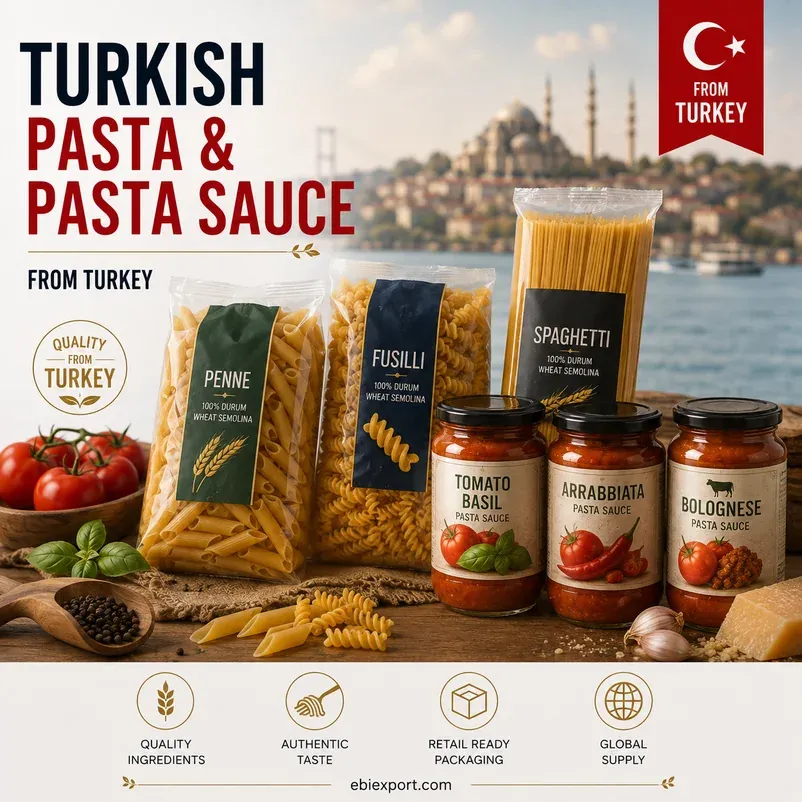
 Turkish Pasta and Pasta Sauce Export for Retail Buyers
Turkish pasta and pasta sauce export can be a practical opportunity for retail buyers who want products with everyday demand, clear shelf use and strong basket-building potential. Pasta is familiar in almost every market, while sauces help customers turn a simple product into a complete meal solution. This makes the category useful for supermarkets, ethnic grocery stores, wholesalers, food distributors and international retailers looking for reliable food products from Turkey.
For importers, pasta is not a difficult product to explain. Customers already understand how it is cooked, where it belongs in the kitchen and why they may buy it again. Pasta sauce adds convenience, flavor and retail value. Together, these products create a category that can serve families, students, busy households, restaurants and small grocery shoppers. Turkish Food Exporter, as an Ebi Export brand, helps international buyers source Turkish pasta, sauces and related staple food products for retail and wholesale markets.
Pasta is one of the most stable grocery categories because it belongs to daily food routines. It can be stored easily, prepared quickly and combined with many ingredients. For retail buyers, this creates a useful product profile: pasta is affordable, familiar, shelf-stable and suitable for repeat purchase. These qualities make it a smart category for importers building a Turkish food range.
The Turkish pasta category can serve both general grocery channels and ethnic markets. Unlike some specialty products, pasta does not depend only on cultural familiarity. It can be sold to a wide customer base because the product format is universal. This gives buyers more flexibility when placing it in supermarkets, grocery stores, wholesale warehouses or food service supply channels.
Turkish pasta can also work well as part of a larger staple food section. When pasta is placed near tomato paste, pasta sauce, spices, soup mixes and ready meals, customers can understand the category naturally. A planned shelf does not merely display products; it quietly suggests meals. That is where retail starts doing some of the selling by itself.
Pasta sauce gives retailers a second layer of opportunity. While pasta is the foundation, sauce brings flavor and convenience. Customers who want quick meals often prefer ready sauces because they reduce preparation time. This makes pasta sauce attractive for modern grocery stores, convenience retailers and supermarket chains serving busy households.
The Turkish sauce category can support buyers who want to build a broader cooking products section. Ready sauces can be sold with pasta, tomato paste, pepper paste, spices and other staple food products. This creates a complete meal solution instead of separate items sitting without connection.
Retail buyers should look at pasta sauce as more than a companion product. It can create stronger basket value. A customer buying pasta may also buy sauce. A customer buying sauce may add tomato paste, spices or ready meals. When the category is arranged with care, each product points gently toward the next one.
A retail buyer should not import pasta and sauces randomly. The best results come from category logic. This means choosing products that work together in real customer shopping behavior. Pasta, tomato paste, pasta sauce and spices form a natural group. Soup mixes and ready meals can extend that same area. Beverages or snacks can then support promotional combinations.
For example, a supermarket may create an international cooking shelf with Turkish pasta, sauces and Turkish tomato paste. An ethnic grocery store may place these items beside Turkish tea, olives, halva and traditional products. A wholesaler may offer pasta and sauce as part of a mixed staple food order for smaller markets.
The right structure depends on the buyer’s channel. A retail chain may care about packaging design and shelf visibility. A distributor may care about carton movement and repeat order potential. An ethnic market may care about product familiarity and customer habit. Turkish Food Exporter helps buyers evaluate these differences before shaping an export order.
Packaging is a serious part of pasta and pasta sauce export. Pasta may be offered in different shapes, weights and package types. Retail buyers should check whether the package size fits local shopping habits. Smaller packs may be better for compact grocery stores and trial purchases, while larger packs may work better for families, wholesalers and value-focused customers.
Pasta sauce packaging also needs careful review. Jars, bottles, cans or other formats may create different shelf impressions. A glass jar can look more premium, while other packaging formats may be more practical for price-sensitive markets. Buyers should review not only how the product looks, but also how it will be transported, stored and displayed.
Carton quantity, gross weight, barcode details, shelf life and pallet structure should be checked before ordering. Pasta is generally easier to handle than many heavy products, but volume and carton planning still matter. Sauces may require more careful logistics because packaging weight and breakage risk can affect shipment planning.
Not every market needs the same pasta and sauce selection. In some countries, customers may prefer classic pasta shapes and simple tomato-based sauces. In others, buyers may want more variety, including spicy sauces, vegetable sauces, ready meal sauces or regional flavors. Importers should choose products according to customer behavior, not only according to catalog variety.
For ethnic markets, Turkish pasta and sauces can be part of a familiar grocery experience. Customers may already use Turkish tomato paste, pepper paste, spices and cooking products. In this case, pasta and sauce help complete the basket. For broader supermarkets, the same products may need clearer positioning as affordable, practical and versatile meal solutions.
Retail buyers should also consider pricing. Pasta is often a price-sensitive category, especially in wholesale and supermarket channels. Sauce may allow more flexibility depending on brand, packaging and flavor. A good importer studies both shelf price and landed cost before deciding what to order. In trade, the shelf may smile, but the margin tells the truth.
Wholesale planning should start with realistic quantities. A first order can test demand without overloading the buyer’s warehouse. Importers may begin with a limited pasta selection, one or two sauce types and related staple products. After the first sales period, they can increase the strongest items and remove weak performers.
Distributors should also think about how pasta and sauces will be sold to retailers. A small store may prefer mixed cartons or a practical starter range. A supermarket may want stronger category depth. A food service buyer may need larger quantities and more consistent supply. The exporter should understand these differences and help the buyer build the right order structure.
Mixed FMCG orders can be useful here. Pasta and sauces can be imported with snacks, beverages, sweets, tea, coffee, cleaning products or personal care items. This gives wholesalers more product variety and helps them serve different retail customers through one sourcing channel.
Before importing Turkish pasta and pasta sauce products, buyers should request complete product information. This includes product name, brand, package size, ingredients, carton count, shelf life, storage conditions, barcode, available stock and shipment timing. If the destination country has special labeling rules, those should be checked before order confirmation.
Food products may require nutrition information, ingredient declarations, allergen details, production data or importer labeling depending on the market. The exporter can provide product and export information, but the importer should confirm local rules with customs brokers or relevant authorities. This step is not glamorous, but it prevents expensive surprises.
A strong pasta and sauce shelf should feel complete. Pasta alone is useful, but pasta with sauce, tomato paste and spices becomes easier to sell. Retailers can create meal-focused sections, promotional bundles or category displays that guide shoppers toward practical combinations.
This category can also support other Turkish food products. Snacks and beverages can bring fast movement. Turkish delight, halva, tea and coffee can add cultural identity. Tomato paste and sauces bring kitchen value. When these products are selected together, the store gains a more serious Turkish grocery range.
Turkish Food Exporter supports international buyers that want to source pasta, pasta sauce and related food products from Turkey. For retail buyers, the best approach is to choose products with clear shelf purpose, suitable packaging, reliable supply and a category plan that matches the target market.
Turkish pasta and pasta sauce export can become a steady opportunity when buyers treat the category with discipline. With the right product mix, practical packaging and professional export support, pasta and sauces from Turkey can serve global grocery shelves as everyday products that customers understand, use and buy again.