
EBİ EXPORT is a foreign trade company that provides services to hypermarkets, fast moving consumer goods suppliers, ethnic markets and wholesalers. We are exporting to more than 20 different countries.
EBİ EXPORT is a foreign trade company that provides services to hypermarkets, fast moving consumer goods suppliers, ethnic markets and wholesalers. We are exporting to more than 20 different countries.
It is an Ebi Export Brand
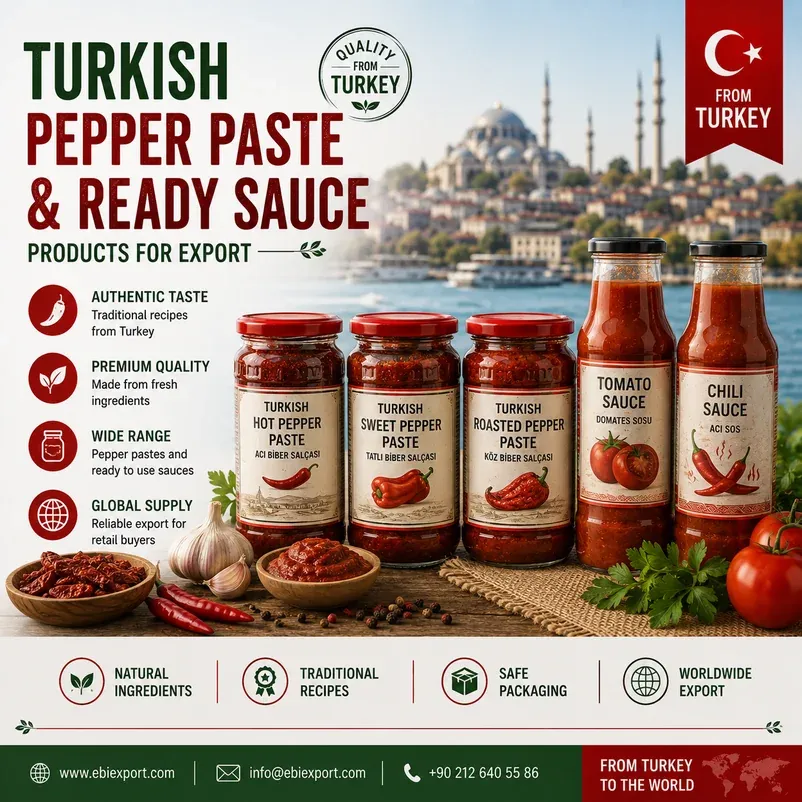
 Turkish Pepper Paste and Ready Sauce Products for Export
Turkish pepper paste and ready sauce products can be strong additions to an international grocery portfolio because they serve both everyday cooking and specialty food demand. These products are practical, flavorful and closely connected with Turkish, Mediterranean, Middle Eastern and Balkan-style kitchens. For importers, wholesalers, supermarket buyers and ethnic market distributors, they offer a useful bridge between traditional taste and modern retail supply.
Pepper paste is not a product that sits on the shelf only for decoration. It is used in soups, stews, marinades, sauces, breakfast spreads, meat dishes, vegetable recipes and many home-cooking routines. Ready sauces, on the other hand, give consumers speed and convenience. Together, they can help buyers build a richer cooking category from Turkey. Turkish Food Exporter, as an Ebi Export brand, supports international buyers that want to source Turkish pepper paste, tomato paste, ready sauces and related staple food products for export markets.
Pepper paste is one of the signature ingredients in Turkish cuisine. It brings color, aroma and depth to many dishes, and it can be used in both home kitchens and food service channels. For ethnic grocery stores, Turkish pepper paste can be a familiar product that customers already know by taste and habit. For broader international retailers, it can be positioned as a flavorful cooking ingredient for customers who enjoy Mediterranean and regional recipes.
The export potential comes from two different strengths. First, pepper paste is traditional enough to carry identity. Second, it is practical enough to be used regularly. That combination is valuable. Some traditional products are interesting but not always frequent purchases. Pepper paste has a better chance of becoming part of a customer’s kitchen routine, especially when it is sold with tomato paste, pasta, spices and sauces.
Importers should think of Turkish pepper paste as a product with repeat-purchase potential. A customer may try it once for a recipe, then continue buying it if the flavor and package size fit their cooking habits. In grocery trade, that is where real value lives. Curiosity opens the door, but habit pays the rent.
Pepper paste becomes more effective on the shelf when it is not presented alone. It pairs naturally with Turkish tomato paste, because many customers use both products in similar recipes. Tomato paste gives body and acidity, while pepper paste adds depth, color and regional flavor. For retailers, placing them together creates a clear cooking section that customers can understand quickly.
For importers, this pairing also helps build a smarter order. Instead of importing one product and hoping it performs, buyers can create a group of related staple food products. Tomato paste, pepper paste, sauces, pasta and spices can form a complete shelf story. This makes the product range easier for supermarkets, ethnic markets and wholesalers to present.
Buyers serving Turkish, Middle Eastern, Balkan or Mediterranean communities should give special attention to this category. These customers often use paste products regularly, and they may already have strong preferences for taste, texture and package size. The exporter should help the buyer review available products according to the target market instead of sending a random list.
Ready sauce products answer a different but related need: convenience. Many consumers want cooking shortcuts without losing flavor. Ready pasta sauces, meal sauces, dipping sauces and table sauces can help grocery stores serve busy households, students, working families and customers who want quick meal solutions.
The Turkish sauce category can support importers that want to offer products beyond basic ingredients. While pepper paste and tomato paste are often used as cooking bases, ready sauces can be sold as direct-use products. This gives retailers a broader category: traditional cooking ingredients on one side, quick-use sauces on the other.
Ready sauces are especially useful for international grocery stores because they can introduce Turkish and regional flavors in an accessible format. A customer may not know how to use pepper paste at first, but they can easily understand a ready sauce for pasta, grilling, dipping or everyday meals. This makes ready sauces a good companion category for buyers who want both authenticity and convenience.
Packaging is one of the most important decisions in pepper paste and sauce export. Importers should review whether products are available in jars, tins, bottles, squeeze packs or other suitable retail formats. Each packaging type has a different role. Jars may work well for pepper paste and tomato paste because they feel familiar and easy to store. Bottles may be better for table sauces or liquid sauces. Larger tins may serve food service or wholesale customers.
Package size should match customer behavior in the destination market. A small jar may be better for new customers who want to try the product. A larger package may be better for families, restaurants or communities that use pepper paste frequently. If the buyer chooses the wrong size, even a good product can move slowly. Retail does not forgive lazy assumptions; it simply lets the product gather dust.
Label design and language also matter. For ethnic markets, customers may recognize Turkish product names and traditional packaging cues. For wider supermarket shelves, the product may need clearer explanation in the local language. Importers should check ingredient declarations, nutrition information, barcode details and any local labeling requirements before shipment.
Wholesale buyers should look beyond the single-unit price. Pepper paste and ready sauces may have different weights, carton structures and storage needs. Buyers should request carton quantity, gross weight, net weight, pallet information, shelf life and loading details before confirming an order. These details affect landed cost, warehouse handling and retail pricing.
Distributors should also think about sales channels. A product sold to ethnic grocery stores may need different packaging and brand positioning than a product sold to restaurants or supermarket chains. Food service buyers may care more about large packaging and cost efficiency. Retail buyers may care more about shelf appearance, package size and customer recognition.
Turkish Food Exporter helps buyers consider these practical points before building a wholesale order. A good export process should make the buyer’s job easier, not bury them under unclear product names and half answers. In international trade, clarity is not a luxury. It is the floor.
A strong paste and sauce category should be planned as a group. Importers can combine pepper paste with tomato paste, pasta sauces, spices, soup mixes, pasta and ready meals. This creates a cooking-focused section that feels useful to shoppers. When products sit together logically, customers buy more naturally.
For example, a grocery store can place Turkish pasta products next to tomato paste, pepper paste and ready sauces. This simple shelf arrangement can support meal planning and increase basket value. A customer buying pasta may also buy sauce. A customer buying tomato paste may notice pepper paste. The shelf begins to sell as a system, not as scattered products.
Ethnic markets can add traditional products around the same category, such as tea, olives, pickles, halva or Turkish delight. Supermarkets can build an international cooking section. Wholesalers can offer the same products to smaller stores as a practical Turkish grocery package. The product logic changes by channel, but the core idea remains the same: related products should strengthen each other.
Not every market will respond to pepper paste in the same way. Some countries and communities already know the product well. In those markets, buyers may focus on brand, package size and price. In newer markets, the product may need clearer explanation and better shelf support. Ready sauces may perform faster in these markets because they are easier for first-time customers to understand.
Importers should define their customer base before ordering. Are they serving Turkish communities? Mediterranean food stores? General supermarkets? Restaurants? Online grocery customers? Wholesale food warehouses? Each channel needs a different product mix. A distributor serving ethnic markets may prioritize pepper paste and tomato paste. A supermarket buyer may combine ready sauces, pasta and snacks. A food service supplier may prefer larger formats.
The best strategy is to start with a focused selection. Buyers can test one or two pepper paste options, a tomato paste product, several ready sauces and related staple foods. After the first sales period, they can review which products moved faster, which package sizes worked better and which items created repeat demand.
Before ordering Turkish pepper paste or ready sauces, importers should request complete product information. This should include product name, brand, package size, carton count, shelf life, storage conditions, ingredient information, barcode, available quantity and shipment timing. If products contain allergens or specific ingredients, these details should be reviewed carefully.
Buyers should also check import regulations in their country. Food products may require specific labeling, ingredient declarations, nutrition tables, customs documentation or certificates. The exporter can support the export side, but the importer should confirm local rules with customs brokers or official authorities in the destination market.
Shelf life is especially important for wholesale planning. Products with long shelf life are easier to manage, but buyers should still check expiry dates and rotation plans. Retailers do not want products that arrive too close to expiry unless there is a planned fast-sale strategy.
Paste and sauce products can be included in wider Turkish FMCG shipments. A buyer may combine them with pasta, soup mixes, ready meals, snacks, beverages, tea, coffee and traditional sweets. This is useful for wholesalers and distributors that want to serve more than one retail need through the same order.
For example, paste and sauce products can create the cooking foundation, while Turkish snack products and beverages add faster shelf movement. Tea, coffee, Turkish delight and halva can add cultural value. This type of balanced product mix can help importers create a stronger Turkish grocery offer for different stores.
Turkish Food Exporter supports international buyers looking for Turkish pepper paste, ready sauce products and related staple food categories for export. The company helps importers, wholesalers, supermarkets and ethnic markets evaluate suitable product groups from Turkey and build practical supply plans.
For buyers, the goal should be clear: choose products that fit the target market, check packaging and technical details, plan logistics carefully and work with an exporter that communicates clearly. Pepper paste and ready sauces can be valuable products, but they perform best when they are part of a thoughtful category strategy.
Turkish pepper paste and ready sauce products bring flavor, practicality and retail potential together. With the right packaging, product selection and wholesale supply structure, they can become steady items in international grocery markets. Turkish Food Exporter helps buyers source these products from Turkey with a broader view of food export, FMCG supply and long-term retail demand.