
EBİ EXPORT is a foreign trade company that provides services to hypermarkets, fast moving consumer goods suppliers, ethnic markets and wholesalers. We are exporting to more than 20 different countries.
EBİ EXPORT is a foreign trade company that provides services to hypermarkets, fast moving consumer goods suppliers, ethnic markets and wholesalers. We are exporting to more than 20 different countries.
It is an Ebi Export Brand
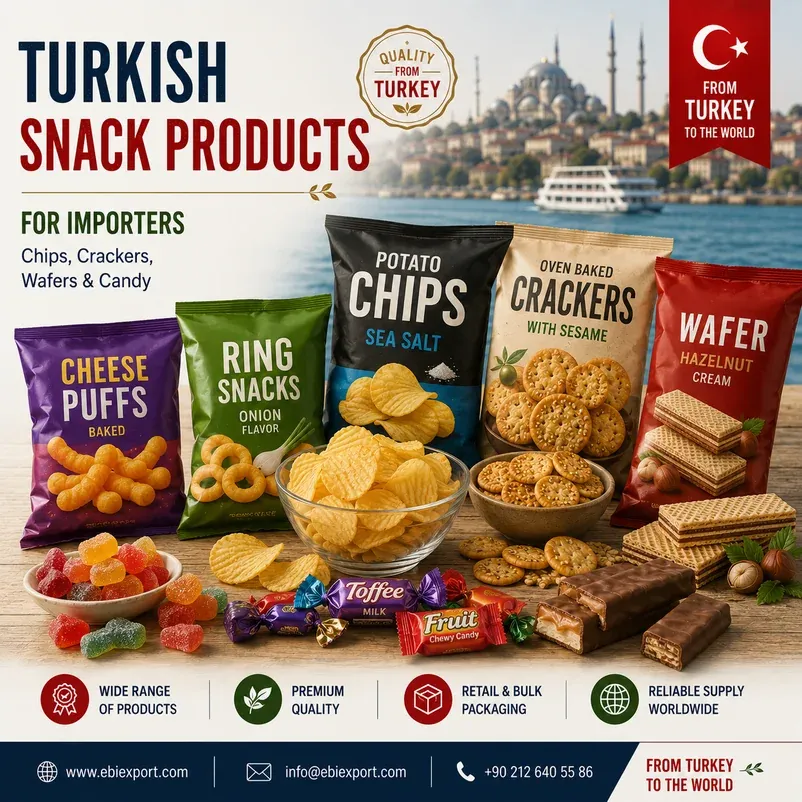
 Turkish Snack Products for Importers: Chips, Crackers, Wafers and Candy
Turkish snack products offer importers a practical way to build a lively, fast-moving and varied retail shelf. Snacks are not silent products. They catch the eye, invite quick trials and often create repeat purchases when the flavor, package size and price are right. For international grocery stores, wholesalers, ethnic markets and snack distributors, Turkey can be a strong sourcing country for chips, crackers, wafers, candy, chocolate, gum and related FMCG products.
Importers usually like snack categories because they are easier to test than many larger grocery products. A customer may hesitate before buying an unfamiliar cooking ingredient, but a bag of chips, a wafer pack or a piece of candy feels less risky. This small decision creates a big commercial advantage. Turkish Food Exporter, as an Ebi Export brand, helps international buyers source Turkish snack products for retail and wholesale markets with a product range that can support different customer profiles.
Snack products are useful because they fit many sales channels. They can be sold in supermarkets, ethnic grocery stores, convenience shops, kiosks, mini markets, school-area stores, petrol station markets and wholesale distribution networks. This flexibility makes snacks valuable for importers that want products with wider movement potential.
Another advantage is speed. Snacks are often purchased without long planning. Customers may buy them with drinks, lunch items, family groceries or as small treats. This means a good snack range can increase basket value without requiring the customer to make a major decision. In retail, that is gold. Not loud gold, perhaps, but steady gold.
For importers, Turkish snacks also create variety. Turkey has familiar international-style snack products as well as local flavors that can attract ethnic communities and curious buyers. A balanced snack portfolio should include safe products, recognizable brands and a few distinctive items that make the shelf feel different from every other market.
Chips are often the first category importers consider when building a Turkish snack range. They are easy to understand, highly visible and suitable for different age groups. Potato chips, tortilla chips, corn snacks and puffed snacks can all serve different customer needs. Some buyers may prefer classic flavors, while others may want spicy, cheese, onion, ketchup, taco or regional-style options.
The Turkish chips category includes a wide selection of products that can help importers create a stronger snack aisle. Chips can work especially well when paired with beverages such as iced tea, fruit juice, soda or bottled water. For small retailers, this pairing is simple and effective because customers often buy snacks and drinks together.
Importers should choose chips according to the market they serve. Convenience stores may prefer smaller packs that encourage impulse purchases. Supermarkets may need family-size packs and wider flavor variety. Ethnic markets may benefit from Turkish or regionally familiar snack names. A good chips selection should not be random; it should reflect how the product will actually be sold.
Crackers and biscuits are strong products because they are suitable for many occasions. They can be eaten at home, packed in lunchboxes, served with tea or coffee, used as office snacks or sold as family grocery items. This gives importers a wider customer base compared with products that serve only one specific occasion.
The biscuit and cracker category can support both traditional grocery shelves and modern snack sections. Crackers may appeal to customers looking for salty, light or practical snacks, while biscuits can work well with tea, coffee and breakfast products. For ethnic markets, biscuits and crackers can also sit naturally beside Turkish tea, coffee, halva and confectionery.
Importers should pay attention to package size and product positioning. Single packs may work well for quick consumption, while larger multipacks may be better for families and supermarkets. Sweet biscuits, cream-filled biscuits, salty crackers and plain tea biscuits can all serve different retail purposes. A distributor that offers this range can speak to more than one type of retailer.
Wafers are one of the most practical sweet snack products for international markets. They are light, easy to display and usually familiar to customers in many countries. A wafer can be sold as a small treat, a lunchbox item, a tea-time snack or a checkout product. That versatility makes it useful for importers.
The Turkish wafer category can help buyers create an affordable sweet snack section. Wafers often work well next to chocolate, candy, biscuits and coffee products. For grocery stores, they are simple products that do not require much explanation. The customer sees the flavor, understands the format and decides quickly.
For wholesale buyers, wafers can be useful because they are easy to distribute across different retail points. However, importers should still check shelf life, carton quantity, package durability and storage conditions. Sweet snacks may look simple, but poor planning can damage margins. The numbers still have teeth, even when the product is covered in chocolate.
Sweet snacks can add color and impulse power to a retail range. Chocolate, candy and gum are small products, but they can play a large role in store movement. They are often placed near checkout areas, snack aisles, children’s sections and promotional displays. For importers, these categories can support both daily sales and seasonal demand.
The Turkish candy category can be useful for buyers who want affordable, easy-to-test products. Candy items can appeal to families, children and customers looking for small treats. Gum products can also support impulse sales, especially in small markets and convenience stores.
Chocolate products deserve separate attention because they can serve both mass retail and gift-style positioning depending on the product. Importers can combine chocolate with wafers, biscuits, cakes and candy to create a full sweet snack section. The best approach is to balance familiar flavors with products that bring a Turkish or regional character.
A strong Turkish snack portfolio should include more than one product type. Chips bring fast movement and visibility. Crackers and biscuits bring everyday use. Wafers and chocolate add sweet snack value. Candy and gum support impulse purchases. When these categories are combined carefully, the buyer can offer retailers a more complete snack solution.
The first order should usually be focused, not overloaded. Importers do not need to buy every flavor and every format at once. A practical starting range may include several chips flavors, a few biscuit and cracker options, wafer products, candy items and one or two related beverage categories. After the products reach the market, sales data can guide the next order.
This testing approach is especially useful for new importers. Instead of guessing which Turkish snacks will sell, buyers can observe real customer behavior. Which flavor moves first? Which pack size works better? Do customers prefer familiar brands or local Turkish snack products? Do retailers reorder quickly? These answers are more valuable than any assumption made before shipment.
Snacks become stronger when they are connected with related products. Chips pair naturally with fruit juice products, iced tea, soda and bottled water. Biscuits and wafers work well with tea and coffee. Candy and gum can be placed near checkout areas. These combinations help retailers sell more effectively.
For ethnic grocery stores, snacks can also support traditional Turkish food categories. A store may sell tomato paste, pasta, tea, Turkish delight and halva, but snacks make the shopping experience more dynamic. They give younger customers and casual shoppers a reason to explore the Turkish product section. This matters because retail shelves should not only store products; they should invite movement.
For distributors, pairing snacks with other FMCG products can increase order value. A buyer can combine snacks with beverages, staple foods, personal care or household cleaning products. This mixed supply structure helps wholesalers serve more retailers with one broader product offer.
Before placing an order, importers should review product details carefully. Important points include package weight, carton quantity, shelf life, barcode, flavor list, available stock, pallet structure and shipment timing. These details affect landed cost, storage planning and retail pricing.
Chips require special attention because they are bulky. A container can fill quickly even when product weight is not high. Wafers and biscuits may require protection from crushing. Chocolate may need extra care depending on temperature and destination. Candy and gum may be simpler in some cases, but they still require clear packaging and shelf-life information.
Importers should also check labeling rules in the destination country. Ingredient information, nutrition facts, language requirements and importer details may vary by market. The exporter can help provide product information, but the importer should confirm local rules with customs brokers or relevant authorities. It is always cheaper to check early than to argue later.
Turkish Food Exporter helps international buyers source snack products from Turkey with a practical export approach. Buyers can explore chips, biscuits, crackers, wafers, candy, chocolate, gum and related FMCG categories through one supply channel. This helps importers save time and build a more organized product list.
For supermarkets, ethnic markets, wholesalers and distributors, Turkish snacks can offer a strong combination of familiarity, variety and commercial movement. The right snack range can attract attention, support repeat sales and open the door to wider Turkish grocery imports.
Importers looking for Turkish snack products should focus on balanced selection, clear product details and reliable supply. With the right exporter, chips, crackers, wafers and candy from Turkey can become more than shelf fillers. They can become a steady part of a profitable international snack business.