
EBİ EXPORT is a foreign trade company that provides services to hypermarkets, fast moving consumer goods suppliers, ethnic markets and wholesalers. We are exporting to more than 20 different countries.
EBİ EXPORT is a foreign trade company that provides services to hypermarkets, fast moving consumer goods suppliers, ethnic markets and wholesalers. We are exporting to more than 20 different countries.
It is an Ebi Export Brand
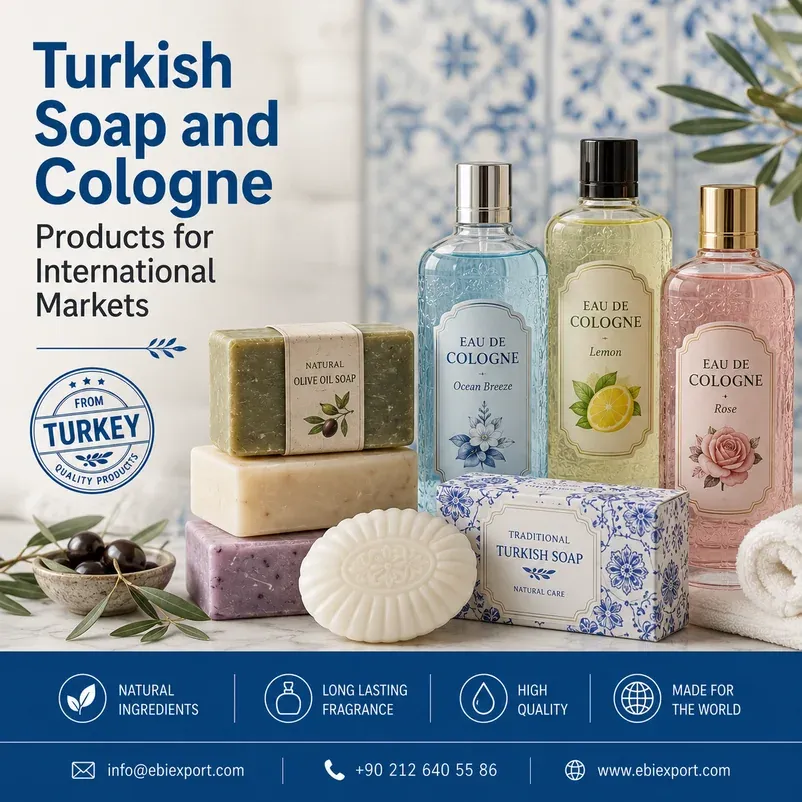
 Turkish Soap and Cologne Products for International Markets
Turkish soap and cologne products can be valuable additions to international FMCG portfolios because they combine daily use, cultural familiarity and retail practicality. For importers, wholesalers, supermarkets, ethnic grocery stores and personal care distributors, these products offer a useful way to expand beyond food categories while still serving regular household demand. Soap is a basic hygiene product, while cologne carries both personal care and traditional refreshment value in Turkish consumer culture.
For many international buyers, personal care products from Turkey are not separate from the wider grocery business. The same retailer that sells Turkish tea, snacks, tomato paste, fruit juice and household goods may also need soap, cologne and shampoo products. Turkish Food Exporter, as an Ebi Export brand, helps buyers evaluate Turkish soap, cologne and related FMCG products for wholesale and retail supply in global markets.
Soap and cologne are strong FMCG categories because they are connected to repeat use. Customers buy soap for home hygiene, hand washing, bathroom use, guest areas, hotels, offices and daily personal care. Cologne can be used for refreshment, hospitality, personal fragrance, traditional offering and hygiene-focused routines. This gives both categories a clear place in retail and wholesale trade.
Unlike some specialty products that need long explanation, soap is immediately understood by customers. Cologne may require slightly more positioning in some markets, but in stores serving Turkish, Middle Eastern, Balkan and Mediterranean communities, it often carries stronger recognition. For importers, this creates two different opportunities: soap can serve universal hygiene demand, while cologne can add Turkish identity and product difference.
The Turkish soap category and Turkish cologne category can be reviewed as part of a broader personal care sourcing plan from Turkey. Buyers can compare packaging, fragrance options, carton details and market suitability before creating an order.
Soap products can work in several retail channels. Supermarkets may carry them in personal care or household aisles. Ethnic grocery stores may offer Turkish soap beside shampoo, cologne, cleaning products and daily grocery items. Wholesalers can distribute soap to small markets, hotels, convenience stores and neighborhood retailers.
Importers should evaluate soap products according to format and use. Bar soap, liquid soap, scented soap, family-use products and hygiene-focused options may all serve different customers depending on availability. A market with strong price sensitivity may prefer basic practical products, while a personal care shop may look for fragrance variety or more attractive packaging.
Packaging clarity is important. Customers should understand the product type, fragrance, size and use quickly. Soap may be simple, but the shelf is crowded. If the package does not communicate clearly, customers will move to a product that does. Retail has no patience for mystery unless the mystery is beautifully priced.
Cologne has a special place in Turkish daily life. It is often used for freshness, hospitality and personal care. In many Turkish homes and businesses, cologne is offered to guests and used during daily routines. This cultural background can make Turkish cologne products attractive for ethnic markets and specialty retailers abroad.
For international markets, cologne can be positioned in different ways. In ethnic grocery stores, it may be sold as a familiar Turkish product. In personal care shops, it can be presented as a refreshing fragrance product. In supermarkets, it may sit near hygiene, hand care or fragrance items. The same product can have different shelf stories depending on the buyer’s market.
Fragrance selection matters. Lemon cologne is one of the most familiar traditional styles, but other fragrance profiles may also be suitable depending on supply. Importers should think about which scents their customers will understand and buy again. A fragrance that feels natural in one country may need stronger explanation in another.
Packaging is one of the most important factors in personal care export. Soap packaging must protect the product, present the fragrance or benefit clearly and fit retail shelf expectations. Cologne packaging must also communicate size, scent, usage and brand identity. A bottle or box is not just a container; it is the first conversation with the customer.
Importers should review package size, units per carton, carton dimensions, barcode, ingredient information, label language, shelf life if applicable, and storage conditions. For cologne, bottle durability and cap quality are especially important. Leaking liquid products can damage cartons and weaken retailer trust very quickly.
Product size should match the sales channel. Smaller cologne bottles may work well for trial purchases, travel, checkout areas or gift-style displays. Larger bottles may be better for households and regular users. Soap products may also be offered in single units, multipacks or family-friendly formats depending on market needs.
Turkish soap and cologne products can serve several retail environments. Ethnic grocery stores may be the most natural starting point because customers may already recognize Turkish personal care products. These stores often sell food, beverages, sweets and household goods together, so adding soap and cologne can strengthen the overall Turkish product section.
Supermarkets may need a more structured approach. Products should have clear packaging, competitive pricing and simple positioning. Soap can compete as a daily hygiene product, while cologne may need a stronger identity as a refreshing personal care item. Importers should decide whether the products will be placed in personal care, household goods, international products or promotional sections.
Wholesalers and distributors can use soap and cologne to serve small markets, mini markets, pharmacies, personal care stores, hotels and local retailers. The wider the distributor network, the more important it becomes to choose products that are easy to explain and easy to reorder.
Soap and cologne products become stronger when they are part of a wider FMCG supply plan. Importers may pair them with Turkish shampoo products, detergents, softeners, dishwashing products and household cleaners. This creates a more complete non-food retail section from Turkey.
For grocery-focused distributors, soap and cologne can also travel with food and beverage products. A shipment may include Turkish snacks, pasta, tomato paste, tea, fruit juice, bottled water, soap and cologne. This approach can help buyers serve stores that purchase across multiple categories. Small retailers usually like suppliers that can solve several shelf needs in one order.
The connection is practical. Customers buying daily grocery products may also buy hygiene and personal care items. A store that carries both food and household goods feels more complete. The buyer’s job is to build a product range that follows real shopping behavior, not artificial category walls.
Wholesale buyers should request clear carton and shipment information before ordering soap or cologne products from Turkey. Important details include units per carton, gross weight, net weight, carton dimensions, pallet structure, available quantity and shipment timing. These details affect landed cost, warehouse planning and retailer pricing.
Soap is generally easier to handle than liquid products, but it still needs protection from moisture, crushing and package damage. Cologne requires more careful attention because it is bottled and may be sensitive to leakage, breakage or regulatory requirements. Importers should review packaging strength and loading conditions before confirming the order.
A first order should usually be focused. Buyers can select a limited range of soap products, one or two cologne sizes and several fragrance options if suitable. After the first sales period, they can measure which products receive repeat demand. The market is the best judge; it votes with reorders.
Before importing Turkish soap and cologne products, buyers should check destination-country rules carefully. Personal care products may require ingredient declarations, local language labels, safety documentation, importer details, product notifications or cosmetic compliance checks depending on the market.
Cologne products may also involve additional rules because they can contain alcohol depending on formulation. Importers should confirm local regulations with customs brokers, regulatory consultants or official authorities before shipment. The exporter can provide product information, but the importer must verify requirements in the destination country.
This step should not be skipped. Compliance questions may feel slow at the beginning, but they are much faster than solving problems after goods arrive. Paperwork is boring only when it behaves; when ignored, it becomes theatre.
Turkish Food Exporter supports international buyers looking for Turkish soap, cologne and personal care products for global markets. Buyers can evaluate these products together with shampoo, cleaning products, beverages, snacks, staple foods and other Turkish FMCG categories.
For importers, soap and cologne can add practical value to a Turkish product portfolio. Soap brings daily hygiene demand. Cologne brings Turkish identity, fragrance and personal care appeal. Together, they can help retailers build a more complete FMCG offer.
Turkish soap and cologne products can serve supermarkets, ethnic markets, wholesalers, personal care stores and distributors when selected with the right packaging, pricing, compliance checks and export planning. With a reliable export partner, buyers can turn these categories into steady retail products for international markets.