
EBİ EXPORT is a foreign trade company that provides services to hypermarkets, fast moving consumer goods suppliers, ethnic markets and wholesalers. We are exporting to more than 20 different countries.
EBİ EXPORT is a foreign trade company that provides services to hypermarkets, fast moving consumer goods suppliers, ethnic markets and wholesalers. We are exporting to more than 20 different countries.
It is an Ebi Export Brand
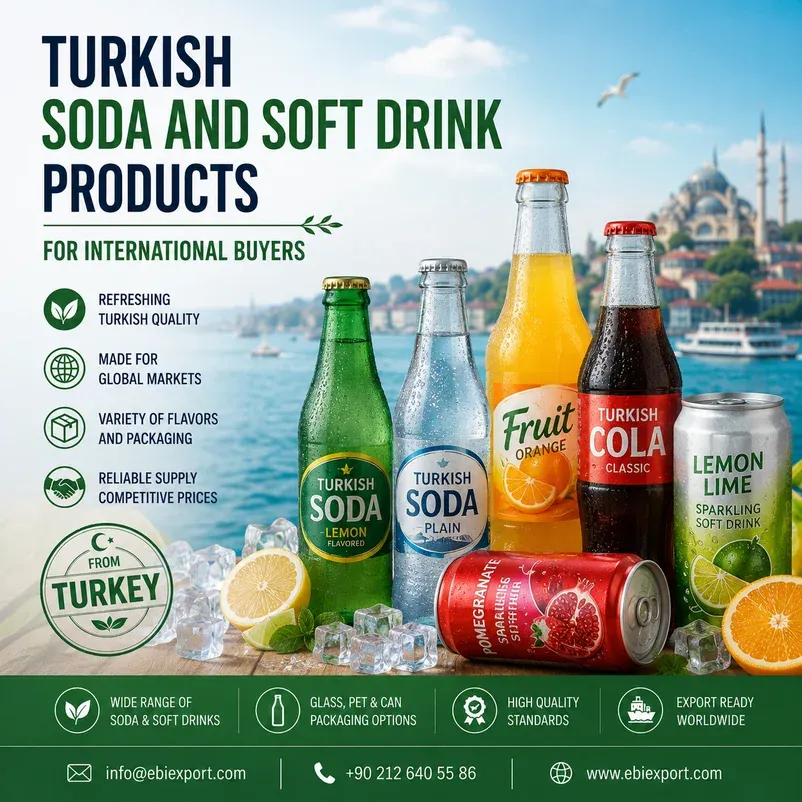
 Turkish Soda and Soft Drink Products for International Buyers
Turkish soda and soft drink products can be valuable choices for international buyers who want refreshing, retail-ready and fast-moving beverage options from Turkey. Soft drinks are easy for customers to understand, simple for retailers to display and suitable for many sales channels. For importers, wholesalers, supermarkets, ethnic grocery stores, convenience markets and beverage distributors, this category can support both daily demand and impulse purchases.
Unlike some food products that need recipe knowledge or cultural familiarity, soda and soft drinks usually communicate their purpose immediately. A customer sees the flavor, package size and brand style, then decides quickly. This gives international buyers a practical advantage when introducing Turkish beverage products into new markets. Turkish Food Exporter, as an Ebi Export brand, helps buyers evaluate Turkish soda, soft drinks, fruit juice, bottled water, iced tea and related FMCG categories for wholesale and retail supply.
Soft drinks are one of the most flexible beverage categories in global retail. They can be sold in supermarkets, mini markets, petrol station shops, cafes, restaurants, hotels, school-area stores, convenience shops and wholesale distribution networks. This wide channel coverage makes the category useful for buyers that need products with broad sales potential.
For retailers, soft drinks can support many shopping occasions. Customers may buy them with snacks, lunch products, ready meals, family groceries or party items. A single beverage category can therefore help increase basket value across different store sections. When a product can sit beside chips, biscuits, fruit juice and ready foods, it becomes more useful than a bottle standing alone.
Turkey offers different beverage options that can fit international grocery and FMCG demand. The Turkish soda category can be reviewed together with fruit juice, iced tea and bottled water products to create a stronger imported beverage range.
International buyers can evaluate several types of soft drink products from Turkey. These may include lemon-flavored drinks, orange drinks, cola-style beverages, lime and mint options, fruit-flavored sodas, classic carbonated drinks and regional refreshment products depending on availability. Each product type has a different role in retail.
Lemon and orange soft drinks are usually easy to introduce because customers understand these flavors quickly. Cola-style drinks can serve mainstream refreshment demand. Lime, mint, ginger or other distinctive profiles can bring variety to the shelf and help retailers offer something different from local standard products.
The best product mix should not be chosen only by taste preference. Importers should think about sales channel, package size, price level, brand awareness and customer habits. A flavor that performs well in convenience stores may not always be the best option for family grocery shopping. A product that looks exciting in a catalog still has to survive the shelf.
Supermarkets usually need beverage products with clear shelf identity, reliable supply and suitable price positioning. Soft drinks can be placed in beverage aisles, chilled displays, promotional areas or seasonal campaigns. For supermarket buyers, the product must look organized, understandable and ready for repeat sales.
Package size is especially important for supermarket channels. Larger bottles may work well for family consumption, home use and meal pairing. Smaller bottles or cans may support quick purchases and promotional multipacks. Buyers should decide whether the product will compete as a daily drink, a family beverage, an imported specialty product or a promotional item.
A supermarket range may include soda products alongside Turkish fruit juice products, iced tea, bottled water and snack products. This helps the retailer build a complete beverage section rather than placing imported drinks in a scattered way.
Convenience stores need products that move quickly. Customers often enter these stores for a drink, snack or small daily purchase. This makes Turkish soda and soft drink products suitable for quick-consumption formats. Smaller bottles, cans or single-serve packages may be more effective in these channels than large family-size products.
Soft drinks also pair naturally with snacks. A customer buying chips, crackers, wafers or chocolate may add a cold drink without thinking too much. For importers, this creates a simple selling argument. A distributor offering beverages together with Turkish chips and snack products can provide retailers with a more complete quick-sale range.
In small retail environments, visibility matters. The drink must be easy to notice, easy to understand and easy to price. If the package is confusing or the flavor is unclear, customers will usually choose something familiar. Convenience retail is fast; it does not wait politely for products to explain themselves.
Ethnic grocery stores can use Turkish soda and soft drinks to strengthen a wider Turkish FMCG section. Customers who buy Turkish tea, coffee, pasta, tomato paste, Turkish delight, halva or snacks may also be interested in drinks from Turkey. This makes beverages a natural extension of the shopping basket.
For these stores, Turkish product identity can matter. Some shoppers may recognize certain flavors or brands from Turkey. Others may be curious about imported beverage options that are different from local products. A balanced soft drink range can serve both groups: familiar flavors for regular customers and distinctive options for discovery.
Soft drinks can also make a Turkish grocery section feel more active. Traditional products give the shelf cultural depth, while beverages and snacks bring daily movement. That mix is important because a strong store section should not feel like a museum. It should feel alive, useful and ready for repeat shopping.
Packaging affects every part of soda and soft drink export. Buyers should review whether products are available in PET bottles, glass bottles, cans or multipack formats. Each option has advantages and trade-offs. PET bottles can be practical for family use and larger retail formats. Cans can be strong for quick consumption and chilled displays. Glass bottles may create a premium or traditional feel, but they require more careful handling.
Importers should ask for package volume, units per carton, carton dimensions, gross weight, net weight, pallet structure, barcode details and shelf life. These details are essential for calculating landed cost and planning storage. Beverage products may look simple on a store shelf, but in logistics they can become heavy, bulky and unforgiving.
If soft drinks are imported in mixed FMCG orders, loading should be planned carefully. Heavy beverages should be positioned properly with lighter products such as wafers, biscuits, chips, personal care items or household goods. A mixed order can be efficient, but only if the exporter treats loading as a real operation rather than a guessing exercise.
Flavor selection should be based on market reality. Lemon, orange and cola-style products may be easier for first orders because customers already understand them. More distinctive options such as lime-mint, ginger, tropical or regional flavors can create shelf interest, but they should usually be tested with controlled quantities.
A good first order should include safe products and a few discovery products. If every flavor is too ordinary, the range may not feel different enough. If every flavor is unusual, the retailer may struggle to sell it. The old balance still wins here: give the market something it knows, then offer something worth noticing.
Importers should also consider climate, customer age groups and retail habits. Hot markets may respond strongly to refreshing flavors. Younger customers may prefer colorful, fruit-based or sharper tastes. Family shoppers may prefer larger bottles and familiar flavors. The best soft drink portfolio listens to the market before shouting at it.
Turkish soda and soft drinks can become stronger when combined with other beverage categories. Buyers can build a complete drink portfolio with Turkish bottled water, fruit juice, iced tea and carbonated drinks. Each product serves a different purpose. Water covers daily need, fruit juice serves families, iced tea supports modern refreshment, and soda brings flavor and impulse appeal.
For wholesalers, this wider beverage offer can make sales easier. Retailers often prefer suppliers that can provide several drink categories at once. A single soda product may be interesting, but a full beverage range gives the store owner more reasons to place an order.
Soft drinks can also be paired with biscuits, crackers, cakes, candy and gum. These products support snack occasions and quick purchases. When a distributor can offer both drinks and snacks, the product range becomes more useful for convenience stores and small markets.
Before importing Turkish soda and soft drink products, buyers should request complete product information. Important details include brand name, flavor, package size, ingredients, nutrition information, barcode, carton quantity, shelf life, available stock, storage conditions and shipment timing.
Destination-country regulations should be checked before shipment. Soft drinks may require local language labels, nutrition panels, ingredient declarations, importer details, deposit rules or other compliance points depending on the market. Turkish Food Exporter can support product and export information, but the importer should confirm local rules with customs brokers or official authorities.
Buyers should also review pricing carefully. Soft drinks often compete with local products, so the final landed cost must make sense. Freight, customs, local transport, warehouse handling and retailer margin all affect the shelf price. A product that cannot compete financially needs a strong reason to exist on the shelf.
A first order should be used to learn. Importers can test several flavors, package sizes and sales channels, then review which products move fastest. Did lemon drinks sell better than orange? Did smaller bottles perform better in convenience stores? Did soda sell well when paired with chips? Did ethnic markets prefer familiar Turkish beverage options?
These answers help buyers create stronger repeat orders. Long-term success in beverage import depends on continuity, reliable availability and disciplined category planning. Retailers do not want to build demand for products that disappear after one shipment. Importers should work with exporters that can communicate clearly about availability and future supply.
Turkish Food Exporter helps international buyers source Turkish soda and soft drink products for wholesale and retail markets. Buyers can evaluate beverages together with snacks, fruit juice, bottled water, iced tea, staple foods, sweets and other FMCG categories from Turkey.
For importers, the strongest soft drink strategy is built on clear product roles, suitable packaging, realistic logistics and market-based flavor selection. Turkish soda and soft drink products can support supermarkets, convenience stores, ethnic markets and distributors when they are chosen with care.
With the right export partner, soft drinks from Turkey can become more than occasional imported items. They can become part of a complete beverage portfolio that supports daily demand, snack sales and broader Turkish FMCG supply for international buyers.