
EBİ EXPORT is a foreign trade company that provides services to hypermarkets, fast moving consumer goods suppliers, ethnic markets and wholesalers. We are exporting to more than 20 different countries.
EBİ EXPORT is a foreign trade company that provides services to hypermarkets, fast moving consumer goods suppliers, ethnic markets and wholesalers. We are exporting to more than 20 different countries.
It is an Ebi Export Brand
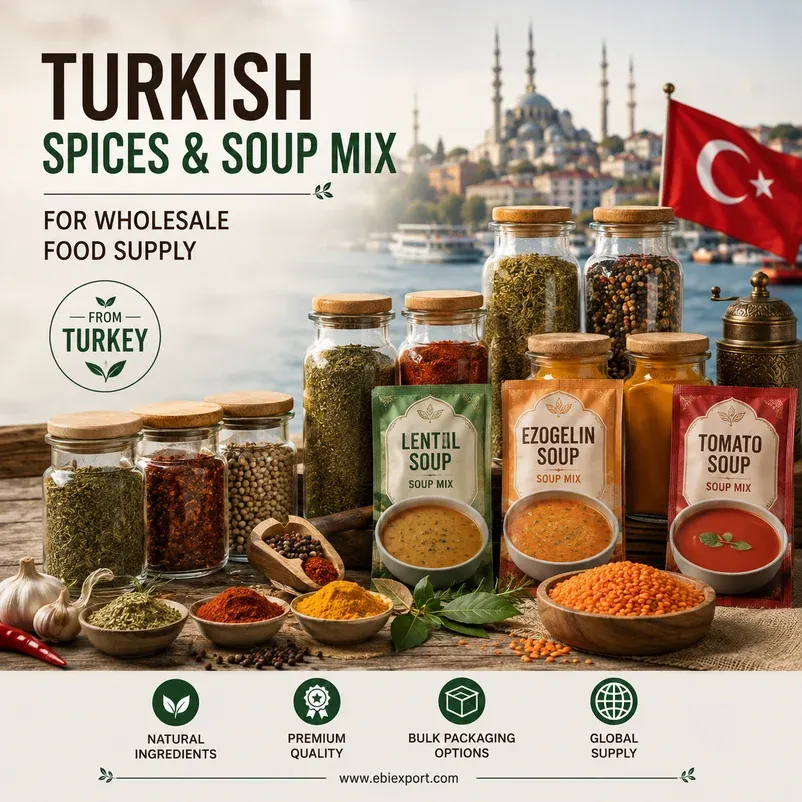
 Turkish Spices and Soup Mix Products for Wholesale Food Supply
Turkish spices and soup mix products can play a quiet but powerful role in wholesale food supply. They may not take as much shelf space as large packaged goods, but they can create strong repeat demand because they are connected to daily cooking habits. For importers, supermarkets, ethnic grocery stores and food distributors, these products offer a practical way to enrich a Turkish food range with items that are easy to store, easy to display and useful for many kitchens.
Spices bring flavor, identity and flexibility. Soup mixes bring convenience, comfort and quick preparation. Together, they can help buyers build a stronger grocery section from Turkey. A store that sells pasta, tomato paste, sauces and ready meals becomes more complete when it also carries spice blends and soup products. Turkish Food Exporter, as an Ebi Export brand, helps international buyers source Turkish staple food products, including spices, soup mixes and related grocery categories for wholesale and retail markets.
Spices are small products with a large commercial role. They influence how customers cook, how they repeat purchases and how they connect with familiar recipes. Turkish and regional cuisines use spices in soups, stews, meat dishes, rice recipes, vegetable meals, sauces and breakfast preparations. For ethnic grocery stores, spice products can be essential because customers often search for familiar taste profiles.
For supermarkets and international grocery retailers, spices can also serve customers who want to explore Mediterranean, Turkish and Middle Eastern cooking. A good spice range can make the shelf more useful and more interesting. It gives customers a reason to buy related products such as tomato paste, pasta, sauces and ready meal ingredients.
Wholesale buyers should not underestimate this category. A spice pack may be small, but it can pull other products into the basket. When a customer buys a spice blend, they may also buy tomato paste, pasta, soup mix or sauces. The product is modest in size, but clever on the shelf.
Soup mix products are valuable because they answer a simple customer need: quick preparation. Many consumers want warm, easy and affordable food options that do not require a long cooking process. Soup mixes can serve families, students, workers, small households and customers looking for practical pantry products.
For importers, soup mixes can be attractive because they are usually shelf-friendly and easy to include in wider grocery orders. They can be placed near spices, pasta, sauces, ready meals and staple foods. This makes them useful for retailers that want to create a full meal-preparation section rather than selling isolated products.
Soup mixes from Turkey can also appeal to ethnic markets when flavors match familiar regional tastes. Lentil soup, vegetable soup, chicken-style mixes, yogurt-based flavors or traditional soup profiles can give customers quick access to tastes they already know. For broader markets, simple and recognizable soup varieties may be easier to introduce first.
Spices and soup mixes become stronger when they are sold with related Turkish food products. For example, Turkish tomato paste is often used with spices in home cooking. Tomato paste gives structure and richness, while spices give aroma and character. Placing these products together helps customers understand how they can be used.
The same logic applies to Turkish pasta products. Pasta can be paired with sauces, spice blends and ready meal ingredients to create quick meal solutions. A customer buying pasta may also need seasoning or soup products for the same kitchen routine. Retailers can use this connection to build a more useful shelf.
Ready meals and sauces are also natural companions. A grocery store can place soup mixes beside ready meal products and sauces to serve customers looking for convenience. This type of category planning helps stores sell products as a meal idea instead of a random collection of packages.
Importers should choose Turkish spices and soup mixes according to their market, not only according to a catalog. A Turkish ethnic market may need products that match traditional recipes and familiar taste expectations. A supermarket may need clean packaging, simple product names and flavors that are easy for wider customers to understand. A wholesaler may need strong carton structure, stable availability and products that can be sold to different retailers.
For spices, buyers can consider single spices, spice blends, seasoning mixes and cooking-specific products. Single spices may be useful for customers who cook from scratch. Blends can be easier for casual shoppers because they solve a specific cooking need. Seasoning mixes can also work well when the packaging clearly explains the use case.
For soup mixes, buyers should review flavor options, preparation instructions, portion count, package size and target customer. A product that is too specific may perform well in ethnic stores but move slowly in general supermarkets. A more universal soup mix may be easier for first-time customers to try. The right product is not always the most unusual one; it is the one the market can actually absorb.
Packaging is especially important for spices and soup mixes because customers need clarity. The product name, flavor, preparation method and usage idea should be easy to understand. In international markets, unclear packaging can slow down sales even if the product itself is good. A customer may be curious, but curiosity has limits when the shelf is crowded.
Spice packaging should protect aroma and freshness. Buyers should ask about package material, net weight, carton quantity and shelf life. Small package sizes may work well for retail shelves because they are affordable and easy to try. Larger formats may suit food service buyers, restaurants or wholesale customers who use spices frequently.
Soup mix packaging should communicate convenience. Preparation instructions, serving suggestions and flavor description matter. If customers do not understand how to prepare the product, they may leave it behind. Retail buyers should review whether the product can speak clearly to their audience before importing it.
Wholesale food supply depends on details. Importers should request carton quantity, gross weight, net weight, pallet structure, shelf life, barcode information and shipment timing before placing an order. Spices are usually lightweight, but carton planning still matters because small products can create many units in one shipment. Soup mixes may also require organized packing to avoid damage and confusion during handling.
For distributors, order structure should reflect sales channels. Small grocery stores may prefer mixed spice and soup assortments. Supermarkets may want specific SKUs with stable replenishment. Ethnic markets may need deeper stock in familiar products. Food service buyers may prefer larger packs. A reliable exporter should help the buyer think through these differences before the shipment is prepared.
The first order should usually be controlled and measurable. Importers can test several spices, a few soup mix products and related staple food categories. After the first sales period, the buyer can increase the strongest items and remove weak performers. Trade should learn from the market, not from wishful thinking dressed in a nice spreadsheet.
Ethnic grocery stores often have strong demand for spices because customers cook traditional meals at home. Turkish, Middle Eastern, Balkan, Mediterranean and Central Asian customers may look for familiar seasoning styles, soup flavors and cooking products. In these stores, spices and soup mixes can sit naturally beside tomato paste, pasta, tea, olives, halva and Turkish delight.
Supermarkets may approach the category differently. They need products that are easy for a wider audience to understand. Spice blends with clear usage, simple soup varieties and products connected to practical cooking can perform better than highly specific items. If the buyer wants to introduce more traditional products, shelf education and smart placement become more important.
For wholesalers, both channels matter. A distributor can carry a balanced range that includes familiar ethnic products and more general retail options. This helps them sell to different types of stores without building separate supply chains for every customer group.
Spices and soup mixes can be included in mixed FMCG orders from Turkey. They do not have to travel alone. Importers can combine them with pasta, tomato paste, sauces, ready meals, snacks, beverages, tea, coffee and traditional sweets. This helps buyers build a complete product range from one sourcing plan.
For example, a distributor may build a Turkish grocery order with staple foods at the center, then add Turkish snack products and beverages for faster shelf movement. Spices and soup mixes support the cooking side of the range, while snacks and drinks support impulse and daily retail sales. The result is a more balanced product portfolio.
This approach is especially useful for international grocery stores. A customer may come for one product, but a well-organized Turkish section can encourage a larger basket. The shelf should feel like a planned kitchen, not a warehouse accident.
Before importing Turkish spices and soup mix products, buyers should request full product information. This includes product name, brand, ingredients, allergens, net weight, carton count, shelf life, preparation instructions, barcode, available quantity and storage conditions. These details are essential for pricing, compliance and retail planning.
Import regulations should also be checked in the destination country. Some markets may require specific language on labels, nutrition information, ingredient declarations, allergen statements or importer details. The exporter can provide product information, but the importer should confirm local rules with customs brokers or official authorities.
Buyers should also ask about continuity. If a spice blend or soup mix sells well, can it be supplied again? Are package sizes stable? Are flavors consistent? Repeat availability matters because retailers do not want to build demand for products that disappear after one shipment.
Turkish Food Exporter supports international buyers looking for Turkish spices, soup mix products and related staple food categories for wholesale supply. The company helps importers, supermarkets, ethnic markets and distributors evaluate product options according to retail use, shipment planning and market suitability.
For buyers, spices and soup mixes can add real value to a Turkish grocery range. They support daily cooking, connect naturally with tomato paste and pasta, and help retailers create a more complete food section. These products may be small, but they can strengthen the whole shelf when chosen carefully.
Turkish spices and soup mix products can become reliable wholesale items when buyers focus on clear packaging, suitable flavors, good shelf life and practical order quantities. With the right export partner, importers can build a food supply plan from Turkey that serves both traditional demand and modern convenience needs.