
EBİ EXPORT is a foreign trade company that provides services to hypermarkets, fast moving consumer goods suppliers, ethnic markets and wholesalers. We are exporting to more than 20 different countries.
EBİ EXPORT is a foreign trade company that provides services to hypermarkets, fast moving consumer goods suppliers, ethnic markets and wholesalers. We are exporting to more than 20 different countries.
It is an Ebi Export Brand
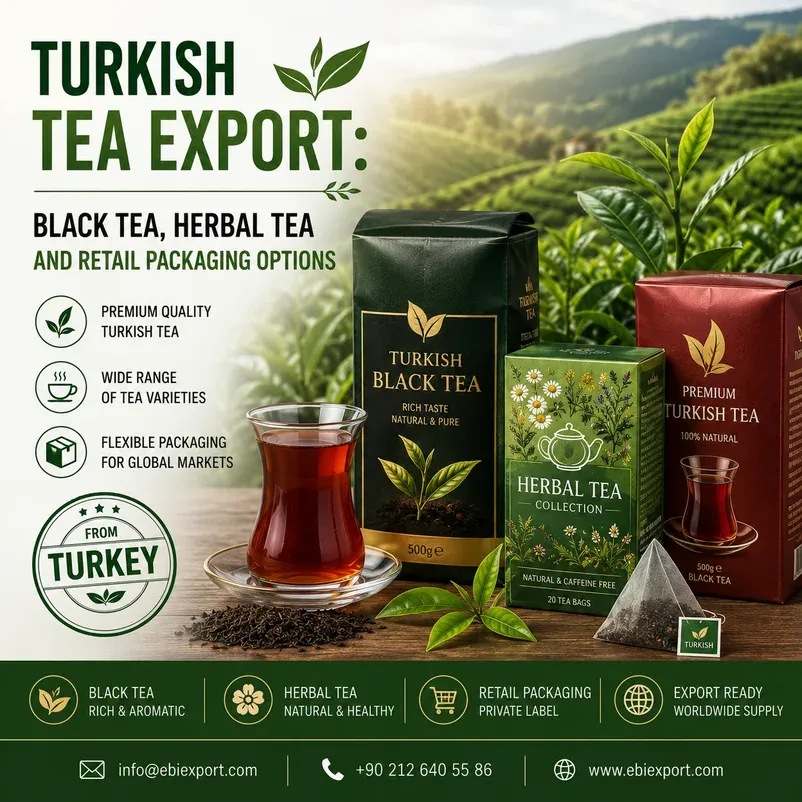
 Turkish Tea Export: Black Tea, Herbal Tea and Retail Packaging Options
Turkish tea export is an important category for international buyers because tea is not only a beverage; it is a daily habit. In many homes, offices, markets and restaurants, tea belongs to routine. This gives Turkish tea products strong potential for importers, wholesalers, ethnic grocery stores, supermarkets and food distributors that want reliable grocery items with repeat-purchase value.
Turkey has a deep tea culture, especially around black tea consumption. Turkish black tea is known for its strong color, rich taste and everyday use. Herbal tea products also create export opportunities for buyers who want lighter, functional or flavor-based beverage options. Turkish Food Exporter, as an Ebi Export brand, helps international buyers evaluate Turkish tea products, retail packaging options and related grocery categories for wholesale and retail supply.
Tea is different from many grocery products because it becomes part of a customer’s daily rhythm. A snack may be bought occasionally. A sauce may be purchased when needed. Tea, however, can become a regular item in the kitchen cupboard. For importers, this repeat behavior is valuable because it can support long-term supply and stable reorders.
Turkish tea products can serve several markets. Ethnic grocery stores may sell them to Turkish, Middle Eastern, Balkan, Central Asian and Mediterranean customers who already know Turkish tea culture. Supermarkets can position Turkish tea as part of an international beverage section. Wholesalers can distribute tea products to grocery stores, cafes, small retailers and food service buyers.
The Turkish tea category can be used as part of a broader grocery plan with coffee, sweets, biscuits, wafers, Turkish delight and staple food products. Tea rarely sells in isolation. It often brings friends to the basket.
Black tea is the heart of Turkish tea consumption. It has a strong place in breakfast tables, family visits, offices, restaurants and daily social life. For international buyers, Turkish black tea can be a powerful product because it carries cultural familiarity and practical everyday use at the same time.
Importers serving ethnic markets should pay close attention to black tea. Customers who grew up with Turkish-style tea often have clear expectations about taste, color and brewing performance. They may prefer loose tea, larger packages or familiar regional names. This makes product selection important. The buyer should choose tea products that fit the habits of the customer base, not just the lowest price on a list.
For general retail, black tea from Turkey may need clearer positioning. It can be presented as a strong, traditional tea for daily brewing, breakfast use and hospitality. Supermarkets may place it in an international foods aisle or tea section. The packaging should help customers understand what makes the product different from standard tea options.
Doğu Karadeniz tea is one of the search interests connected with Turkish tea. The eastern Black Sea region is closely associated with tea culture in Turkey, and this regional identity can be useful for export positioning. Buyers looking for Turkish black tea may respond well to products that communicate origin, tradition and brewing style clearly.
For importers, regional tea terms can help attract customers who already know Turkish tea culture. A product connected with Black Sea tea heritage can feel more authentic to ethnic market shoppers. For newer customers, the same product may need simple explanation: strong black tea, suitable for Turkish-style brewing, ideal for daily consumption.
This is where retail communication matters. A customer should not need a long lecture to understand the product. The shelf should whisper the right idea quickly: this is Turkish black tea, it is strong, traditional and made for regular brewing.
Herbal tea products create a different kind of opportunity. While black tea is often connected with tradition and daily routine, herbal teas can appeal to customers looking for lighter drinks, flavor variety or specific plant-based options. Mint, linden, sage, chamomile, fennel, mixed herbal teas and fruit-flavored infusions may all interest different markets depending on availability.
For supermarkets, herbal teas can be easier to introduce to general customers because many shoppers already understand the category. They may not know Turkish black tea culture yet, but they understand herbal tea as a relaxing, warm or caffeine-free beverage option. This gives importers another path into the tea shelf.
For ethnic grocery stores, herbal teas can sit beside black tea, coffee, honey, jam, Turkish delight and natural products. A buyer can create a warmer, more complete beverage and pantry section by combining these products. Turkish Food Exporter can help buyers evaluate tea products together with other categories that support the same customer habits.
Packaging is one of the most important decisions in Turkish tea export. Tea may be offered in loose leaf packages, tea bags, boxed products, larger family packs or smaller trial sizes depending on the product line. Each format serves a different market need.
Loose black tea can be strong for ethnic markets because many customers prefer traditional brewing methods. Larger packages may work well for households that drink tea daily. Smaller packages can help new customers try Turkish tea without committing to a large quantity. Tea bags may be easier for offices, hotels, cafes and general retail customers who want convenience.
Importers should review package weight, carton quantity, barcode details, shelf life, packaging language and visual presentation. Tea is lighter than many beverage products, but that does not mean planning can be lazy. Small items can still create big confusion when carton details are unclear.
The right tea selection depends on the buyer’s customer base. An ethnic market distributor may prioritize Turkish black tea, larger packages and familiar brewing habits. A supermarket buyer may prefer smaller retail packs, tea bags or clearly presented herbal teas. A wholesaler may need a mixed tea range that can serve different stores.
Buyers should also consider price positioning. Tea can be both a daily value product and a specialty imported product. If the target customers already know Turkish tea, they may compare brands, taste and package size carefully. If the target customers are new to Turkish tea, packaging and explanation become more important than deep brand loyalty.
A first import order should usually include a balanced selection: one or two black tea options, several herbal tea products and package sizes that match the sales channel. After the first sales period, the buyer can review which products sold faster and which formats received repeat demand.
Tea becomes stronger when it is imported with products that naturally sit beside it. Turkish biscuits, crackers, wafers, cakes, halva, jam and Turkish delight can all support tea sales. A customer buying tea may also buy sweets or snacks. A customer buying Turkish delight may add tea for home use or gifting.
Importers can pair tea with Turkish biscuits and crackers to build a practical tea-time section. They can also add Turkish delight products, halva and jam for a more traditional grocery offer. This approach helps retailers create a shelf that feels intentional and easy to shop.
Tea can also support broader FMCG orders. A distributor may combine Turkish tea with coffee, snacks, tomato paste, pasta, beverages, personal care and household products. This gives the buyer more category depth and helps serve different retail customers through one export plan.
Ethnic grocery stores are often the strongest channel for Turkish black tea. Customers in these stores may already know how to brew Turkish tea and may be loyal to certain styles. For these buyers, the important details are taste consistency, package size, availability and price.
A Turkish grocery section without tea can feel incomplete. Tea connects with breakfast, conversation, hospitality and daily routine. When a store carries Turkish tea beside tomato paste, pasta, olives, sweets and snacks, it feels more complete to customers who are searching for familiar products.
Herbal teas can also work well in ethnic markets, especially when placed near honey, natural products, jams and breakfast items. This kind of shelf planning can increase basket value and make the store’s Turkish range more useful.
Supermarkets may approach Turkish tea differently. The customer may not always know how Turkish tea is brewed, so the product needs clearer presentation. Smaller packages, tea bags or packaging with simple usage cues can help new customers feel more comfortable trying it.
For general retail, herbal teas may be a softer entry point. They are already familiar to many shoppers and can be positioned near wellness, warm drinks or specialty tea sections. Once customers become comfortable with Turkish tea products, retailers can introduce stronger black tea options and larger packs.
Supermarket buyers should also think about shelf placement. Turkish tea can sit in the tea aisle, international foods area or promotional sections with sweets and biscuits. The strongest placement depends on how the retailer wants customers to discover the product.
Tea is easier to handle than bottled beverages because it is lighter and usually more storage-friendly. Still, importers should request full product details before placing an order. Important points include package weight, units per carton, carton dimensions, pallet structure, shelf life, storage requirements and available quantity.
Tea should be protected from moisture, strong odors and damaged packaging. Since tea aroma and freshness matter, storage conditions should be taken seriously. A product can have a long shelf life, but poor handling can still damage its retail quality.
For wholesalers, tea can be an efficient product to include in mixed FMCG shipments. It can travel with sweets, biscuits, pasta, sauces, snacks and personal care products. Because it is not as heavy as beverages, it can help balance a shipment that includes denser products.
Before importing Turkish tea products, buyers should check destination-country labeling and food import requirements. Tea products may require ingredient information, origin details, nutrition details if applicable, local language labels, barcode data, importer information or other compliance points depending on the market.
The exporter can provide product and export information, but the importer should confirm local rules with customs brokers or relevant authorities. This step should be handled before shipment, not after the goods arrive. Paperwork is boring until it becomes expensive; then suddenly everyone respects it.
Buyers should also ask about continuity. If a black tea or herbal tea product performs well, can it be supplied again? Are package sizes stable? Are seasonal changes likely? Repeat availability is important because tea customers often return for the same product once they trust it.
Turkish Food Exporter supports international buyers looking for Turkish tea products for wholesale and retail markets. Buyers can evaluate black tea, herbal tea and related grocery categories from Turkey according to their market, packaging needs and sales channels.
For importers, Turkish tea export works best when the product range is planned with care. Black tea can serve tradition and daily routine. Herbal tea can serve variety and lighter beverage demand. Retail packaging should match how customers shop, brew and repeat their purchases.
With the right selection, Turkish tea products can become a steady part of international grocery supply. Turkish Food Exporter helps buyers build that supply with practical product options, export-focused communication and a broader FMCG view that connects tea with snacks, sweets, staple foods and other Turkish grocery products.