
EBİ EXPORT is a foreign trade company that provides services to hypermarkets, fast moving consumer goods suppliers, ethnic markets and wholesalers. We are exporting to more than 20 different countries.
EBİ EXPORT is a foreign trade company that provides services to hypermarkets, fast moving consumer goods suppliers, ethnic markets and wholesalers. We are exporting to more than 20 different countries.
It is an Ebi Export Brand
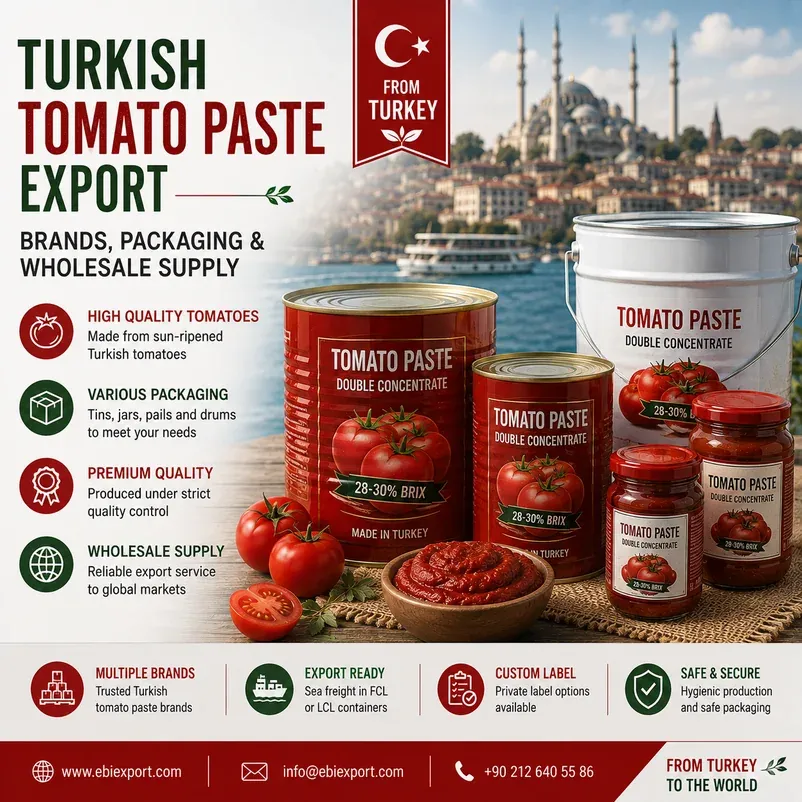
 Turkish Tomato Paste Export: Brands, Packaging and Wholesale Supply
Turkish tomato paste export is an important category for importers, wholesalers, supermarkets, ethnic grocery stores and food distributors looking for practical, high-demand products from Turkey. Tomato paste is not a trend product that depends on short attention. It is a kitchen essential used in daily cooking, restaurant preparation, traditional recipes and retail grocery shopping. This makes it one of the strongest staple food items for buyers who want steady movement and repeat demand.
For international buyers, Turkey is a strong sourcing country for tomato paste because the product fits many markets. It can serve Turkish, Middle Eastern, Balkan, Mediterranean, African, Central Asian and general grocery consumers. A buyer may import it for ethnic markets, wholesale food warehouses, supermarket shelves or food service channels. Turkish Food Exporter, as an Ebi Export brand, helps buyers evaluate Turkish tomato paste products, packaging types and wholesale supply options for export markets.
Tomato paste has a simple commercial advantage: people use it again and again. Unlike a novelty snack or a seasonal sweet, tomato paste belongs to regular kitchen routines. It is used in soups, stews, sauces, rice dishes, pasta recipes, meat dishes, vegetable meals and many traditional food preparations. For importers, this repeat-use nature makes the product attractive.
Another advantage is familiarity. Even in markets where Turkish food products are still growing, tomato paste is easy for customers to understand. It does not require a long explanation. The customer sees the product, recognizes its purpose and knows how to use it. In grocery retail, that kind of clarity is valuable. A product that explains itself has already crossed half the bridge.
The Turkish tomato paste category can be positioned as part of a wider staple food range. Importers can combine tomato paste with pasta, sauces, spices, soup mixes and ready meals to create a practical cooking section for retail shelves. This helps stores sell related products together instead of placing tomato paste as a lonely tin in the corner.
Turkish tomato paste can be suitable for different buyer profiles. Ethnic grocery stores often import it because customers already know Turkish-style cooking products. Supermarkets may carry it as part of an international foods section or a wider grocery category. Wholesalers can distribute it to small markets, food stores, restaurants and regional retailers. Food service suppliers may also consider larger formats depending on their customer base.
Importers serving Turkish, Arab, Balkan, Mediterranean or Central Asian communities may see especially strong demand. Tomato paste is used widely in these cuisines, and customers often prefer products that feel familiar in taste, texture and cooking performance. For many households, tomato paste is not optional; it sits near the stove like a quiet worker that never takes a day off.
For general grocery markets, tomato paste from Turkey can also work when pricing, packaging and brand positioning are selected correctly. Buyers should evaluate whether their market needs premium branded products, affordable wholesale items, smaller retail packs or larger food service formats.
Brand selection is one of the key decisions in tomato paste import. Some buyers prefer recognized Turkish brands because they create trust on the shelf. Others focus on price-sensitive options that can support wholesale distribution. The right choice depends on the destination market, customer profile and retail channel.
Öncü tomato paste is one of the names international buyers may search for when looking at Turkish tomato paste products. Known brands can help retailers build confidence because customers may already recognize them from previous purchases, family use or ethnic grocery shopping. For stores serving Turkish and regional communities, brand familiarity can strongly influence repeat sales.
However, importers should not choose a product only because the brand name looks familiar. They should check package size, carton quantity, shelf life, current availability, price level and shipment suitability. A good brand still needs good planning. In wholesale trade, romance ends quickly when carton math begins.
Packaging is central to tomato paste export. Importers should decide which format fits their market before placing an order. Tomato paste may be available in tins, jars, cans or other packaging formats depending on the brand and product line. Each format has a different retail use.
Small retail packs are useful for grocery stores and supermarkets because they are easy for households to buy. They can fit daily cooking needs and are often more approachable for first-time customers. Larger packs may be better for restaurants, catering businesses and food service channels. Wholesale buyers should match packaging size with actual customer behavior, not only with price per unit.
Tin packaging is common and practical for many markets. It can be efficient for storage, carton planning and shelf display. Jar packaging may create a different retail perception and can sometimes feel more premium depending on the market. Importers should also consider whether customers prefer easy storage after opening, smaller portions or larger economy sizes.
Wholesale tomato paste purchasing requires careful carton planning. Buyers should review how many units come in each carton, carton weight, pallet structure and loading details. These numbers affect landed cost, warehouse handling, retail pricing and distribution planning.
A product may look affordable at unit level, but shipment efficiency can change the real cost. Heavy products such as tomato paste require practical logistics calculation. Importers should check whether the order volume matches their sales capacity and storage conditions. Buying too little may increase cost per unit; buying too much can create cash flow and stock pressure.
For first orders, many buyers prefer a balanced approach. They may test one or two package sizes, then increase volume after observing sales. This is often smarter than importing too many variations at once. Tomato paste is a stable category, but each market still has its own habits. Some customers may prefer smaller packs, while others may buy larger formats regularly.
Tomato paste becomes stronger when it is sold with related products. Importers can pair it with Turkish pasta products, sauces, spices, soup mixes and ready meals. These categories naturally support each other because customers use them in similar cooking routines.
For ethnic grocery stores, tomato paste can also sit near Turkish tea, coffee, olives, pickles, rice products, legumes, halva and Turkish delight. This creates a more complete Turkish grocery section. The goal is to make the shelf feel planned, not scattered. Customers should be able to move from one product to another with a sense of purpose.
For wholesalers, tomato paste can be included in mixed FMCG orders with snacks, beverages and household products. A distributor may import tomato paste as a staple category while also adding chips and snack products, fruit juice, iced tea, cleaning products or personal care items. This kind of mixed supply can help buyers serve more retailers through one shipment.
Before importing Turkish tomato paste, buyers should request full product details. These include brand name, net weight, packaging type, carton quantity, shelf life, production and expiry dates, barcode details, pallet structure and available stock. Importers should also ask whether the product is suitable for their destination market.
Label requirements can vary from country to country. Some markets may require specific language, nutrition information, ingredient details, importer information or other compliance points. The exporter can support product information, but the importer should confirm local requirements with customs brokers or relevant authorities before shipment.
Shelf life is especially important for staple food products. Tomato paste usually has practical storage advantages, but buyers should still check expiry dates carefully. Retailers do not want short-dated stock unless it is clearly planned for quick sale. A reliable exporter should communicate these details openly before the order is confirmed.
Tomato paste is a dense and heavy product, so logistics planning matters. Importers should evaluate total shipment weight, carton handling, container use and warehouse receiving conditions. Unlike lightweight snacks, tomato paste does not create volume problems as quickly, but it can create weight considerations. This is why shipment planning should be done with accurate carton and pallet information.
Depending on the destination country and order size, products may be shipped by sea, road or other suitable transport methods. Full container orders may work for larger buyers, while mixed shipments may be better for importers testing the market or combining several Turkish FMCG categories. The best option depends on budget, timing and sales strategy.
Clear communication during logistics is essential. Buyers should know when products are being prepared, when they are loaded and which documents will be provided. Export is not a guessing game. If the process becomes foggy, costs usually find a way to appear from the fog wearing a very serious face.
A first tomato paste order should be realistic and market-focused. Importers should select package sizes that match their customers, choose brands according to shelf expectations and avoid overcomplicating the order with too many similar variations. Testing should be structured enough to produce useful results.
For example, a buyer may start with one recognized Turkish tomato paste brand in two package sizes, then support it with pasta, sauces and spices. This creates a simple cooking category that retailers can understand. After the first sales period, the buyer can evaluate which size moved faster, which price point worked better and whether customers asked for other Turkish staple food products.
This step-by-step method helps importers reduce risk while building a stronger product range. It also helps exporters recommend better options for future orders. Real sales feedback is much more useful than assumptions made before the first shipment.
Turkish Food Exporter helps international buyers source Turkish tomato paste and other staple food products for wholesale and retail markets. The company supports importers, supermarkets, ethnic markets and distributors looking for practical food export solutions from Turkey.
Buyers can evaluate tomato paste together with pasta, sauces, spices, snacks, beverages, traditional sweets, personal care products and household goods. This wider product range makes it easier to build a balanced import plan instead of sourcing every category separately.
Turkish tomato paste export offers strong potential because the product is familiar, useful and repeat-oriented. With the right brand, packaging format, carton planning and export partner, tomato paste from Turkey can become a stable part of international grocery and wholesale supply. Turkish Food Exporter helps buyers organize that process with clear communication, category variety and a practical approach to food export from Turkey.