
EBİ EXPORT is a foreign trade company that provides services to hypermarkets, fast moving consumer goods suppliers, ethnic markets and wholesalers. We are exporting to more than 20 different countries.
EBİ EXPORT is a foreign trade company that provides services to hypermarkets, fast moving consumer goods suppliers, ethnic markets and wholesalers. We are exporting to more than 20 different countries.
It is an Ebi Export Brand
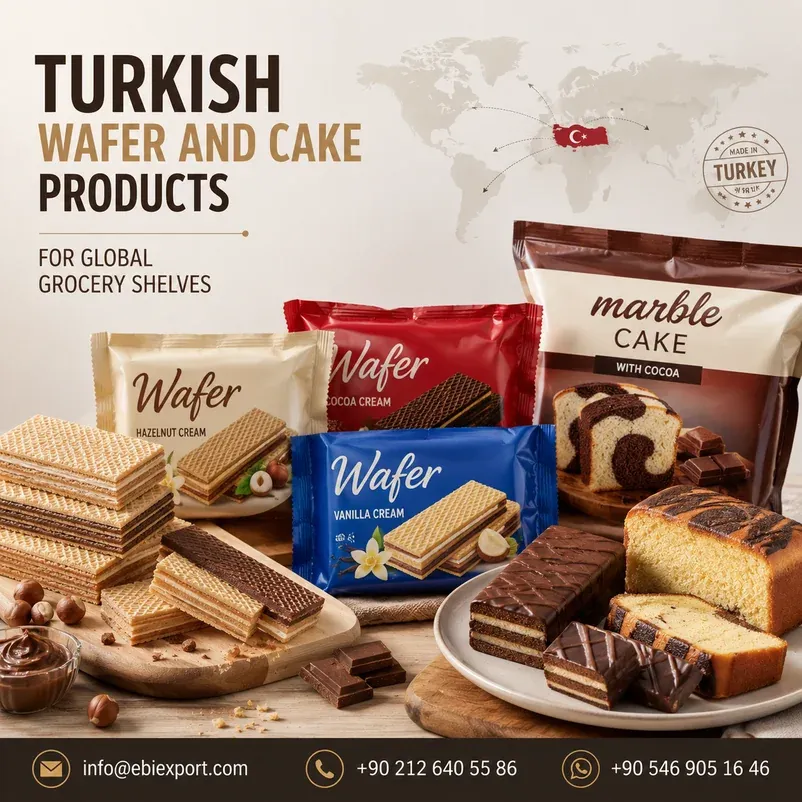
 Turkish Wafer and Cake Products for Global Grocery Shelves
Turkish wafer and cake products can be strong additions to global grocery shelves because they sit in one of the most flexible areas of retail: sweet snacking. These products are easy to understand, simple to display and suitable for many daily moments. Customers may buy them for tea-time, school lunchboxes, office breaks, family snacks, guest service, travel or small indulgence. For importers, wholesalers, supermarkets, ethnic markets and FMCG distributors, wafers and cakes from Turkey can support a wider snack and confectionery range.
Unlike traditional sweets that may need cultural explanation, wafers and cakes usually speak a very simple retail language. The customer sees the flavor, package size and product type, then decides quickly. This makes them useful for international grocery stores that want Turkish snack products with broad appeal. Turkish Food Exporter, as an Ebi Export brand, helps international buyers evaluate Turkish wafer, cake, biscuit, chocolate and snack categories for wholesale and retail markets.
Wafers and cakes are practical because they can serve both planned purchases and impulse purchases. A family may buy multipack cakes for home. A student may buy a small wafer with a drink. An office worker may choose a cake during a break. A customer shopping for tea or coffee may add sweet snacks for guests. This variety of use gives importers more than one sales path.
For retailers, these products are easy to place. Wafers can sit in the snack aisle, confectionery section, checkout area or tea-time shelf. Cakes can work in family snack shelves, bakery-adjacent areas, promotional displays or lunchbox sections. In ethnic markets, Turkish wafers and cakes can be placed beside tea, coffee, biscuits, chocolate, Turkish delight and halva.
The Turkish wafer category can be reviewed by buyers who want light, sweet, fast-moving products from Turkey. Wafers are especially useful because they are familiar in many markets and can be sold in different package sizes.
Wafer products are attractive for importers because they are light, crisp and easy to consume. They can be chocolate-coated, cream-filled, plain, mini-sized, family-sized or individually packed depending on availability. This gives buyers room to build a range for different customers and retail channels.
Individual wafers can work well in convenience stores, kiosks, school-area shops and checkout displays. Larger packs can serve families, supermarkets and grocery stores. Multipacks may help retailers position wafers as home snack products rather than only single impulse items. A good wafer range should include both quick-sale products and products suitable for repeat household buying.
Flavor selection also matters. Chocolate, vanilla, hazelnut, strawberry, cocoa and milk-style flavors are usually easy to understand in many markets. More distinctive flavors can be tested later if the customer base is open to variety. The first order should be readable. If the shipment contains too many similar products, the buyer may struggle to learn what the market actually prefers.
Cake products can bring a softer and more filling snack option to grocery shelves. They may include packaged cakes, mini cakes, chocolate cakes, fruit-flavored cakes, cream-filled cakes, rolls or family-style products depending on supply. For importers, cakes can be useful because they serve different consumption moments from wafers. Wafers are often light and crisp, while cakes feel more like a small treat or quick dessert.
The Turkish cake category can help buyers evaluate packaged cake products suitable for retail and wholesale supply. These products can work well in supermarkets, mini markets, ethnic stores, convenience shops and family grocery channels.
Cake products should be selected with attention to shelf life, package durability and flavor clarity. Customers usually want to understand the filling, coating or flavor quickly. If the product is chocolate, fruit, milk cream or cocoa-based, the packaging should make that clear. A cake product has only a few seconds to invite the customer. Retail shelves do not hand out second chances generously.
Tea-time is one of the strongest selling moments for wafer and cake products. In Turkish and regional food culture, sweet snacks often sit beside tea or coffee. This makes wafers and cakes useful companions for hot beverage categories. Importers can build a stronger shelf by connecting these products with Turkish tea, coffee, biscuits and traditional sweets.
For ethnic grocery stores, this pairing is especially natural. Customers buying Turkish tea products may also choose wafers, cakes, biscuits, Turkish delight or halva. A customer buying coffee may add chocolate-coated wafers or small cakes for guests. These are not abstract marketing ideas; they are ordinary shopping habits.
Supermarkets can also use this relationship. Wafers and cakes can be promoted with tea, coffee, fruit juice or family grocery items. When products are placed according to real use, the shelf becomes easier to shop. A planned shelf quietly sells better than a random pile of packages.
Wafers and cakes become stronger when they belong to a complete sweet snack range. Importers can combine them with Turkish chocolate products, biscuits, crackers, candy and gum. This gives retailers more choices for different customer groups and buying occasions.
A store that carries only one sweet snack product may not create enough attention. A shelf with wafers, cakes, chocolate and biscuits feels fuller and more useful. Customers can choose between light, crunchy, soft, rich or simple products. That variety helps the retailer serve families, children, workers and casual snack buyers.
The Turkish biscuit and cracker category can support wafer and cake orders by creating a broader snack portfolio. For distributors, this is useful because retailers often prefer suppliers that can offer several related products rather than one isolated SKU.
Wafers and cakes also pair naturally with beverages. Fruit juice, iced tea, soda, bottled water, tea and coffee can all support snack sales. In convenience stores and mini markets, a customer may buy a drink and a sweet snack together. In supermarkets, families may buy cakes, wafers and beverages for home use.
Importers can pair wafer and cake products with Turkish fruit juice products, iced tea or soft drinks. This gives wholesalers a better sales offer for small retailers. A snack alone may be useful, but a snack-and-beverage range is easier to sell.
For global grocery shelves, this relationship can increase basket value. Wafers and cakes are not only products to be placed in the confectionery aisle. They can support lunchbox sections, tea-time displays, checkout areas and promotional bundles. The more useful the product becomes in the store, the more valuable it becomes for the importer.
Packaging is one of the most important parts of wafer and cake export. These products must be protected from crushing, moisture, heat and rough handling. Wafers are delicate because their texture can break easily. Cakes may be sensitive to pressure, temperature and packaging damage. Importers should review product protection before confirming an order.
Important details include package weight, units per carton, carton dimensions, gross weight, net weight, shelf life, storage conditions, barcode, ingredient information and pallet structure. If products contain chocolate, cream, milk, nuts or gluten, allergen information should be checked carefully. The product may be sweet, but the documentation must stay serious.
Package format should match the sales channel. Single-serve products may work well in convenience shops and checkout areas. Multipacks may suit supermarkets and family grocery stores. Larger packs may be useful for wholesalers and value-focused buyers. The package should make the product easy to buy, easy to carry and easy to understand.
Ethnic grocery stores can use Turkish wafers and cakes to strengthen a wider Turkish food section. Customers who buy Turkish tea, coffee, tomato paste, pasta, sweets or snacks may also be interested in familiar packaged cakes and wafers. These products can bring daily movement to a shelf that may otherwise focus mostly on staple foods.
Supermarkets may need more universal snack products with clear packaging and competitive pricing. Chocolate wafers, cream cakes, family packs and lunchbox-friendly formats can work well if the products are positioned correctly. Convenience stores may prefer smaller products with strong impulse appeal.
Wholesalers should choose products that can move through several retail channels. A wafer that sells only in one store type may still be useful, but a product that fits supermarkets, ethnic markets, mini markets and convenience shops gives the distributor more flexibility.
Wholesale buyers should build wafer and cake orders with controlled variety. A first shipment may include several wafer flavors, one or two cake products, biscuits, chocolate and selected beverage items. This creates a balanced snack range without creating too many similar products at once.
Importers should track product movement after the first order. Which flavor sold fastest? Did single packs move better than multipacks? Did cakes perform better in supermarkets or small markets? Did wafers sell well with tea and coffee? Did retailers ask for more sweet snack options? These answers help shape repeat orders.
Buyers should also ask about supply continuity. If a wafer or cake product sells well, it should be available again. Retailers do not want customers asking for products that cannot be reordered. Continuity is the quiet promise behind every successful FMCG category.
Before importing Turkish wafer and cake products, buyers should review destination-country food labeling rules. These products may require ingredient lists, allergen declarations, nutrition information, local language labels, origin details, importer information and barcode data depending on the market.
Allergen information is especially important because wafers and cakes may contain wheat, gluten, milk, soy, nuts, cocoa or other ingredients. Importers should request accurate product specifications before shipment. The exporter can provide product information, but local rules should be checked with customs brokers or official authorities.
Shelf life must also be reviewed carefully. Wafers and cakes should arrive with enough time for customs clearance, warehousing, retailer distribution and final sale. Short-dated products can create discount pressure and make retailers hesitant to reorder.
Turkish Food Exporter supports international buyers looking for Turkish wafer and cake products for global grocery shelves. Buyers can evaluate wafers, cakes, biscuits, chocolate, candy, beverages, tea, coffee and other Turkish FMCG categories through a practical export-focused supply approach.
For importers, wafers and cakes can be strong products when selected with the right format, flavor mix, packaging and sales channel strategy. Wafers bring light, crisp, easy-to-sell snack value. Cakes bring soft, filling and family-friendly appeal. Together, they can help retailers build a more complete sweet snack section.
Turkish wafer and cake products can serve supermarkets, ethnic markets, convenience stores, wholesalers and snack distributors when planned carefully. With clear product details, reliable supply and smart shelf positioning, these products can become steady parts of international grocery and FMCG supply from Turkey.