
EBİ EXPORT is a foreign trade company that provides services to hypermarkets, fast moving consumer goods suppliers, ethnic markets and wholesalers. We are exporting to more than 20 different countries.
EBİ EXPORT is a foreign trade company that provides services to hypermarkets, fast moving consumer goods suppliers, ethnic markets and wholesalers. We are exporting to more than 20 different countries.
It is an Ebi Export Brand
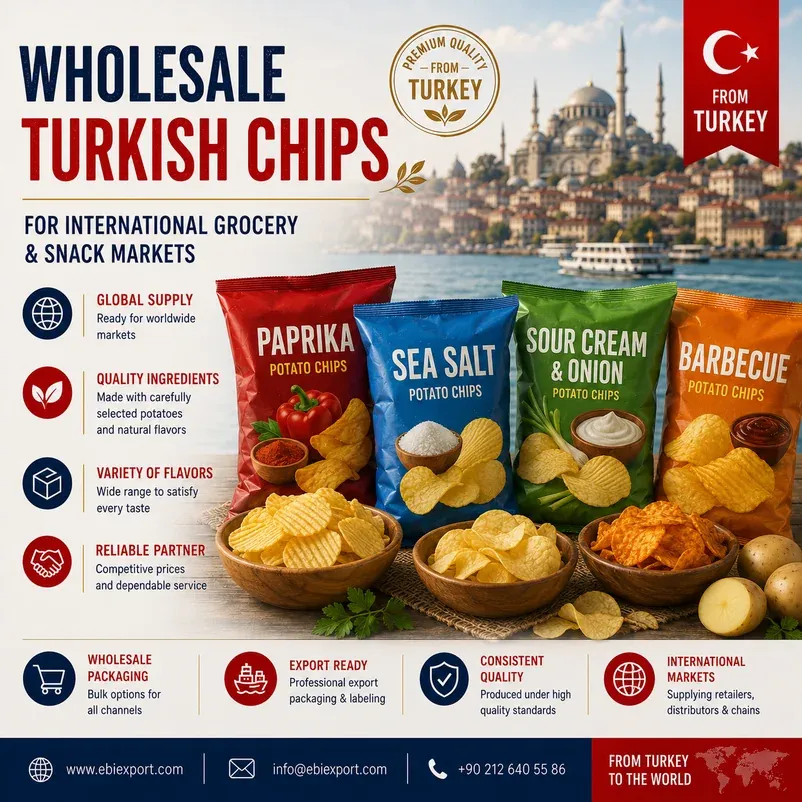
 Wholesale Turkish Chips for International Grocery and Snack Markets
Wholesale Turkish chips have a strong place in international grocery and snack markets because they answer a simple retail need: customers want snacks that are familiar, affordable, easy to try and easy to buy again. For importers, chips are also practical because they can be sold through many channels, including supermarkets, ethnic markets, convenience stores, wholesalers, distributors and small neighborhood retailers. A well-selected chips range can bring fast movement to the shelf and help buyers test Turkish FMCG products with less commercial hesitation.
Turkey has a wide snack product range, from potato chips and tortilla chips to corn snacks, puffed snacks and flavored crisps. International buyers can source products from known global-style brands as well as Turkish snack names that appeal to ethnic and regional markets. Turkish Food Exporter, as an Ebi Export brand, helps buyers evaluate wholesale Turkish chips and related snack categories for export-ready supply. The goal is not only to send products, but to help buyers create a snack selection that makes sense in their own market.
Chips are one of the easiest product groups for retailers to introduce. Customers do not need a long explanation. They understand the package, the flavor and the occasion. This gives importers a clear advantage when opening a new product line from Turkey. A grocery store may need time to educate customers about some traditional products, but a bag of chips speaks quickly from the shelf. That speed matters in retail, where attention is short and competition is loud.
For wholesalers, chips are useful because they can be distributed across different store types. A single shipment may serve ethnic grocery stores, small markets, supermarkets, kiosks and convenience retailers. This makes wholesale chips from Turkey suitable for buyers who want products with broad sales potential. When the right flavors and package sizes are chosen, chips can become a repeat-order category rather than a one-time trial.
The Turkish chips category includes several product types that can be used to build a balanced snack portfolio. Potato chips are usually the foundation because they are widely recognized. Classic salted, cheese, onion, spicy, ketchup and herb-style flavors can work in many countries. These products are often the safest starting point for importers entering a new market.
Tortilla chips are another valuable group. They are especially useful for younger customers, party snacks and stores that sell bold flavors. Nacho, hot corn, taco, spicy and regional flavor profiles can give the shelf more color and energy. Importers can use tortilla chips to create a more modern snack section alongside traditional potato chips.
Corn snacks and puffed snacks also deserve attention. Products similar to cheese puffs, peanut snacks, corn rings and flavored corn crisps are often suitable for families and casual snacking. They can be sold in smaller packs, making them attractive for impulse purchases. For buyers building a wider Turkish snack range, these products help avoid a flat shelf that depends only on standard potato chips.
Many international buyers look for familiar names when they source chips. Products such as Ruffles, Doritos, Lays, Cheetos, Çerezza, Patos and Cipso can create different levels of recognition depending on the target market. Some products appeal because customers already know the brand style. Others appeal because they bring a Turkish or regional snack identity that is harder to find in standard grocery aisles.
Flavor strategy should be planned carefully. A first wholesale order should usually include safe flavors and a few bolder options. Salted, cheese, onion and classic potato chips can create the base. Spicy, ketchup, taco, yogurt-herb or local Turkish flavor profiles can be added for discovery. If every product is too ordinary, the shelf becomes invisible. If every product is too unusual, the buyer carries unnecessary risk. The stronger strategy sits in the middle.
Ethnic grocery stores often need products that create recognition and emotional connection. Turkish chips can do that well, especially for customers who already know Turkish brands or regional snack flavors. A customer may visit the store for tea, tomato paste, pasta, Turkish delight or halal-friendly grocery items, but snacks can increase basket value at the end of the visit.
For ethnic markets, chips should not be treated as a minor add-on. They can make the store feel more complete and active. Traditional products bring identity, but snacks bring daily movement. A Turkish grocery section with only cooking products may feel serious and quiet; adding chips, wafers, biscuits and drinks gives it life. That combination is good for both customer experience and store sales.
Supermarkets need products that fit shelf systems, promotion areas and category planning. Chips can be placed in snack aisles, end-cap displays, seasonal promotions or near beverages. Convenience stores may prefer smaller packs and eye-catching flavors because their customers often buy quickly. Importers should think about where the product will sit before deciding what to buy.
Package size is especially important. Large packs may work better for supermarkets and family shopping. Smaller packs may work better for kiosks, school-area shops, convenience stores and quick purchases. A reliable supplier should help buyers compare package options, carton quantities and product availability before the order is finalized.
Wholesale Turkish chips become stronger when they are not imported alone. Buyers can pair them with fruit juice products, iced tea, soda, bottled water and soft drinks to create a snack-and-beverage combination. This is useful because customers often buy drinks and chips together. For wholesalers, this pairing can also make the sales offer more attractive to retailers.
Chips can also be combined with biscuits and crackers, wafers, chocolate, candy and gum. A distributor that carries a complete snack range has more flexibility than one selling only a few products. Retailers prefer suppliers that can fill more than one shelf need. This is where mixed FMCG supply from Turkey becomes valuable.
Before buying wholesale chips from Turkey, importers should review the basic commercial details. These include product name, flavor, package weight, carton quantity, shelf life, barcode, available stock, pallet structure and shipment timing. Chips are light, but they take up volume. This means carton and container planning can affect the final landed cost more than buyers first expect.
Label requirements should also be checked for the destination market. Some countries may require specific language, nutrition information, ingredients or importer details. The Turkish exporter can support product and export information, but the buyer should confirm local import rules with customs brokers or relevant authorities. It is better to solve these details before shipment than to discover them when the products are already waiting at customs.
A first order should be shaped around testing and learning. Importers do not need to buy every available flavor at once. A practical starting list may include classic potato chips, one or two tortilla chip options, a few corn snacks and several flavors with clear market appeal. The order can then be expanded according to real sales performance.
Retail feedback is valuable. Which flavors sell first? Which pack sizes move faster? Do customers prefer known brands or regional Turkish snack names? Are chips selling better with beverages or as part of a broader Turkish grocery section? These answers help buyers create stronger repeat orders. In wholesale trade, the first shipment opens the door; the second and third shipments prove the business.
Turkish Food Exporter helps international buyers source wholesale Turkish chips and snack products from Turkey with a broader FMCG perspective. Buyers can explore chips, biscuits, crackers, beverages, staple foods, sweets, personal care and household products through one export-oriented supply channel.
For importers, wholesalers and snack distributors, the best supplier is not the one that only lists products. The best supplier helps organize the category, clarify product details and support realistic export planning. Turkish Food Exporter helps buyers move from interest to order structure with a practical approach built for international grocery and snack markets.
Wholesale Turkish chips can be a strong product category when they are selected with care. The right mix of flavors, brands, package sizes and related FMCG products can help retailers build a snack shelf that attracts attention and creates repeat sales. With reliable sourcing from Turkey, chips can become more than a trial product; they can become a steady part of a distributor’s international product range.